🔥🔥
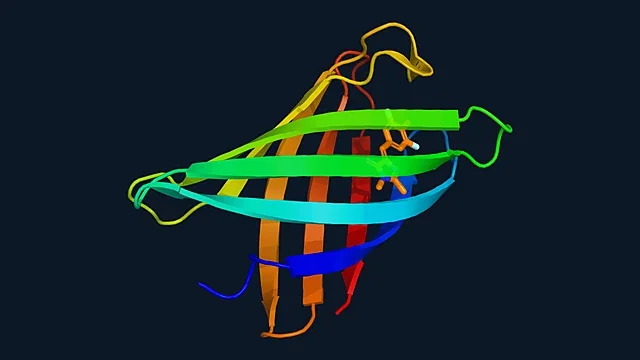
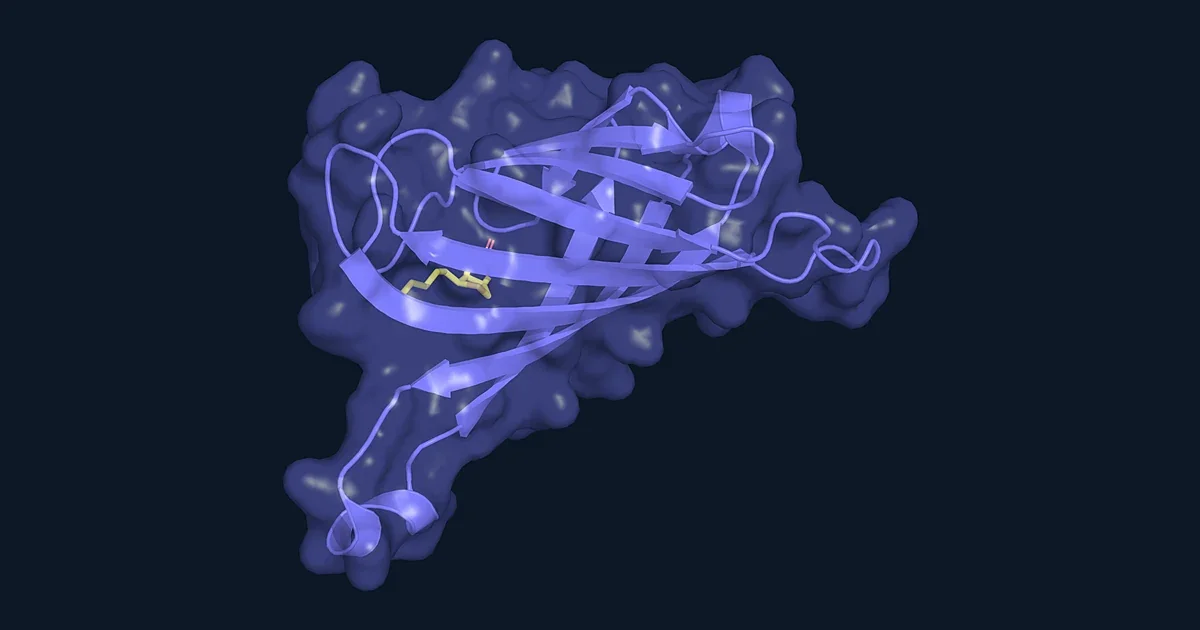
Photo: Image: BioLabs Research, rendered from PDB 6CZH (RCSB PDB, CC0) / own upload
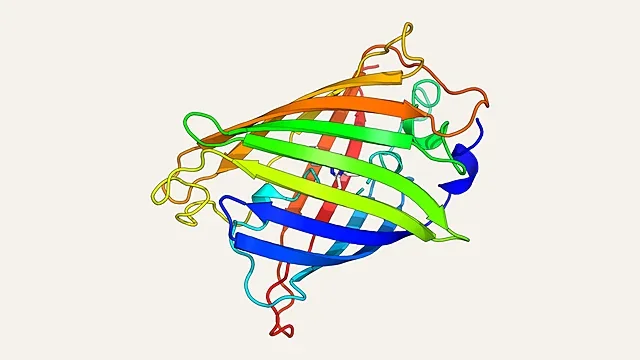
Researchers at the University of Bristol and collaborators in Copenhagen, Sheffield and Manchester reported in Nature Communications on 19 October a rapid physics-based method for building binding pockets that match a small molecule's shape and chemistry into de novo designed proteins. Testing only single-digit numbers of designs, they obtained stable binders for several synthetic and natural chromophores, with binding sites pre-organised in X-ray structures of the ligand-free proteins and micromolar or tighter affinities. They also coupled two chromophore sites in one two-domain protein for controlled energy transfer, and made a small binder usable for imaging sub-cellular structures in cultured cells.
Read the Full Update
🔥🔥
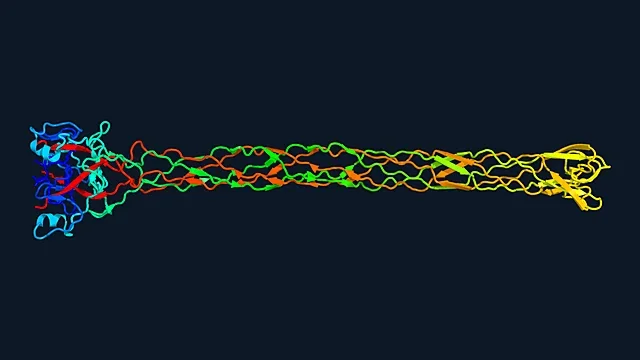
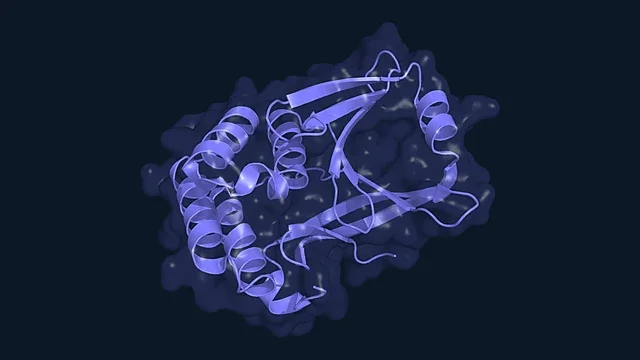
Photo: Image: BioLabs Research, rendered from PDB 2XGF (RCSB PDB, CC0) / own upload
Researchers at Sichuan University in Chengdu reported in Nature Communications on 19 October two bacterial anti-phage systems that act directly on a viral protein. TFAD1, built around a serine protease, degrades the phage long tail fibre protein, and TFAD2, built around a serine/threonine kinase, phosphorylates it. In both cases the phage completes its replication cycle, but the progeny are not infective, a mechanism the authors call passive abortive infection to distinguish it from classical abortive infection. The study is basic microbiology research.
Read the Full Update
🔥
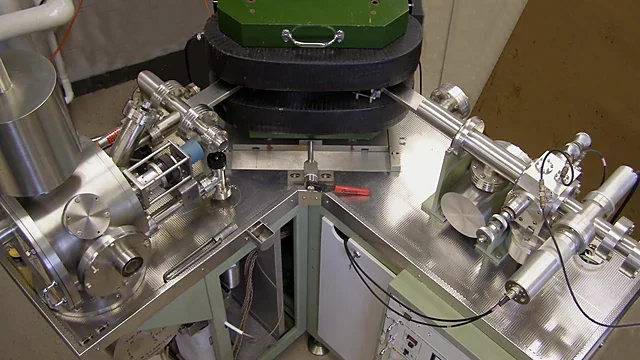
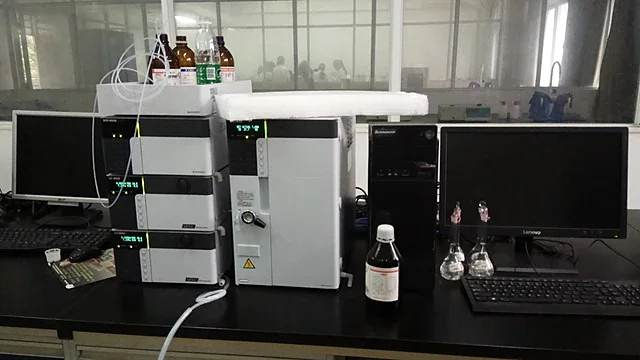
Photo: Radiogenic / Wikimedia Commons (CC0) / own upload
Researchers at Pacific Northwest National Laboratory reported in the Journal of Proteome Research on 18 October fracSLIM, a proteomics workflow that pairs offline peptide fractionation with high-resolution ion mobility spectrometry-mass spectrometry built on structures for lossless ion manipulation (SLIM). Using ion-mobility separation of isomeric and isobaric species and collision cross-section values, three fractions of a HeLa cell-line digest gave more than ten times the peptide identifications of a conventional single-shot LC-MS run, with high reproducibility. The workflow also supports quantitation against heavy-isotope-labelled standards. The paper is an analytical-methods report.
Read the Full Update
🔥
CasanovoGUI brings deep-learning de novo peptide sequencing to a point-and-click desktop app

Photo: Derrick Coetzee from Berkeley, CA, USA / Wikimedia Commons (CC0) / own upload
Researchers at the University of Washington, the University of Michigan and the University of Antwerp reported in the Journal of Proteome Research on 19 October CasanovoGUI, an open-source Java desktop application for Casanovo, a widely used deep-learning model that reads peptide sequences directly from tandem mass spectra without a protein database. The app runs on Windows, macOS and Linux, installs a private Python environment and a GPU-matched Casanovo build on first use, streams live progress, shows annotated spectra with per-residue confidence scores and maps de novo peptides back to a reference proteome with mismatch tolerance. The code is on GitHub.
🔥
PDBe releases SIFTS sequence-to-structure mapping as an open-source, locally deployable tool
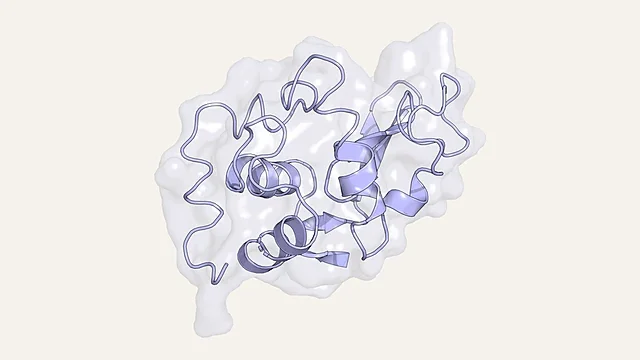
Photo: Image: BioLabs Research, rendered from PDB 1LYZ (RCSB PDB, CC0) / own upload
The Protein Data Bank in Europe at EMBL-EBI reported in Protein Science on 15 October PDBe-SIFTS, an open-source Python implementation of the SIFTS framework that maps UniProtKB protein sequences to Protein Data Bank structures residue by residue, previously generated only in internal pipelines. Using MMseqs2 sequence search, an improved bounded scoring scheme and refinement based on backbone connectivity, it cut archive-scale UniProtKB searches from hours with BLASTP to minutes, about 22 to 36 times faster, and recovered curated mappings at top rank in 93.1 percent of cases across the whole archive. The code is on GitHub.
🔥
Palladium-catalysed annulation converts tryptophan side chains in short peptides into phenanthridinyl indoles
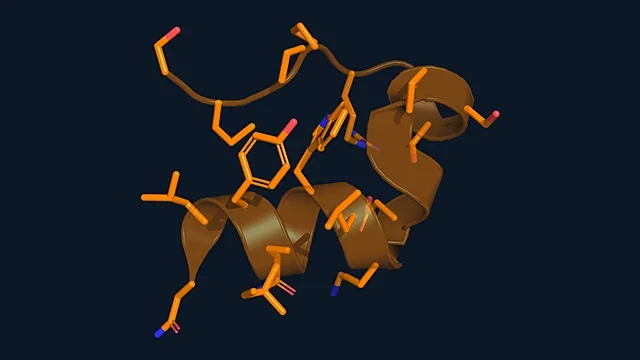
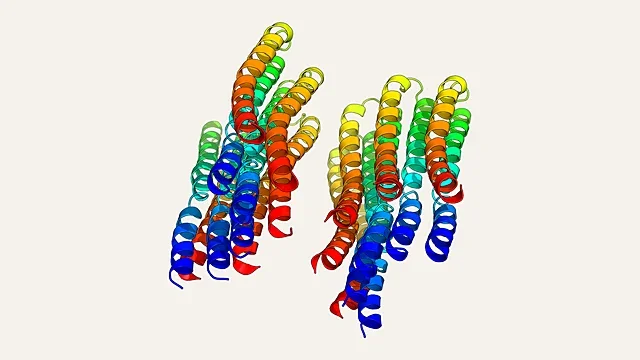
Photo: Image: BioLabs Research, rendered from PDB 1L2Y (RCSB PDB, CC0) / own upload
Researchers at the CSIR-Indian Institute of Chemical Technology reported in Organic Letters on 15 October a palladium-catalysed cascade that uses cyclic diaryliodonium salts to arylate the tryptophan indole at both its C2-H and N-H positions, extending the ring system into a phenanthridinyl indole. The ligand-free, operationally simple method also worked on other indole derivatives and on tryptophan-containing short peptides, giving unnatural phenanthridinyl indole-tethered peptides with good efficiency, and it tolerated N- and C-terminal protecting groups and the side chains of other amino acids. The paper is a synthetic-methods report.
Curated for research-community awareness. Not medical or legal advice. All products on this site are for laboratory research use only.