🔥🔥
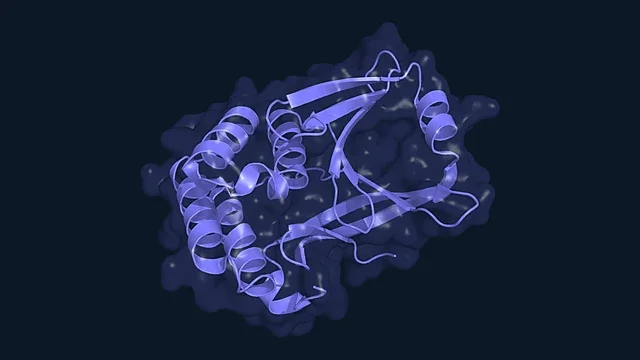
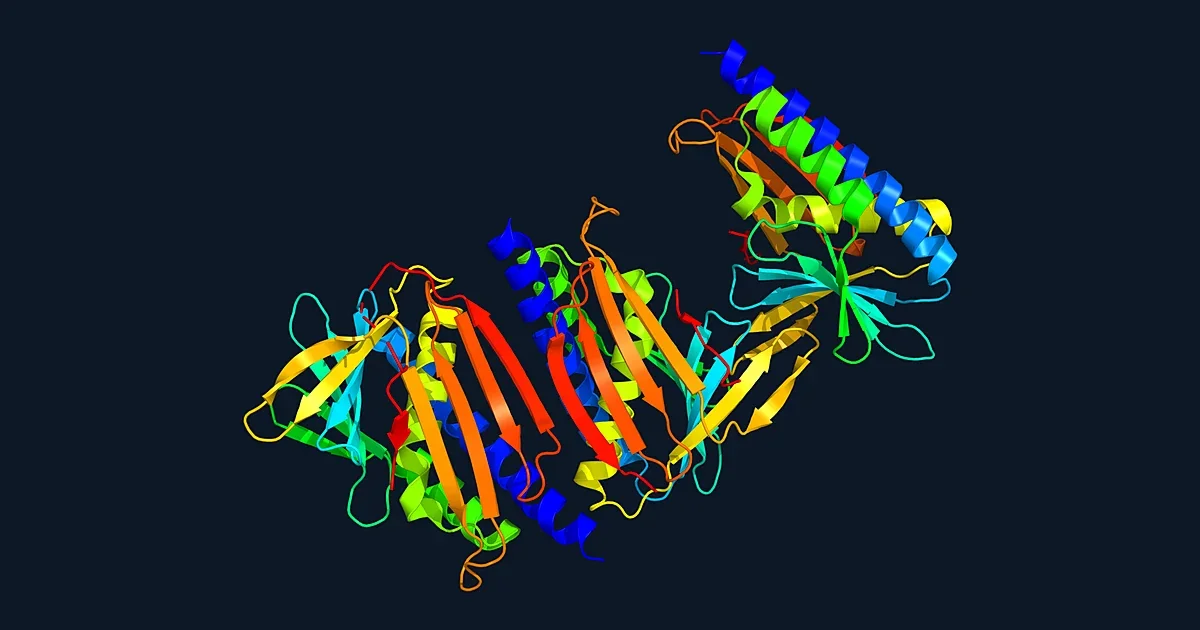
Photo: Image: BioLabs Research, rendered from PDB 9YOX (RCSB PDB, CC0) / own upload
Researchers at the University of Washington's Institute for Protein Design and collaborators reported in Nature on 14 October the de novo design of enzymes that hydrolyse the peptide backbone with an activated cysteine. Of 69 designs, 13 cleaved their target sequence, with rate enhancements of up to 3 x 10^7 over the uncatalysed reaction; the designs have folds unlike natural proteases, and six crystal structures closely matched the models (PDB 9YNL, 9YNM, 9YOX, 9YOY, 9YOZ, 9YP0). The designed proteases also cleaved reporter substrates in cultured mammalian cells. The work is basic enzyme-design research.
Read the Full Update
🔥🔥
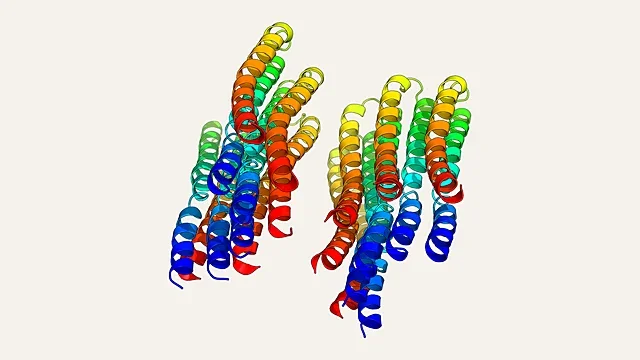
Photo: Image: BioLabs Research, rendered from PDB 4F4S (RCSB PDB, CC0) / own upload
Researchers at Huazhong University of Science and Technology reported in Nature Computational Science on 14 October HDOCK-Multimer, an open framework that builds large protein assemblies from AlphaFold-predicted subcomponents using asymmetric docking, symmetric docking and genetic-algorithm-guided assembly. On 35 large heteromeric complexes it gave acceptable top-ranked models for 83 percent of targets, versus 74 percent for CombFold, and on 172 complexes of 10 to 30 chains it reached 59 percent versus 55 percent for AlphaFold3, which could not take every target because of size limits. The code is on GitHub and Zenodo.
Read the Full Update
🔥🔥
Law-firm analysis: FDA's interim peptide-compounding notice remains under White House review, text not public
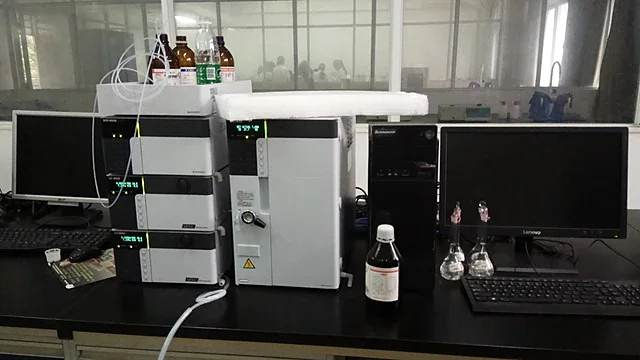
Photo: Dqwyy / Wikimedia Commons (CC0) / own upload
Law firm Buchanan Ingersoll & Rooney noted on 16 October that the White House Office of Information and Regulatory Affairs received FDA's notice 'Interim Access Policy for Compounding Using Certain Peptides' on 14 October 2026 and lists it as pending review, with no legal deadline. The analysis states that the public record does not disclose the notice's text, covered substances or conditions, that submission for review is not an operative change in FDA policy, and that an enforcement policy would not amount to FDA approval of any compounded drug; any issued policy would also have to be read alongside state pharmacy law. As of 19 October the reginfo.gov record still lists the notice as pending.
For research-community awareness only. Not legal advice.
🔥
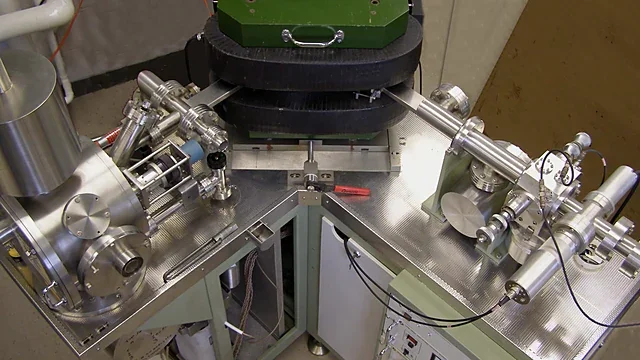
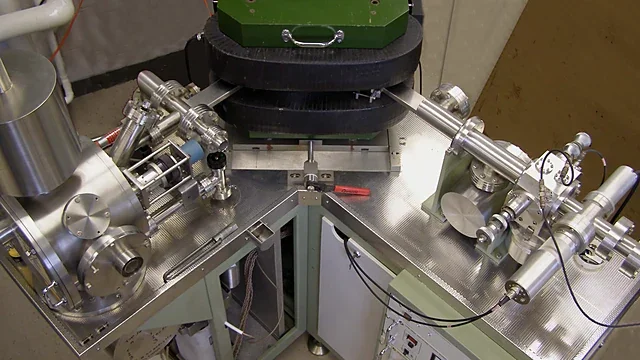
Photo: Radiogenic / Wikimedia Commons (CC0) / own upload
Researchers at Aalen University and Kiel University reported in Analytical Chemistry on 14 October a comprehensive online coupling of nanoflow liquid chromatography with capillary zone electrophoresis-mass spectrometry for top-down proteomics, the analysis of intact proteoforms. Placing nanoLC in front of CZE overcomes CZE's small sample loads; the automated system reached a peak capacity of about 2,200 and roughly tripled proteoform identifications in a human cell-line lysate compared with nanoLC-MS alone, and it supports isobaric-label quantitation. The paper is an analytical-methods report.
Read the Full Update
🔥
Four-residue peptide tag enables wash-free fluorogenic protein labelling in cultured cells
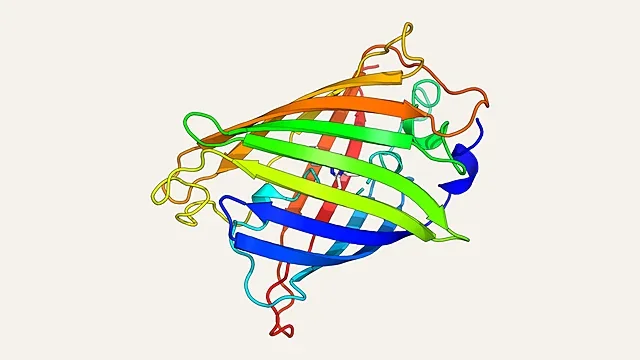
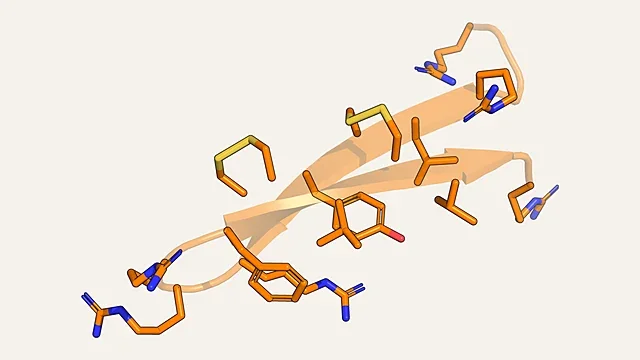
Photo: Image: BioLabs Research, rendered from PDB 1EMA (RCSB PDB, CC0) / own upload
A team led by Peking University reported in Advanced Science on 15 October a site-selective fluorogenic labelling method built on a compact four-residue peptide tag, Phe-Cys-Pro-Phe (FCPF), paired with an environmentally sensitive sulfonyl benzoxadiazole dye. The tag can be genetically inserted at protein termini or exposed loops, and NMR analysis suggests the Phe-rich motif partly clamps the dye, boosting its fluorescence after reaction. The pair enabled wash-free imaging of proteins in several subcellular locations of cultured cells, and a FRET design improved signal-to-noise by up to 20-fold for tracking receptor conformational changes and protein-ligand interactions.
🔥
Solid-phase synthesis route opens access to analogues of the sactipeptide enteropeptin A
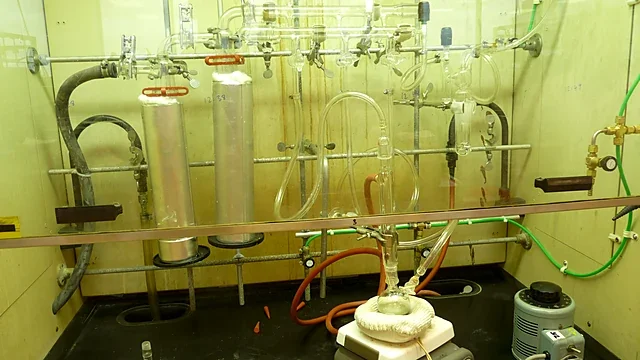
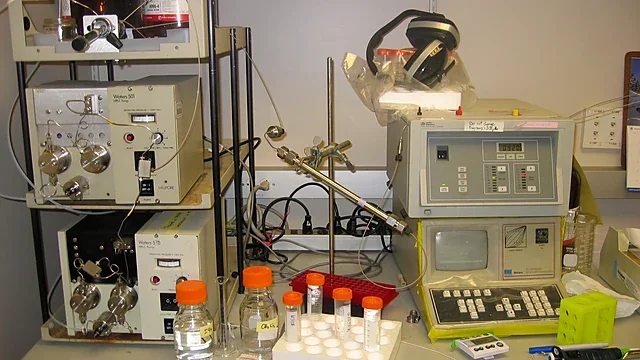
Photo: Serge Brière / Wikimedia Commons (Public domain) / own upload
Researchers at the Australian National University reported in Organic Letters on 14 October a route to analogues of enteropeptin A, a sactipeptide natural product with an unusual six-membered thiomorpholine core, that is compatible with standard solid-phase peptide synthesis. The strategy uses a readily accessible building block and efficient on-resin assembly to install a simplified sactionine motif, and a variant with the opposite, N-to-C direction of the sactionine linkage was also prepared. The authors say the approach speeds access to analogues of this natural-product class; the paper is a synthetic-methods report.
Curated for research-community awareness. Not medical or legal advice. All products on this site are for laboratory research use only.