
By BioLabs Research · Last reviewed: October 8, 2026
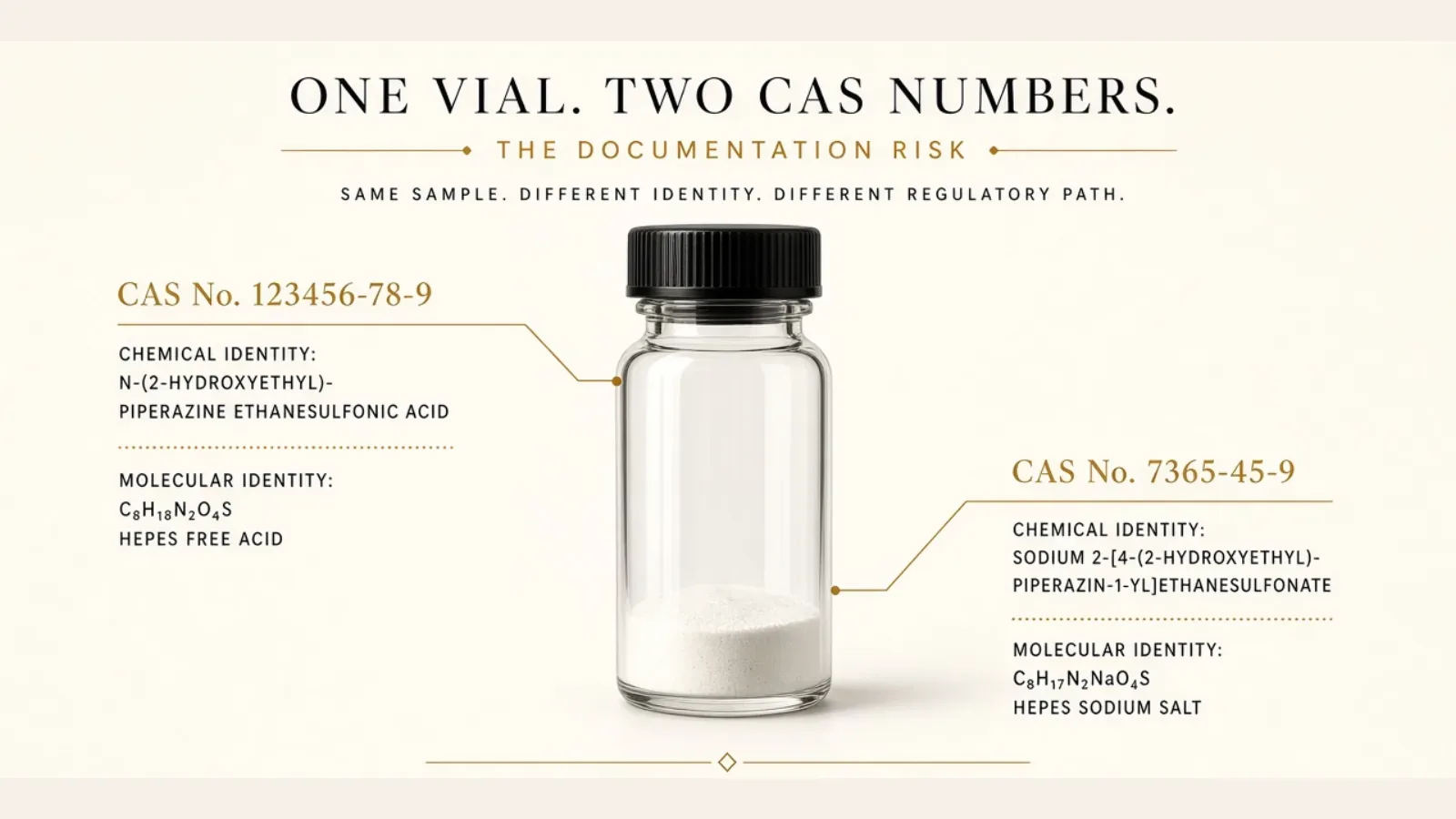
CAS Registry Numbers index defined substances (or defined salts), not storefront mix names. When two peptides share one vial, the correct label is two CAS numbers — one for each component — plus the sequences and theoretical masses that go with them. Mixing two reagents does not mint a third registry entry.
Document the check shown above before moving to the next figure — label fields, lot paper, and pack notes belong on the same receiving record.
Research use only. Do not treat storefront nicknames as a substitute for sequence, CAS, or observed mass on the certificate.

CAS indexes substances, not mix names
Trade-name blends that never name components have no CAS until lot docs list molecules. Purchasing language that treats “Blend X” as if it were a single registry substance creates documentation risk: receiving, LIMS, and SDS mapping all depend on knowing which substances are present.
What a usable blend COA shows
- Sequence (or structure) for each component
- CAS (or equivalent registry) for each component when applicable
- Observed mass for each component
- Chromatogram information readable against those named peaks
- Component amounts only when measured for that lot
One sequence line with two peaks, or two masses with only one CAS, is incomplete lot paper. HPLC area% on a blend is still a UV ratio under one method — two main peaks can yield two area% values and still tell you nothing about milligrams of either peptide. Read HPLC area percent vs net peptide content before converting a chromatogram ratio into a weighing factor.
Catalog examples
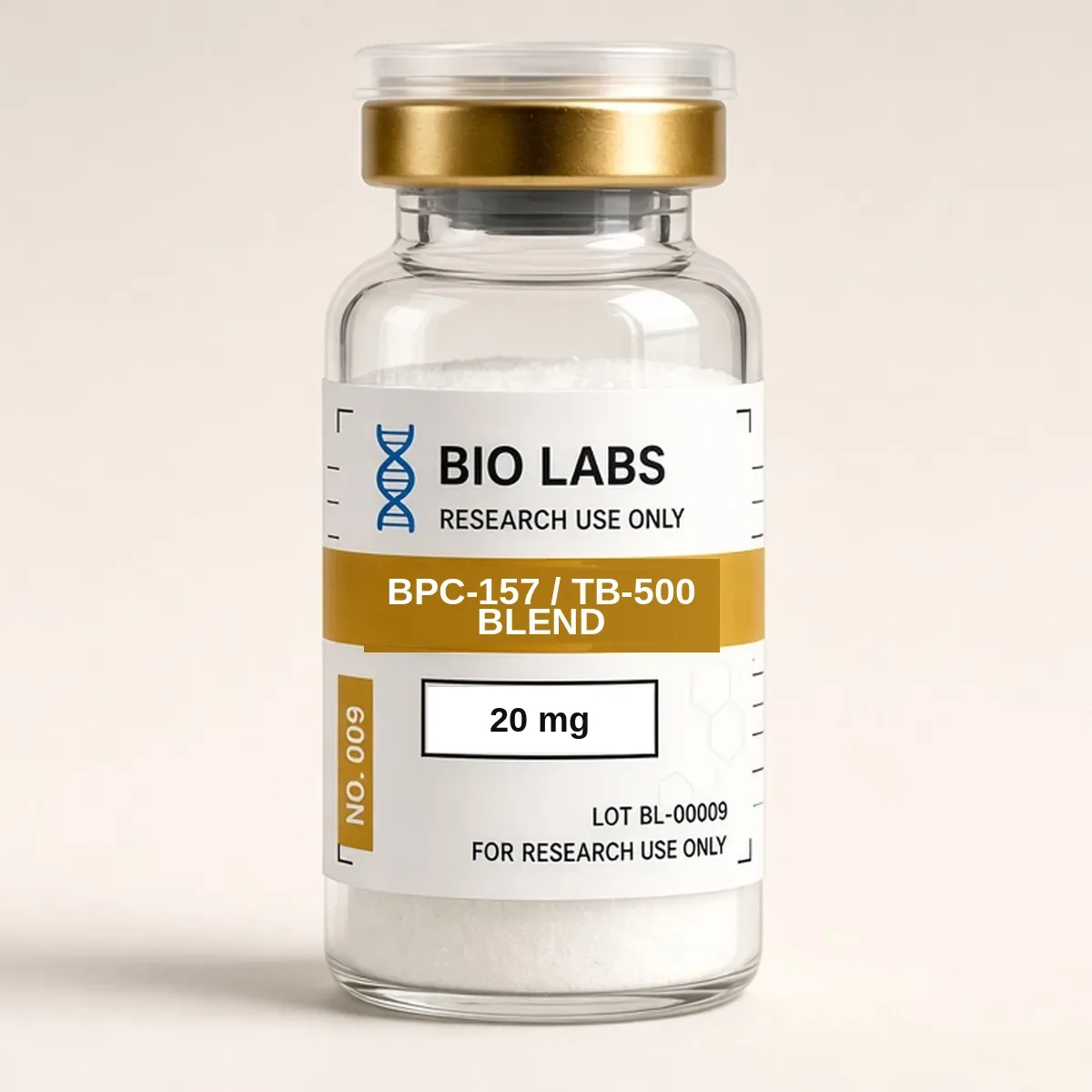
On this catalog, examples include the BPC-157 / TB-500 blend and the tesamorelin / ipamorelin blend. Each listing names both molecules. For a trade-name blend without a CAS, see ECM-70 identity. Component identity notes: BPC-157 / TB-500 blend identity, TB-500 vs thymosin β4.
Documentation checklist
| Paper field | Single-peptide vial | Two-peptide blend |
|---|---|---|
| CAS lines | One (when applicable) | Two — one per component |
| Sequence / structure | One | One per component |
| Observed mass | One | One per component |
| “Blend CAS” | N/A | Not a valid substitute for component CAS |
| HPLC area% | Method-bound UV ratio | Still method-bound — not mg of each peptide |
LIMS and SDS mapping for two-component vials
Most inventory systems assume one substance per container ID. Blends break that assumption. Practical options: (1) create a parent container record with two child substance links, or (2) store dual CAS/sequence pairs in structured custom fields that receiving must complete before release. Option (2) fails if the fields are free text without validation.
SDS packets should list both components when the blend is sold as one SKU. If a supplier sends a single SDS that only names a trade blend, request component SDS sheets or an appendix that names both molecules. Emergency responders and EHS reviews need substance-level identity, not a marketing mix name.
On the analytical side, specify which peak belongs to which component in the method worksheet. “Peak 1 / Peak 2” without names is how area% values later get attached to the wrong peptide in a spreadsheet. Name the peaks with the same strings used on the COA sequence lines.
If a blend arrives with only one CAS, treat it as incomplete identity — same severity as a missing lot number. Do not “fix in” the second CAS from memory. Pull it from the catalog card or from PubChem for the named sequence, then require the supplier to correct the certificate.
Purchasing should also refuse “proprietary ratio” as a substitute for measured component amounts. If the experiment needs a defined milligram of each peptide, the lot certificate has to state how those milligrams were assigned. A ratio copied from a marketing page is not lot data. When in doubt, order the two peptides as separate SKUs and combine under your own controlled procedure rather than accepting an undocumented mix.
Refuse undocumented mix ratios copied from marketing pages; only measured component amounts on the lot certificate support preparation math.
When dual-component preparation math is required, only lot-measured amounts support it — not a ratio remembered from a prior quote.
See blend listings
Named components on the card. Research use only.
Related notes
References
- PubChem compound pages for individual peptide components (look up each CAS/CID separately; a blend name is not a PubChem substance). https://pubchem.ncbi.nlm.nih.gov/
- CAS Registry practice: defined substances vs mixtures — treat each peptide component as its own indexed substance on receiving paperwork.
Research use only. Not for human consumption, self-administration, or therapeutic use. Laboratory reagent listing only.