
By BioLabs Research · Last reviewed: October 15, 2026
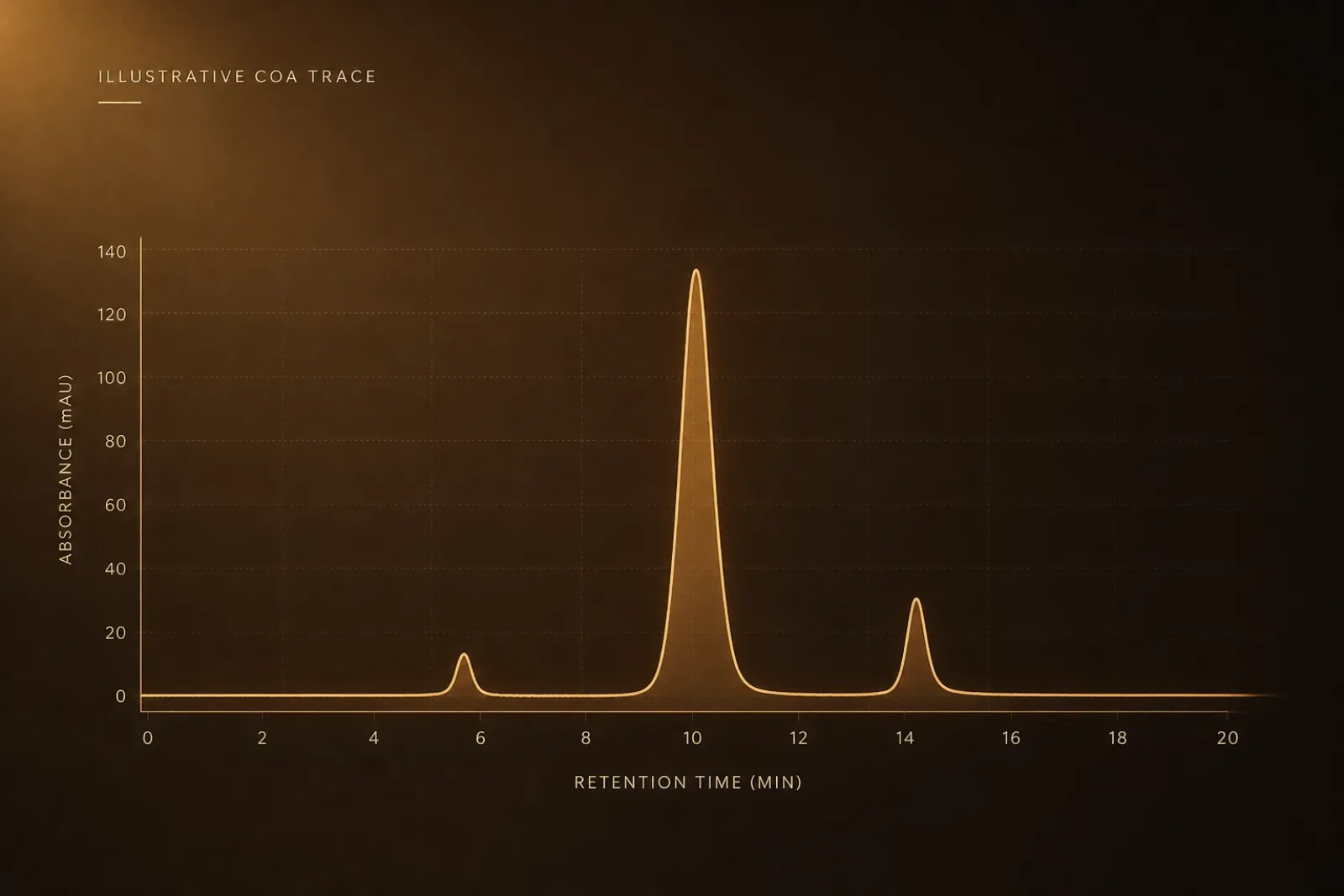
A Certificate of Analysis (COA) is lot paper, not a marketing badge. It is tied to a batch identifier. The useful fields are identity (what molecule was measured) and purity-related measurements (how that measurement was run). A storefront number that is not on that certificate is not lot data.
Document the check shown above before moving to the next figure — label fields, lot paper, and pack notes belong on the same receiving record.
Research use only. Do not treat storefront nicknames as a substitute for sequence, CAS, or observed mass on the certificate.

What a COA is for
When we say “COA on request,” we mean the lot document for that shipment — not a house purity claim reused across SKUs. If a field is blank, ask for it. If a percentage appears without a method ID, treat it as incomplete. Lot paper should travel with the vial through receiving.
Identity fields vs purity fields
Identity on a peptide COA usually means sequence or structure as named, a CAS or equivalent registry when applicable, theoretical mass, and an observed mass (often from MS). If the sequence line and the observed mass disagree, stop. Do not “average” them into a purity percentage.
Purity fields are method-dependent. HPLC area percent is a UV chromatogram ratio under one method ID — not milligrams of peptide in the vial, and not net peptide content (NPC). Residual solvents, counter-ion (for example TFA), and water can all change how much peptide you actually weigh. Those distinctions belong on the COA when the lab reports them; they are not something a blog invents.
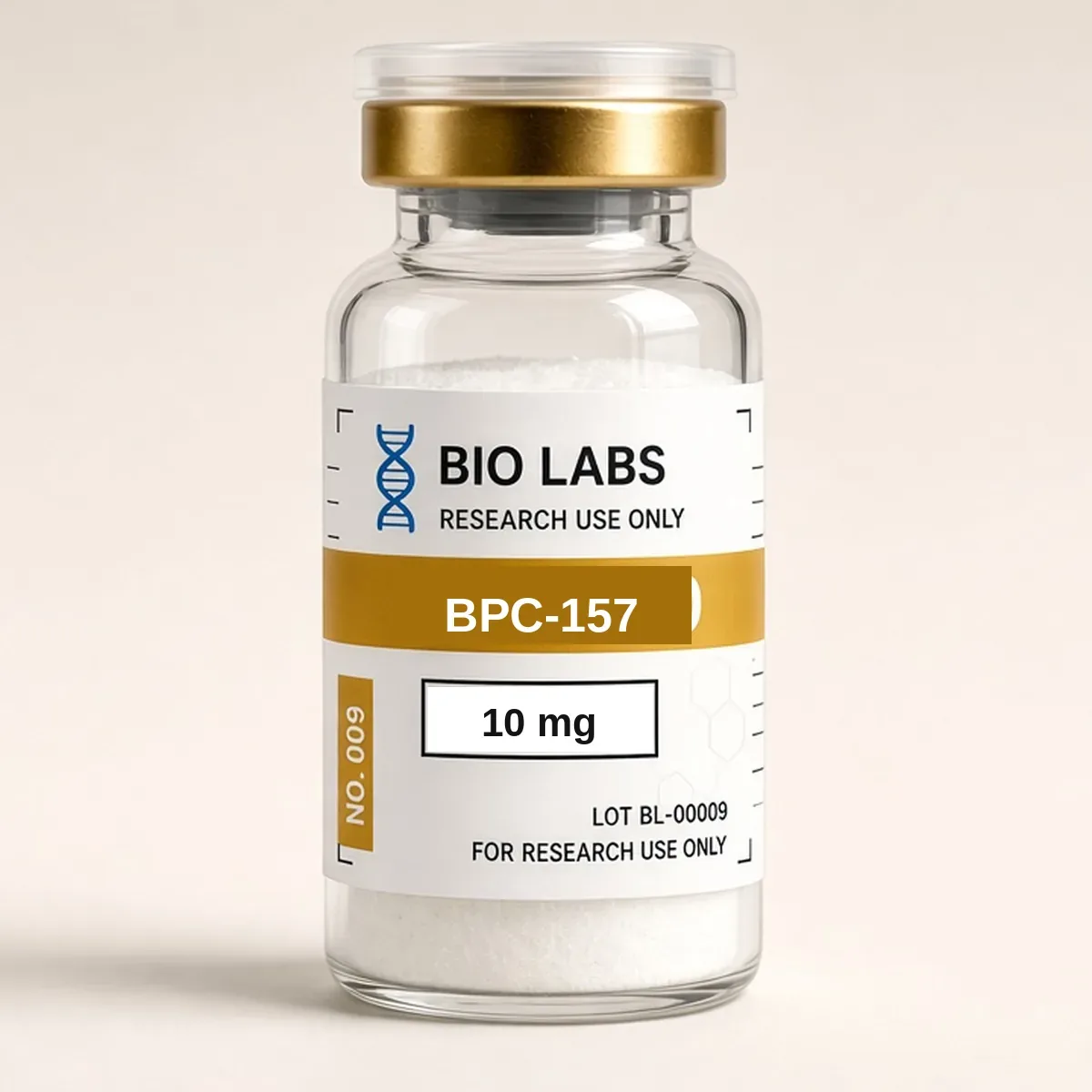
Field checklist
| Field | What “good” looks like | Common failure |
|---|---|---|
| Lot / batch ID | Matches the carton and invoice | Generic “house COA” with no lot |
| Sequence / structure | Printed and matches the SKU card | Nickname only |
| CAS (if applicable) | Matches the named structure | Wrong CAS borrowed from a related peptide |
| Observed mass (MS) | Consistent with theoretical mass | Missing MS with only HPLC% |
| HPLC area% | Method ID + wavelength stated | Orphan percentage with no method |
| NPC / counter-ion / water | Reported when claimed for weighing | Treating HPLC% as milligrams in the vial |
HPLC area% is not NPC
Read the longer walkthrough: HPLC area percent is not net peptide content. Also useful: Peptide purity and COA explained. For blend vials, remember two CAS lines — see One vial, two CAS numbers.
Public compound identity for a listed example such as BPC-157 should be checked on PubChem when you are confirming a CAS/CID pair on receiving paperwork (search the CAS printed on your lot docs at PubChem).
Vendor PDFs vs lot-tied certificates
Marketing decks often show a single HPLC chromatogram or a round purity number beside a product family photo. That artwork is not lot paper. Receiving should ask three questions: Does the PDF print a lot or batch ID? Does that ID match the carton? Does the method section describe the HPLC (and MS, if claimed) actually run on that batch?
If any answer is no, escalate before releasing the material to the bench. Some labs keep a “vendor literature” folder separate from “lot quality records” so auditors can see the difference. Crossing those folders is how a house percentage becomes an undocumented weighing factor months later.
Net peptide content, when you need it for solution preparation math, must be a reported field — not inferred from area%. Counter-ion and water statements matter for the same reason. If the certificate omits them, either weigh with the limitations documented or request a revised COA. Silent assumptions are not a quality system.
For blends, apply the same lot discipline twice: each component needs identity, and any purity-like number needs a method boundary. A single “98%” stamp on a two-peak chromatogram without peak assignment is not dual identity.
Build a simple release gate: no lot ID, no release; no MS when the SKU card implies a defined sequence, no release; HPLC% without method ID, hold for clarification. Document exceptions with a signed note — not a Slack message. That discipline is what turns “COA on request” into a traceable quality record instead of a brochure claim.
Request lot paper with your order
Listed reagents. Research use only.
Related notes
References
- PubChem compound search for CAS/CID verification on receiving. https://pubchem.ncbi.nlm.nih.gov/
- BioLabs Research: HPLC area percent vs net peptide content.
Research use only. Not for human consumption, self-administration, or therapeutic use. Laboratory reagent listing only.