🔥🔥

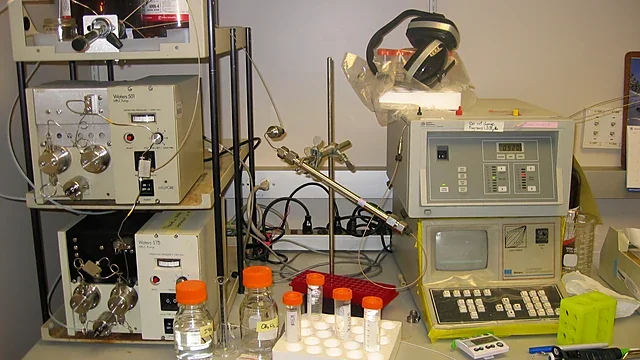
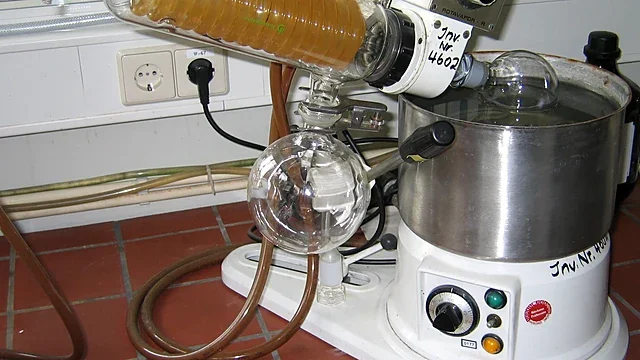
Photo: Rsparks3 / Wikimedia Commons (CC0) / own upload
Researchers at Hunan Normal University reported in Small Methods on 15 October an out-of-the-box benchmark of 10 publicly released tools that predict antimicrobial peptide minimum inhibitory concentrations from sequence. Most showed poor absolute MIC regression and limited transfer to an external dataset, while selected tools kept useful ranking and virtual-screening enrichment; reproducibility of the published implementations also varied. The authors position the tools as early screening filters, not substitutes for measured MICs.
🔥🔥
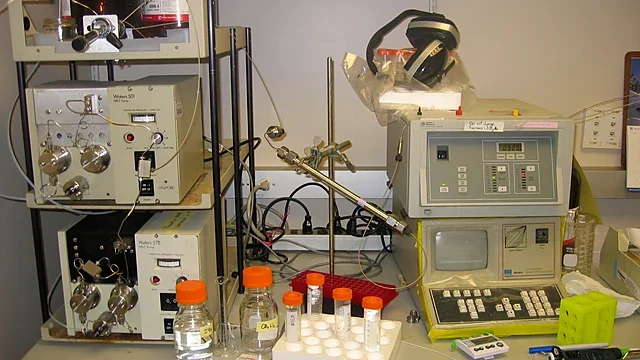
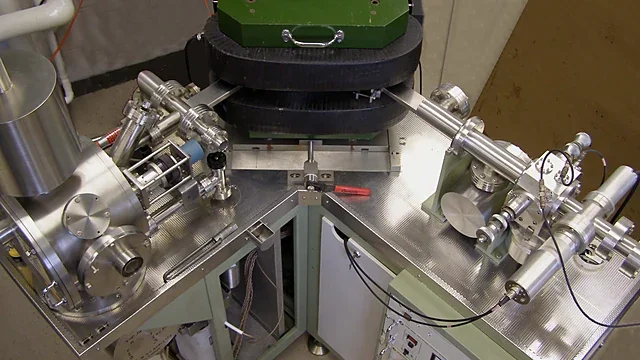
Photo: Kjaergaard at English Wikipedia / Wikimedia Commons (Public domain) / own upload
Researchers at the University of Tübingen, the Max Planck Institute for Multidisciplinary Sciences and University Medical Center Göttingen reported in Protein Science on 15 October NuXLApp, which combines the NuXL crosslink search engine, machine-learning rescoring, DIA spectral-library generation and interactive dashboards in shareable workspaces. On an E. coli peptide-RNA example dataset, rescoring raised identifications from 972 to 1,054 crosslink spectrum matches at 1% FDR. The code is BSD-licensed on GitHub.
🔥🔥
FRET sensor and AI peptide design combined to screen inhibitors of the Zika virus NS2B-NS3 protease
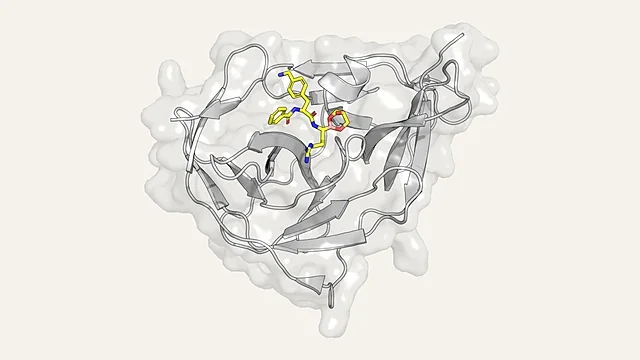
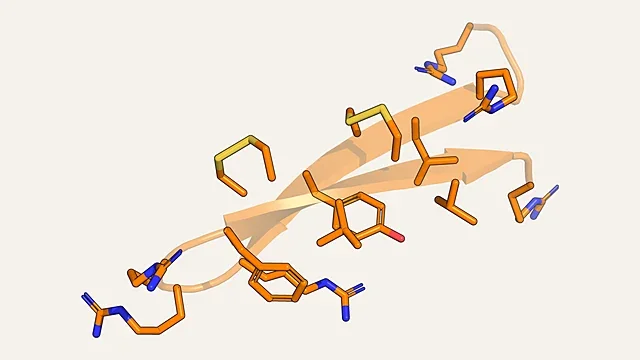
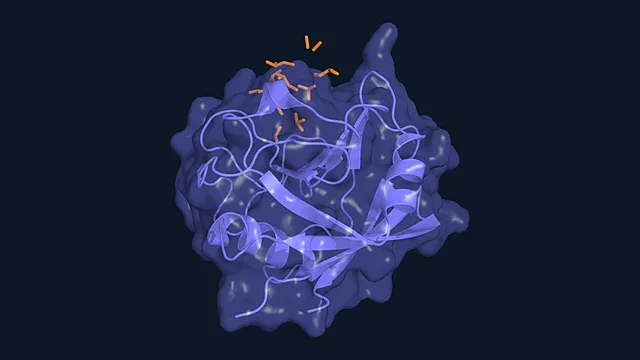
Photo: Image: BioLabs Research, rendered from PDB 5LC0 (RCSB PDB, CC0) / own upload
Researchers at Universidad Peruana de Ciencias Aplicadas in Lima reported in Scientific Reports on 15 October a recombinant FRET-based sensor for the Zika virus NS2B-NS3 protease, paired with de novo peptide generation (RFdiffusion, ProteinMPNN) and computational filtering by docking, AlphaFold-3 co-folding and molecular dynamics. Enzyme-assay screening found three candidate peptide inhibitors, the strongest with an IC50 of 214 micromolar. The study is an in vitro biochemistry and design workflow.
🔥
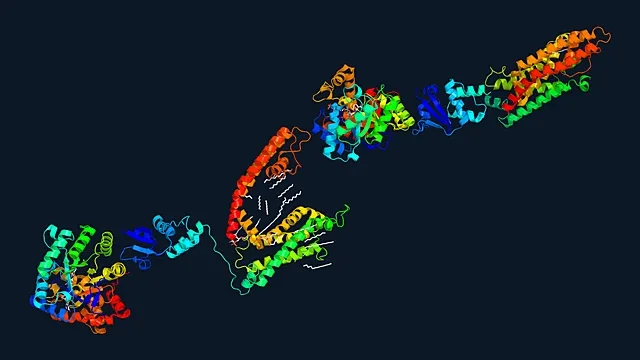
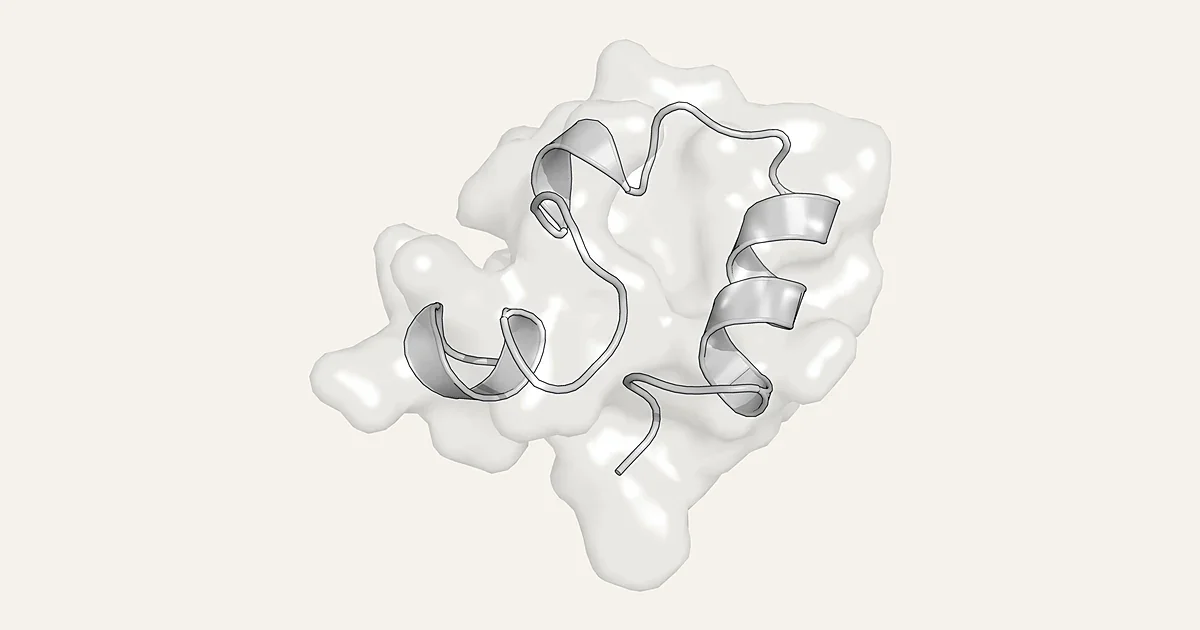
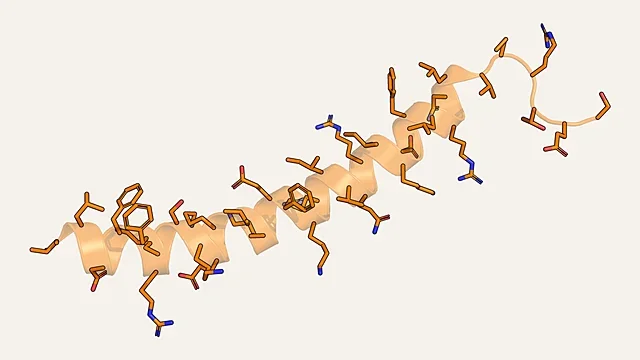
Photo: Image: BioLabs Research, rendered from PDB 2R9R (RCSB PDB, CC0) / own upload
Researchers at the University of Strasbourg and CNRS reviewed in the Journal of Peptide Science on 16 October solid-state NMR work on Aib-rich fungal peptaibols in lipid bilayers. Alamethicin mostly adopts transmembrane alignments and forms dimers or pentamers depending on concentration, while shorter peptaibols such as trichogin lie parallel to the surface and form in-plane tetramers; in a bacterial-membrane mimic even alamethicin lies flat. The work is model-membrane biophysics.
🔥
MAOMAO harmonises peptide toxicity annotations from 56 sources into one FAIR, ontology-guided resource
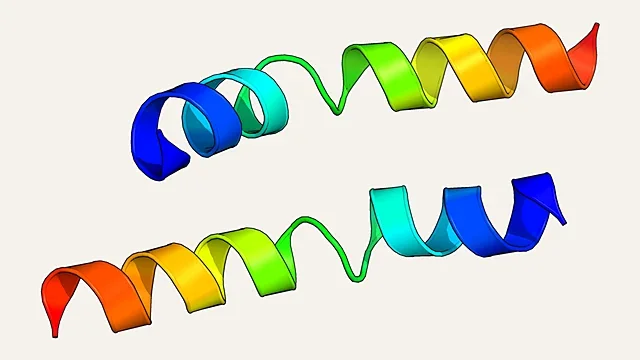
Photo: Image: BioLabs Research, rendered from PDB 2MLT (RCSB PDB, CC0) / own upload
Researchers at Universidad de Magallanes and Universidad del Desarrollo in Chile, with PEACCEL in France, reported in Frontiers in Pharmacology on 16 October MAOMAO, which maps toxicity annotations for 71,857 unique peptide sequences onto eight endpoints with evidence states, provenance, descriptors, protein-language-model embeddings and benchmark splits. The data are on Zenodo and the code on GitHub under an MIT licence; the authors note the splits are not similarity-controlled.
🔥
Astral analyzer benchmarked for metaproteomics on a 30-organism ground-truth microbial community
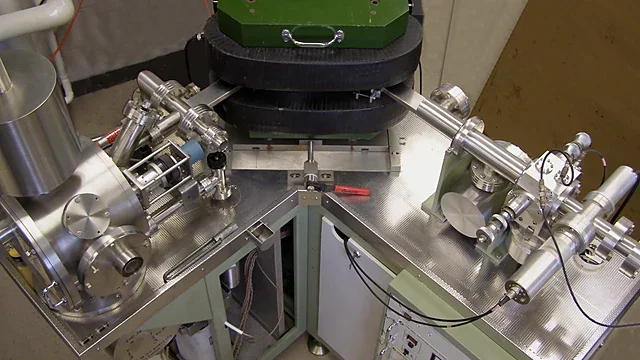
Photo: Radiogenic / Wikimedia Commons (CC0) / own upload
Researchers at Woods Hole Oceanographic Institution, the University of Minnesota, North Carolina State University and Thermo Fisher Scientific reported in the Journal of the American Society for Mass Spectrometry on 14 October a data-independent acquisition benchmark of an asymmetric track lossless (Astral) mass analyzer on a defined community of 30 microorganisms. Compared with an Orbitrap Fusion it improved depth and accuracy with acceptable precision; FAIMS added peptide identifications but cost precision and throughput.