NuXLApp brings protein-nucleic acid crosslinking mass spectrometry analysis into one open-source web app
Researchers at the University of Tübingen, the Max Planck Institute for Multidisciplinary Sciences and University Medical Center Göttingen in Germany reported in Protein Science, first published on 15 October, NuXLApp, an interactive web application for crosslinking mass spectrometry (XL-MS) studies of protein-nucleic acid interactions.
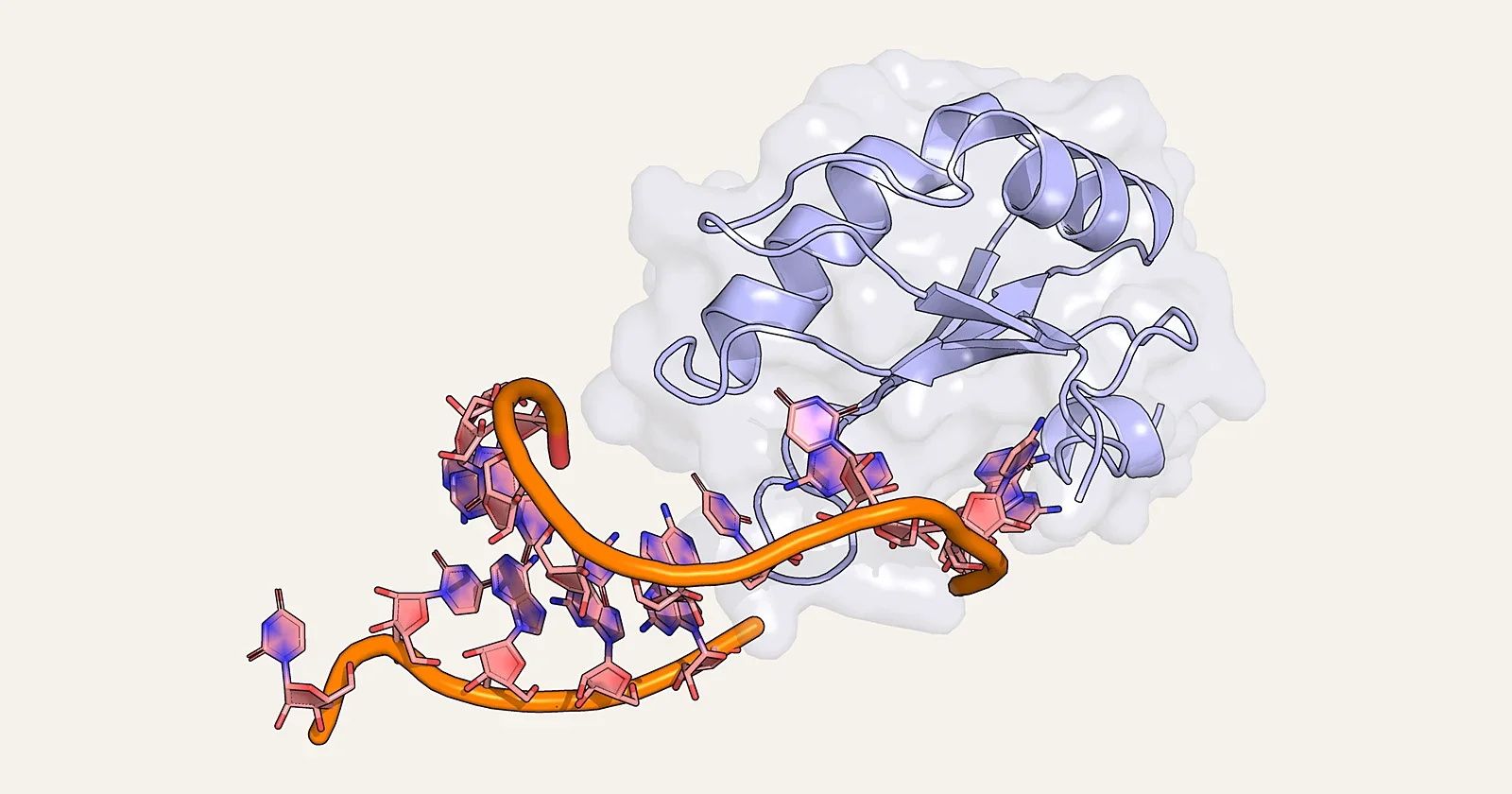
Summary. Researchers at the University of Tübingen, the Max Planck Institute for Multidisciplinary Sciences and University Medical Center Göttingen in Germany reported in Protein Science, first published on 15 October, NuXLApp, an interactive web application for crosslinking mass spectrometry (XL-MS) studies of protein-nucleic acid interactions. Analysing such data has typically meant moving files between a search engine, a separate spectrum viewer and a Python environment for rescoring. Built on the OpenMS WebApps framework, NuXLApp combines the NuXL crosslink search engine, rescoring with machine-learning predictions of peptide retention time and fragment intensity, spectral-library generation for data-independent acquisition (DIA) and interactive result dashboards in a single workspace.
Research context (RUO). On an example dataset of enriched peptide-RNA crosslinks from Escherichia coli treated with the crosslinker 1,2:3,4-diepoxybutane, the NuXL search identified 972 crosslink spectrum matches at a 1% false discovery rate; adding the data-driven features raised this to 1,054 (+8.4%) at the same threshold. Methionine, cysteine and histidine were the residues most often crosslinked, and the resulting DIA spectral library held 775 unique precursors from 306 proteins. Workspaces can be bookmarked and shared, and the app runs as a hosted service, as a Windows executable or in Docker. The source code is on GitHub under the BSD 3-Clause licence. The paper is a software and methods report with no clinical component. For proteomics and RNA-biology laboratories, the contribution is a reproducible, single-interface route from raw crosslinking data to quantitative follow-up experiments.