Research comparison
GHK-Cu vs BPC-157: research comparison
GHK-Cu and BPC-157 are both present in the BioLabs Research catalog but represent unrelated chemical identities. GHK-Cu is a copper(II)–tripeptide complex; BPC-157 is a pentadecapeptide. Comparing them is useful for procurement clarity, not because they share a pathway label in marketing copy.
Quick comparison
| Field | First | Second |
|---|---|---|
| CAS | 89030-95-5 | 137525-51-0 |
| Formula | C14H22CuN6O4 | C62H98N16O22 |
| MW (approx.) | ~403.9 Da | ~1419.5 Da |
| Sequence / identity | GHK·Cu | GEPPPGKPADDAGLV |
| Catalog | Yes — GHK-Cu | Yes — BPC-157 |
GHK-Cu
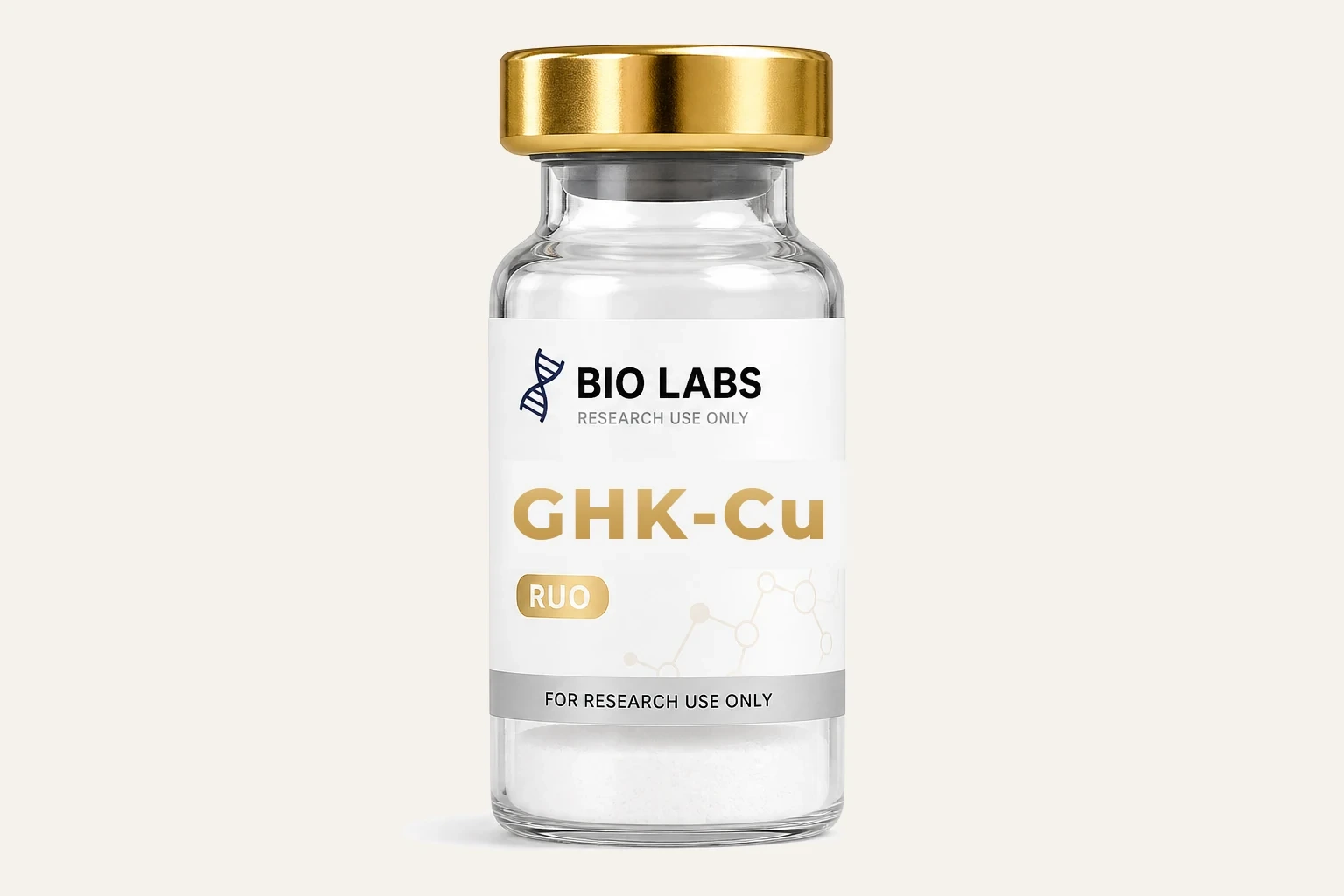
GHK-Cu (CAS 89030-95-5) is listed with formula C14H22CuN6O4 and approximate MW ~403.9 Da on site identity strips. The copper complexation is part of the identity — a copper-free GHK listing would be a different reagent. Research literature often places GHK-Cu in extracellular matrix and copper-handling model systems.
See GHK-Cu copper peptide research and GHK-Cu product. ECM-70 is a separate named blend SKU that should not be confused with neat GHK-Cu.
BPC-157
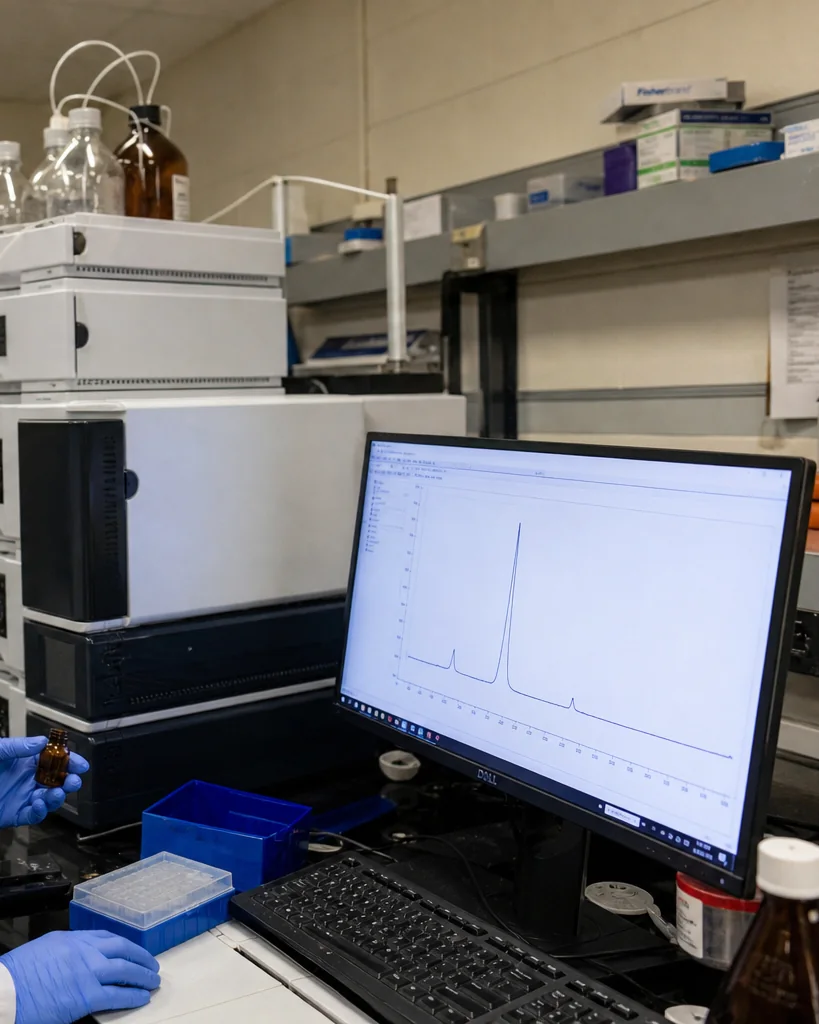
BPC-157 (CAS 137525-51-0) carries formula C62H98N16O22, MW ~1419.5 Da, and sequence GEPPPGKPADDAGLV on this site. It contains no copper center. Analytical expectations (HPLC, MS) differ from metal–peptide complexes; treat COA methods accordingly.
Overview: BPC-157 research overview · product.
Key differences
- Metal complex (Cu) vs non-metallated pentadecapeptide.
- Different CAS, formula, MW, and sequence.
- Distinct research literature clusters; not drop-in replacements.
- Both sold as separate catalog vials with their own strength options.
Which for which research context
GHK-Cu when the protocol requires the copper–tripeptide complex (CAS 89030-95-5).
BPC-157 when the protocol requires GEPPPGKPADDAGLV / CAS 137525-51-0.
References
- GHK-Cu: PubChem CID 378611 · CAS 89030-95-5
- BPC-157: PubChem CID 9941957 · CAS 137525-51-0
All discussion on this page is limited to chemical identity, public registry identifiers, and laboratory research framing. BioLabs Research lists reagents for in-vitro and analytical work only. Confirm vial strengths on the product page.
Related reading: blog, Science, reading a COA, Shipping.
Copper–peptide handling may involve additional laboratory safety notes versus plain peptides; follow SDS guidance for metal-containing reagents. Lab COA PDFs are published per product where available in our COA library; others on request.
Word-of-mouth blend names (for example ECM-70) can include multiple components — always open the product identity strip rather than assuming “GHK-Cu equivalent.”
For laboratory research use only. Not for human or veterinary use. No medical claims; no human dosing guidance.