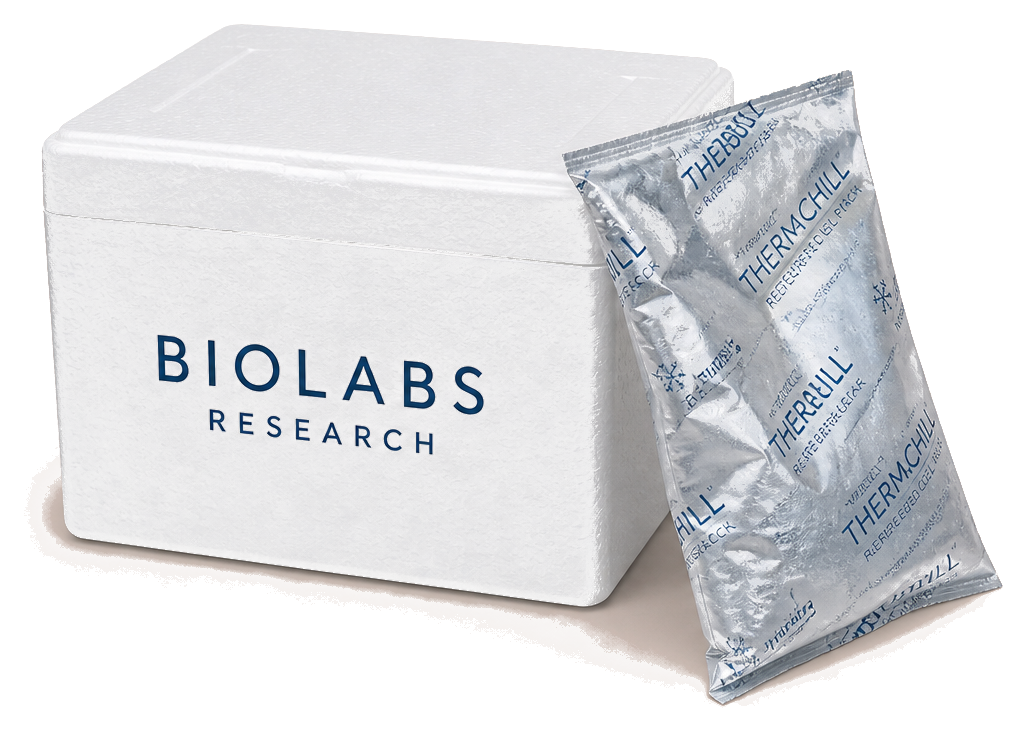
Shipping cold-chain for research reagents
Temperature-sensitive research lots leave the warehouse with cold-chain packing when the SKU requires it. That packing rides on the same carrier options shown…
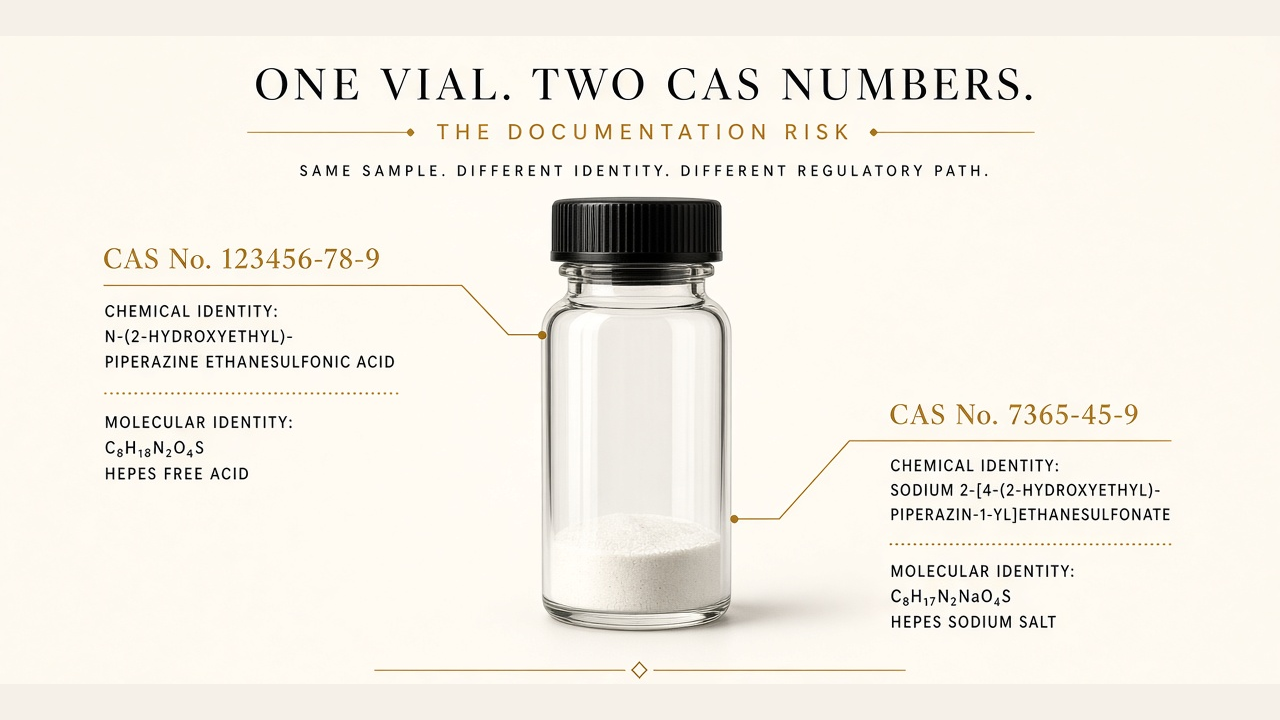
One vial, two CAS numbers
CAS Registry Numbers index defined substances (or defined salts), not storefront mix names. When two peptides share one vial, the correct label is…
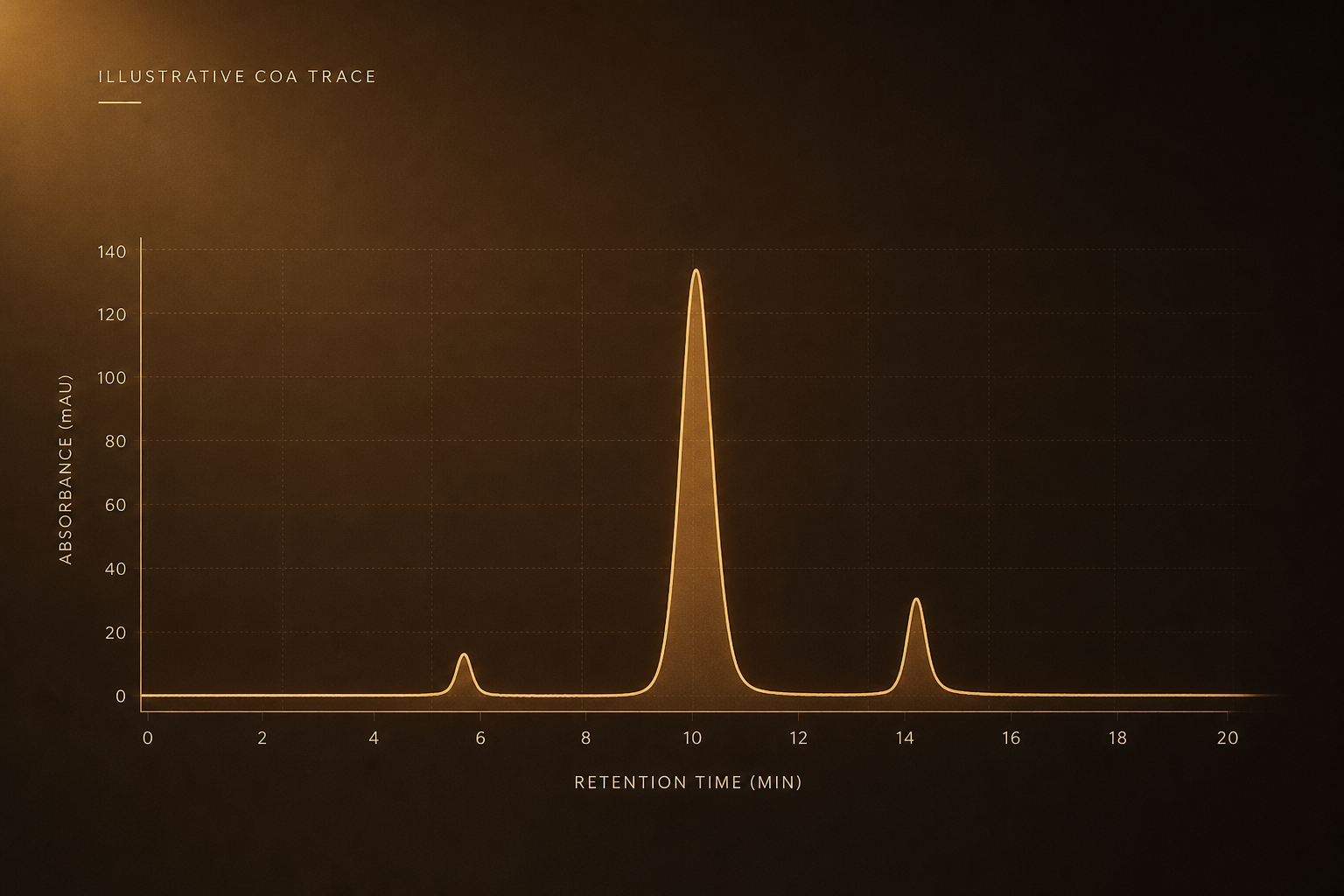
Lot COA, not a purity percentage
A Certificate of Analysis (COA) is lot paper, not a marketing badge. It is tied to a batch identifier. The useful fields are…
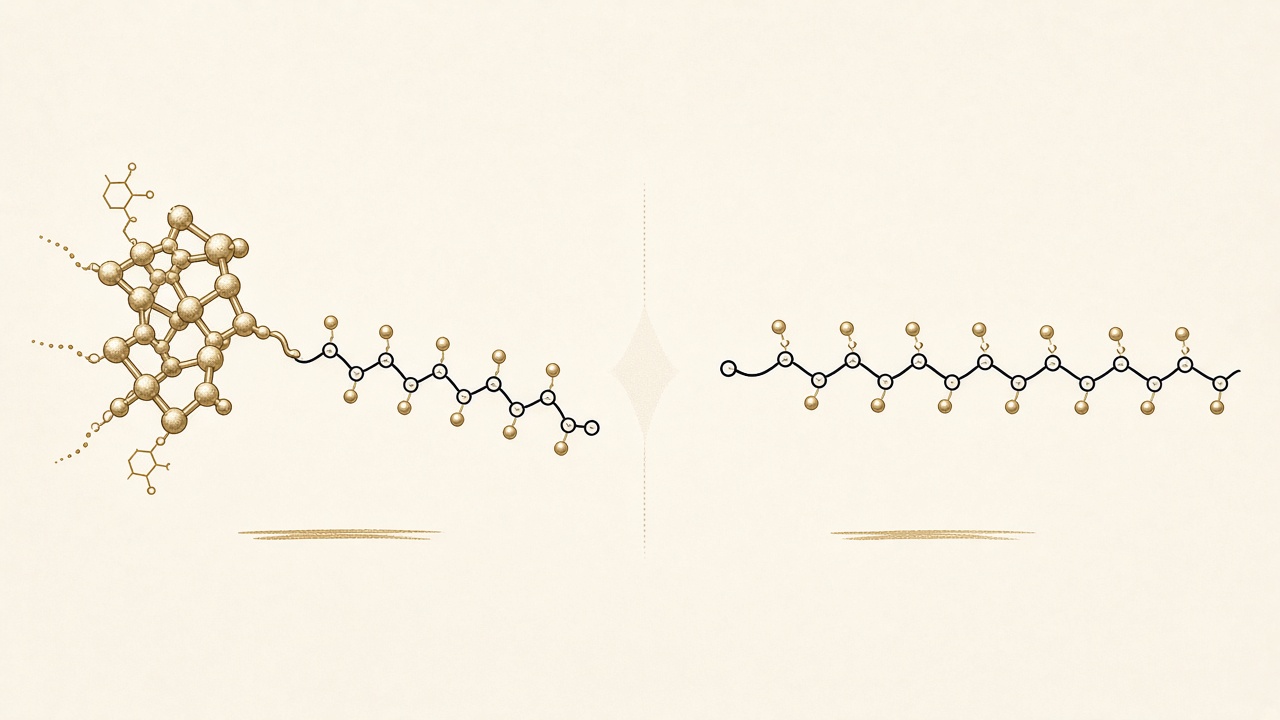
DAC vs no-DAC is a formula difference
“DAC” in peptide listings usually points to a Drug Affinity Complex-style chemical modification — commonly a maleimidopropionyl handle on a lysine — that…
Catalog SKUs vs research analogues
This storefront lists a fixed set of research reagents. A name that circulates in the wider research literature is not automatically a SKU…
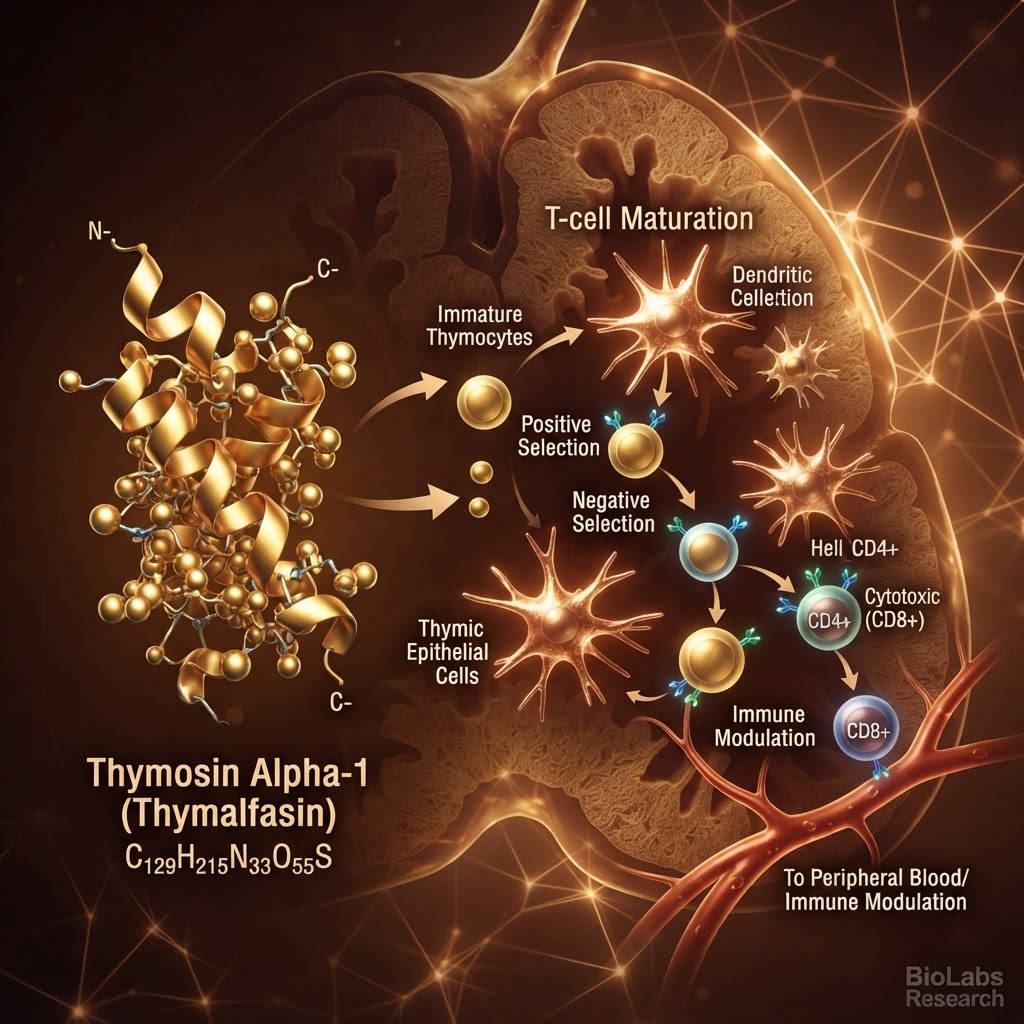
Thymosin Alpha-1 Is the 28-Residue N-Acetyl Peptide, Not TB-500
Thymosin alpha-1 is a 28-residue peptide with an N-acetyl serine: Ac-SDAAVDTSSEITTKDLKEKKEVVEEAEN. The international nonproprietary name is thymalfasin. It is chemically unrelated to thymosin…
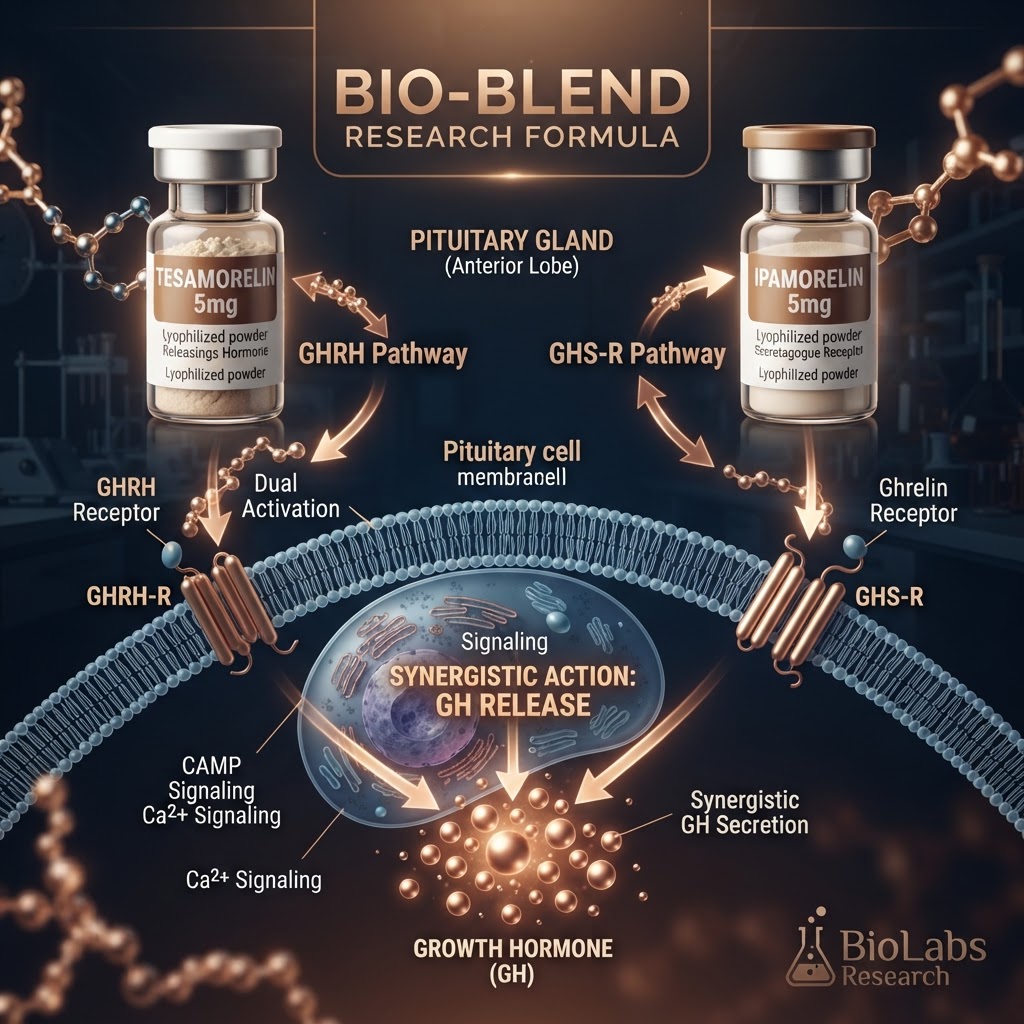
Tesamorelin / Ipamorelin: Two CAS Numbers on One Vial
One catalog SKU can still be two chemicals. Tesamorelin / ipamorelin on this site is a blend listing: two CAS numbers, two sequences,…
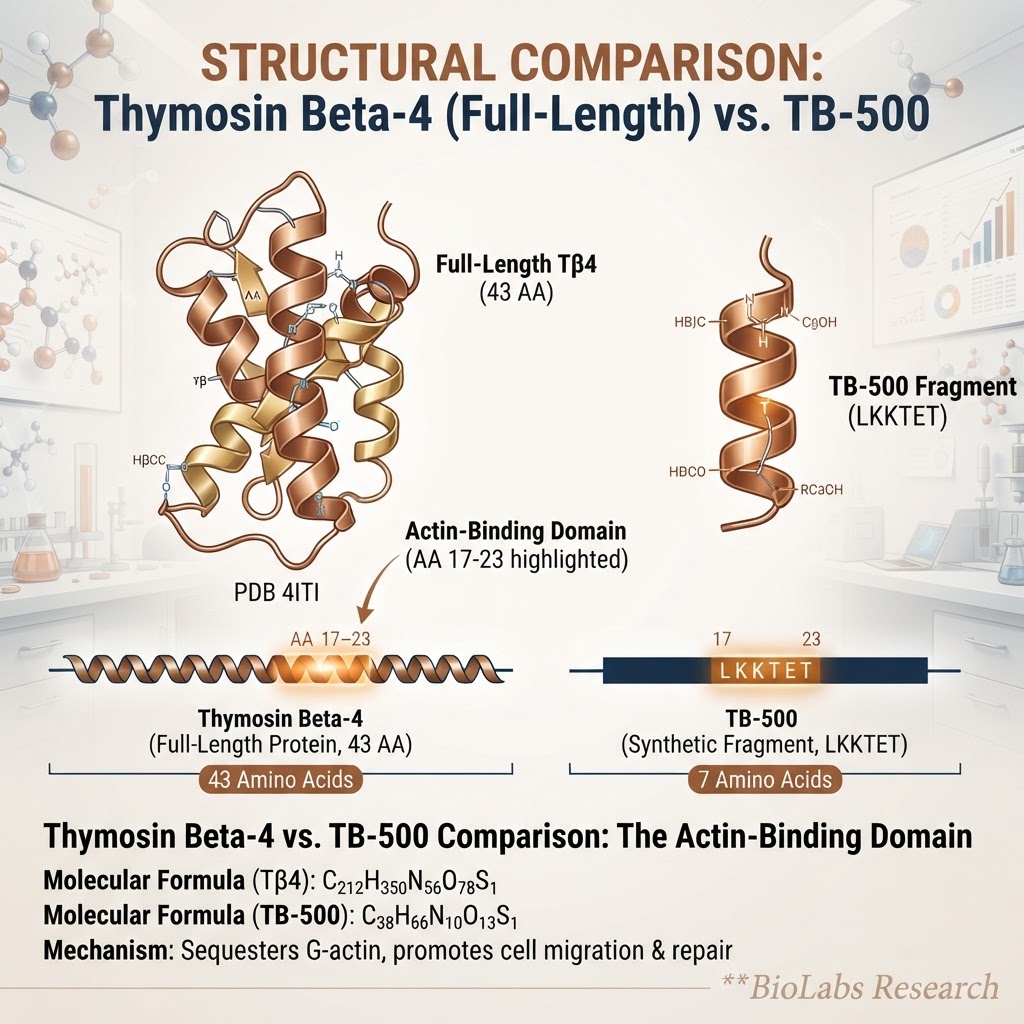
TB-500 vs Thymosin β4: Which Sequence Is on the Vial
Two different molecules share the shop name “TB-500.” Full-length thymosin β4 is a 43-residue actin-binding peptide, commonly indexed as CAS 77591-33-4. BioLabs Research…
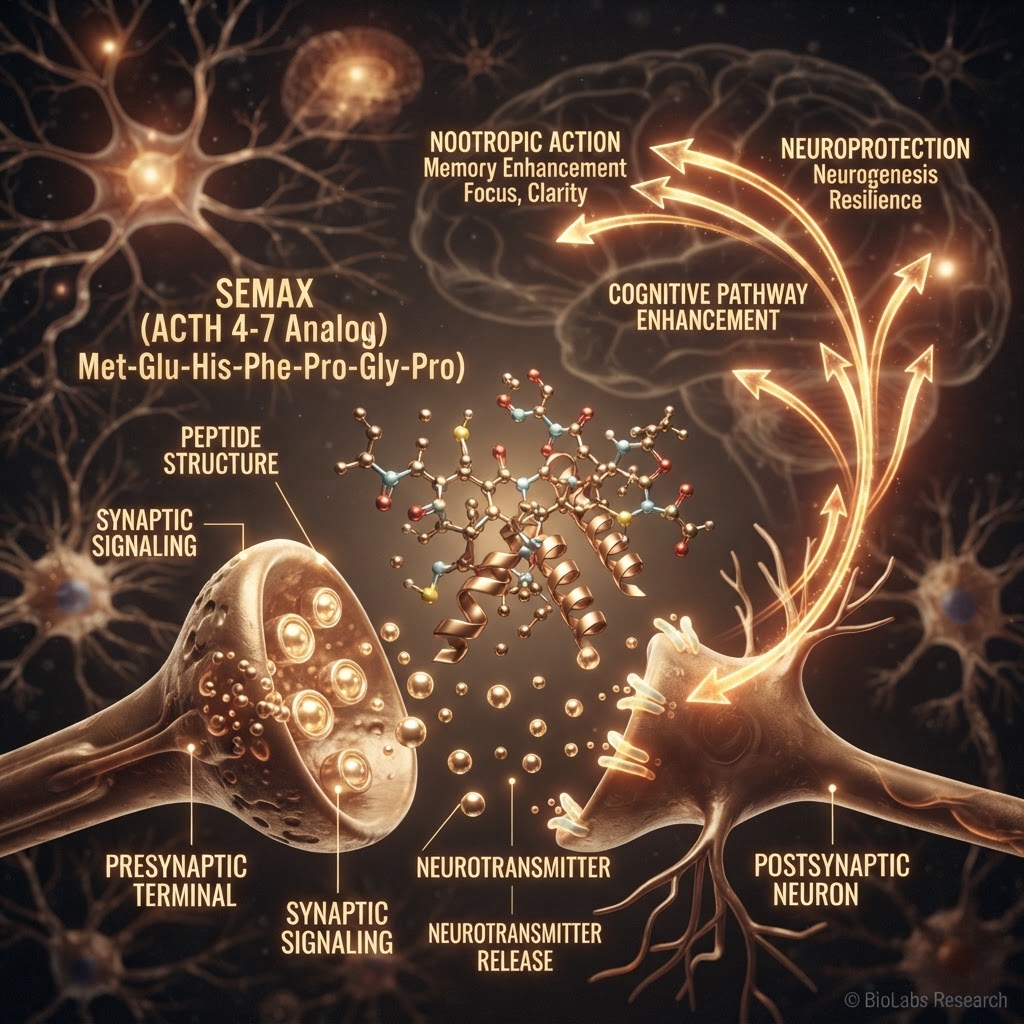
Semax Is ACTH(4–7)-PGP, Sequence MEHFPGP
Semax is a synthetic heptapeptide built as ACTH(4–7) with a C-terminal Pro-Gly-Pro (PGP) extension. The one-letter sequence is MEHFPGP: Met-Glu-His-Phe-Pro-Gly-Pro. It is not…
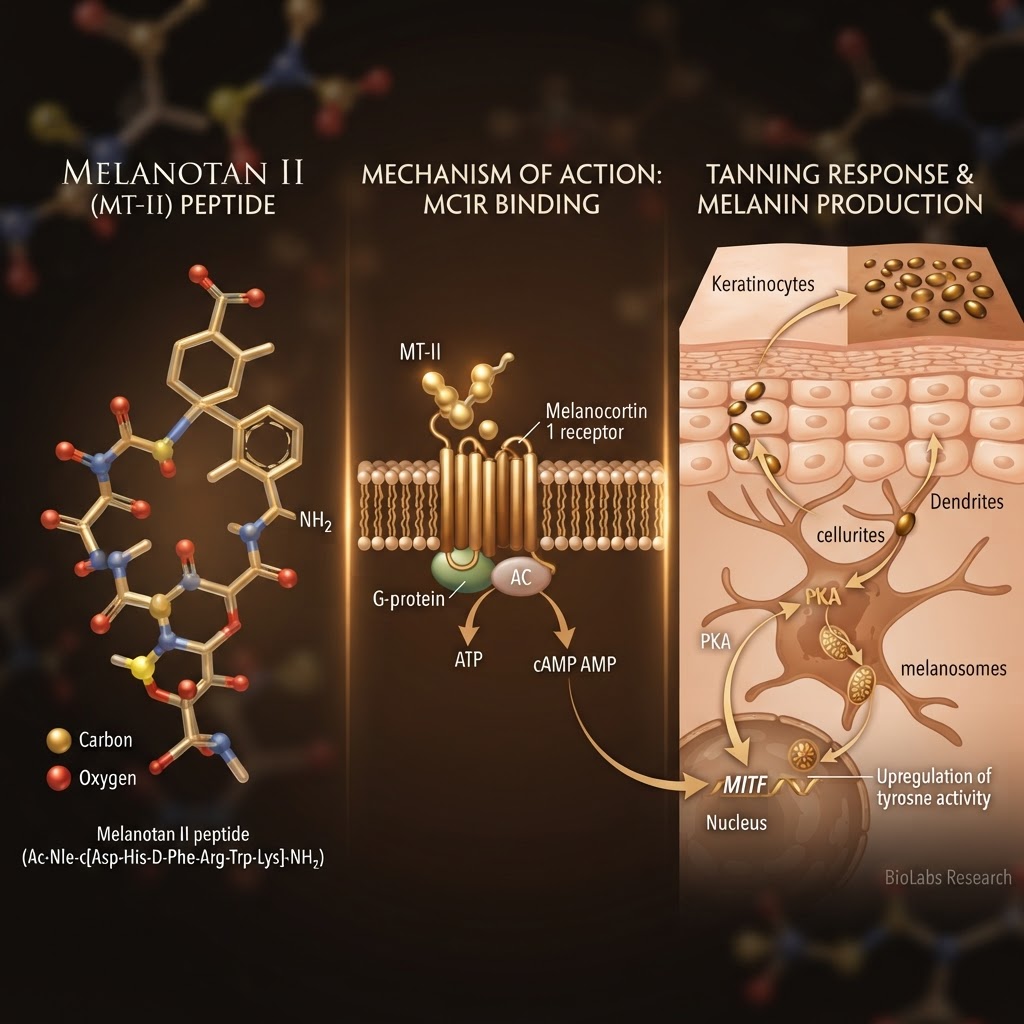
Melanotan II Is a Cyclic α-MSH Analogue, Not a Catalog SKU
Melanotan II (MT-II) is a synthetic cyclic lactam analogue of α-melanocyte-stimulating hormone (α-MSH). Purchasing teams see the name on forums, PO templates, and…
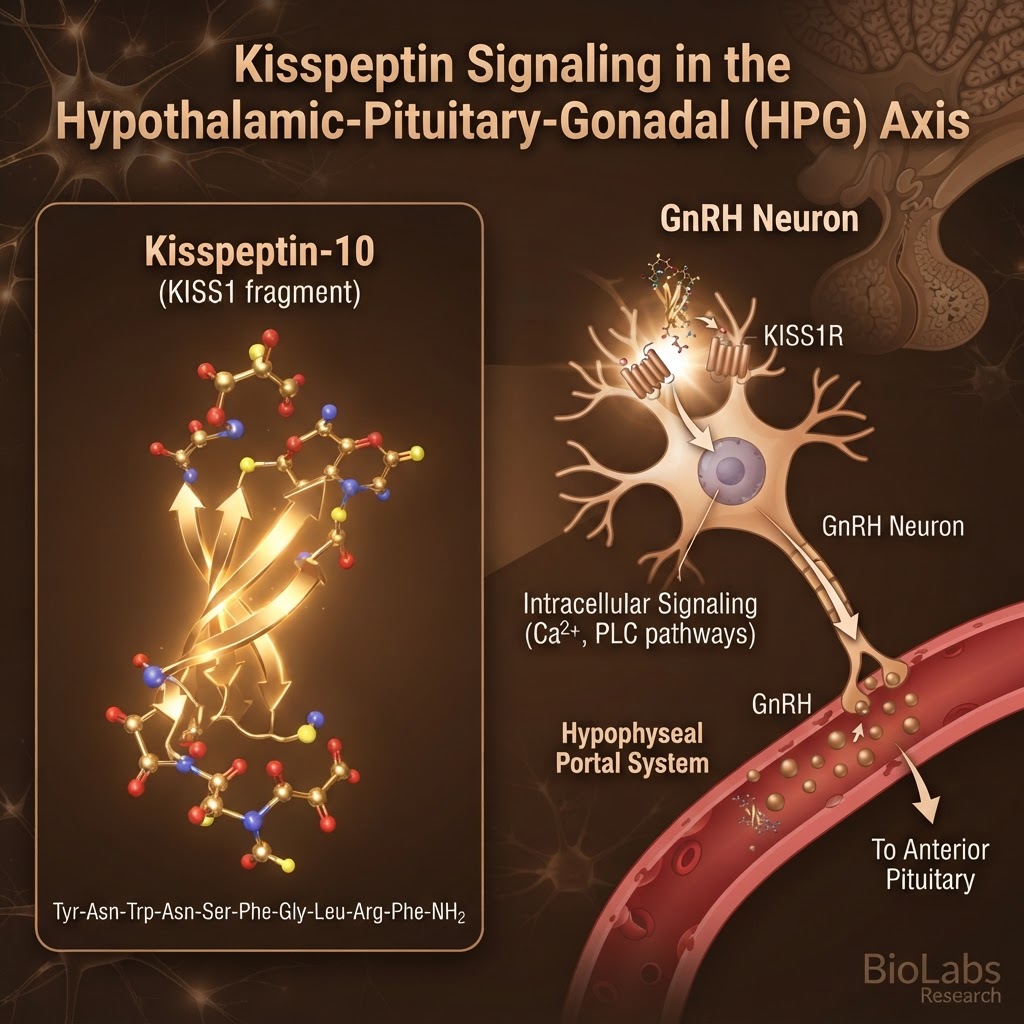
Kisspeptin-10 Is the C-Terminal KISS1 Decapeptide Amide
Laboratory purchasing note: keep identity fields (sequence or structure, registry numbers when applicable, and observed mass) on the same record as the physical…
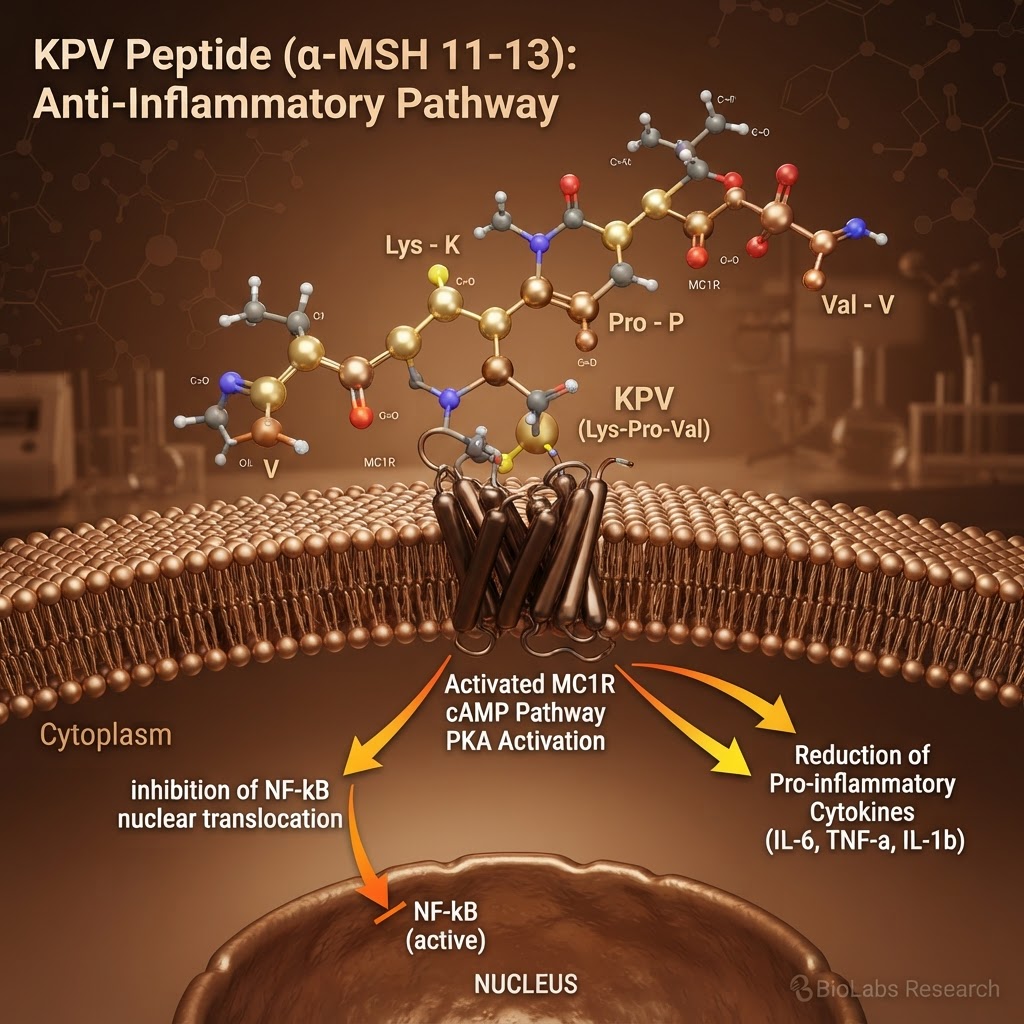
KPV Is α-MSH 11–13, Not the Whole Hormone
Catalog cards often print “KPV” as if that three-letter code were a hormone. It is not. KPV is the C-terminal tripeptide of α-melanocyte-stimulating…
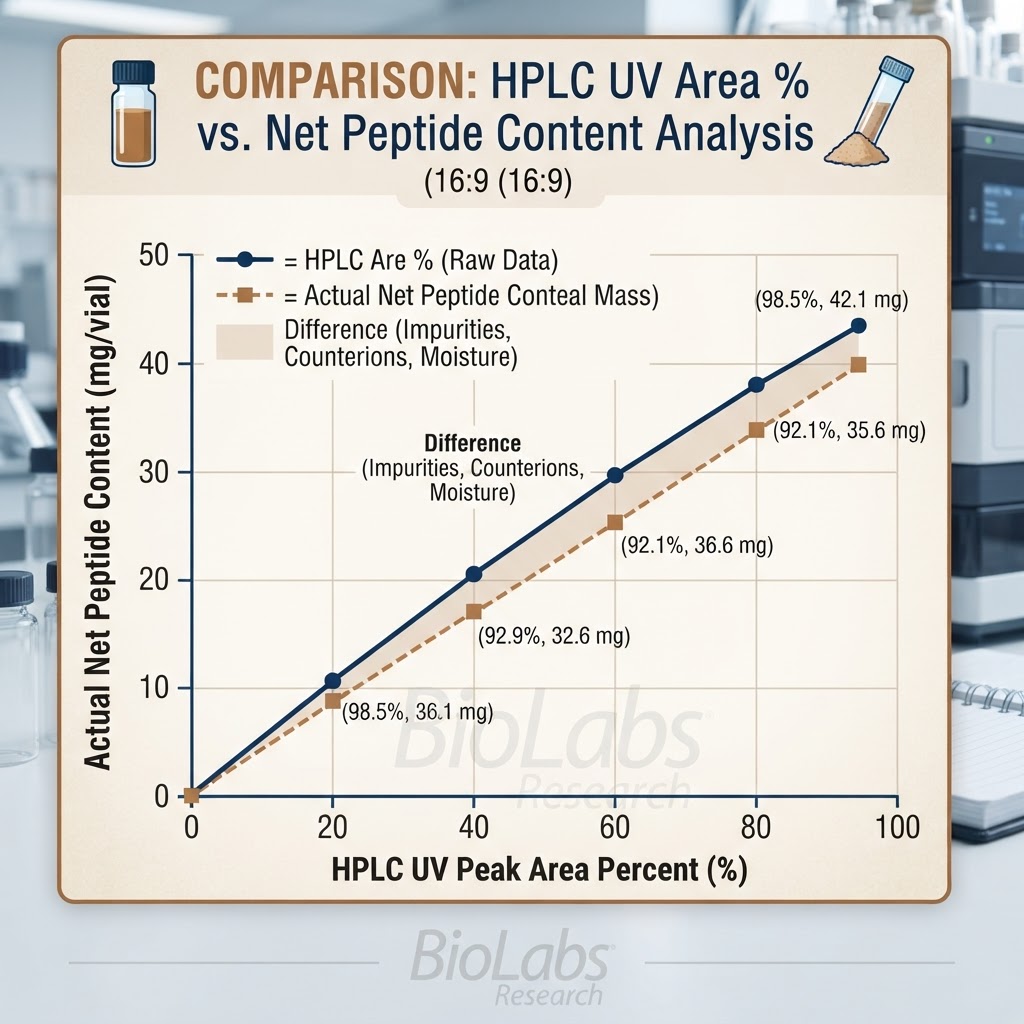
HPLC Area Percent Is Not Net Peptide Content
A catalog line that says “98% pure” is not a mass of peptide. On a reversed-phase HPLC trace, that number is almost always…
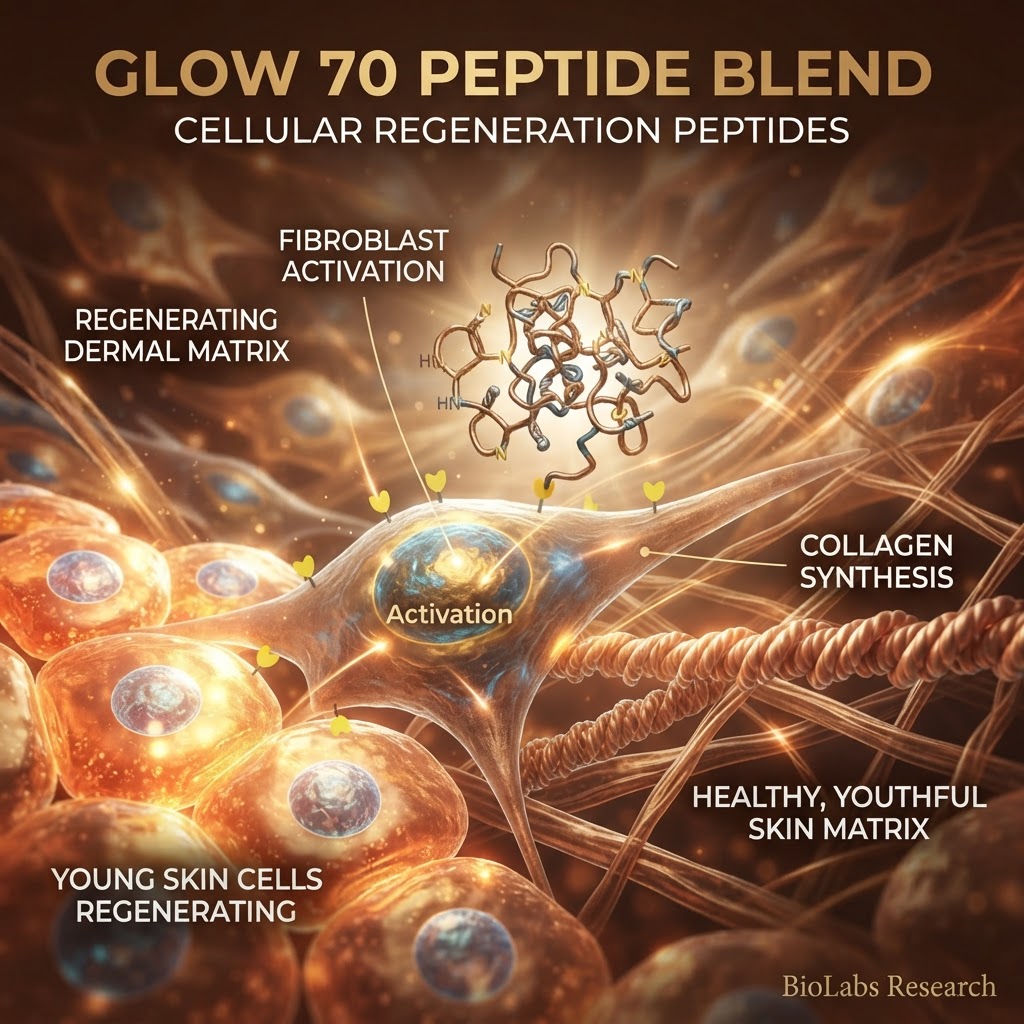
GLOW 70 Is a Named Catalog Blend, Not a CAS Number
GLOW 70 is a named catalog blend. It is not a CAS number. A trade name on a vial does not mint a…
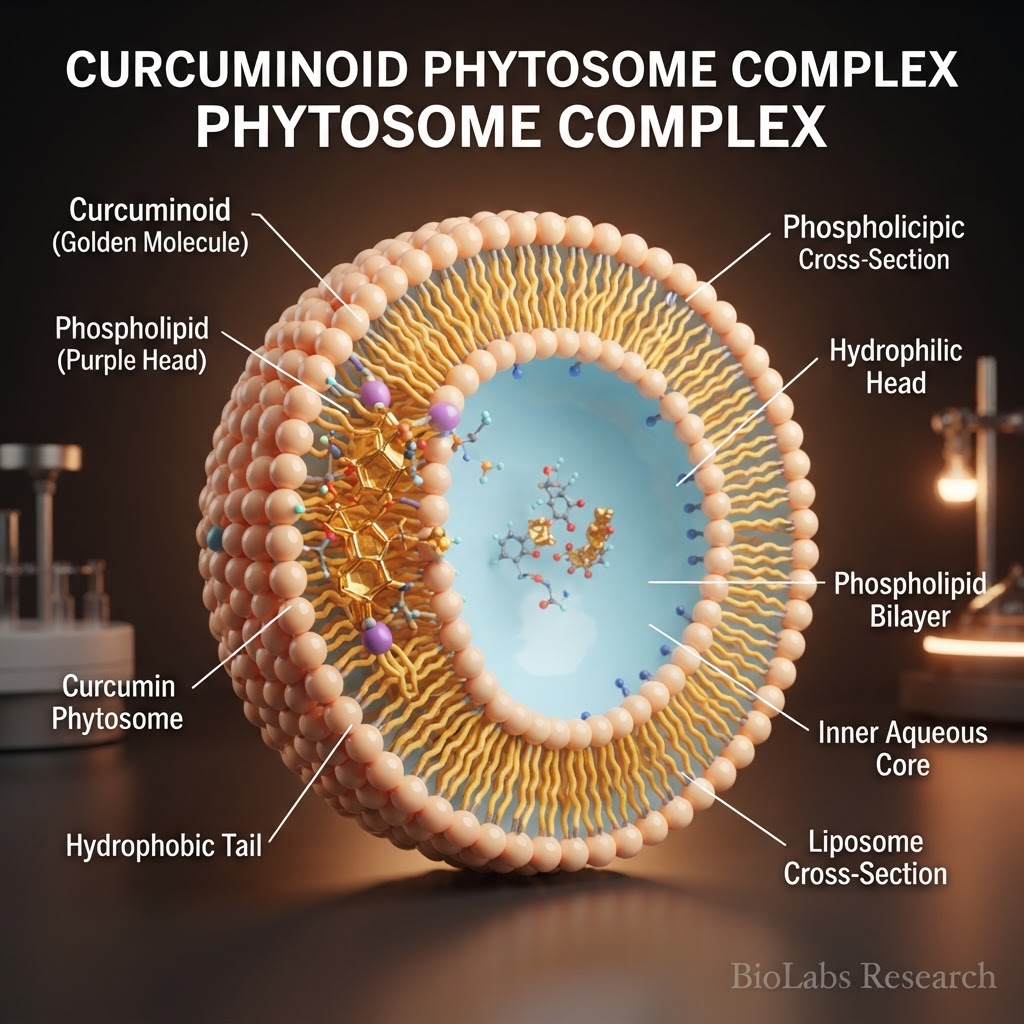
Curcumin Phytosome Is a Complex, Not a Peptide CAS
Curcumin phytosome is not a peptide and it does not have a peptide CAS. Curcumin itself is diferuloylmethane, a diarylheptanoid polyphenol. A phytosome,…
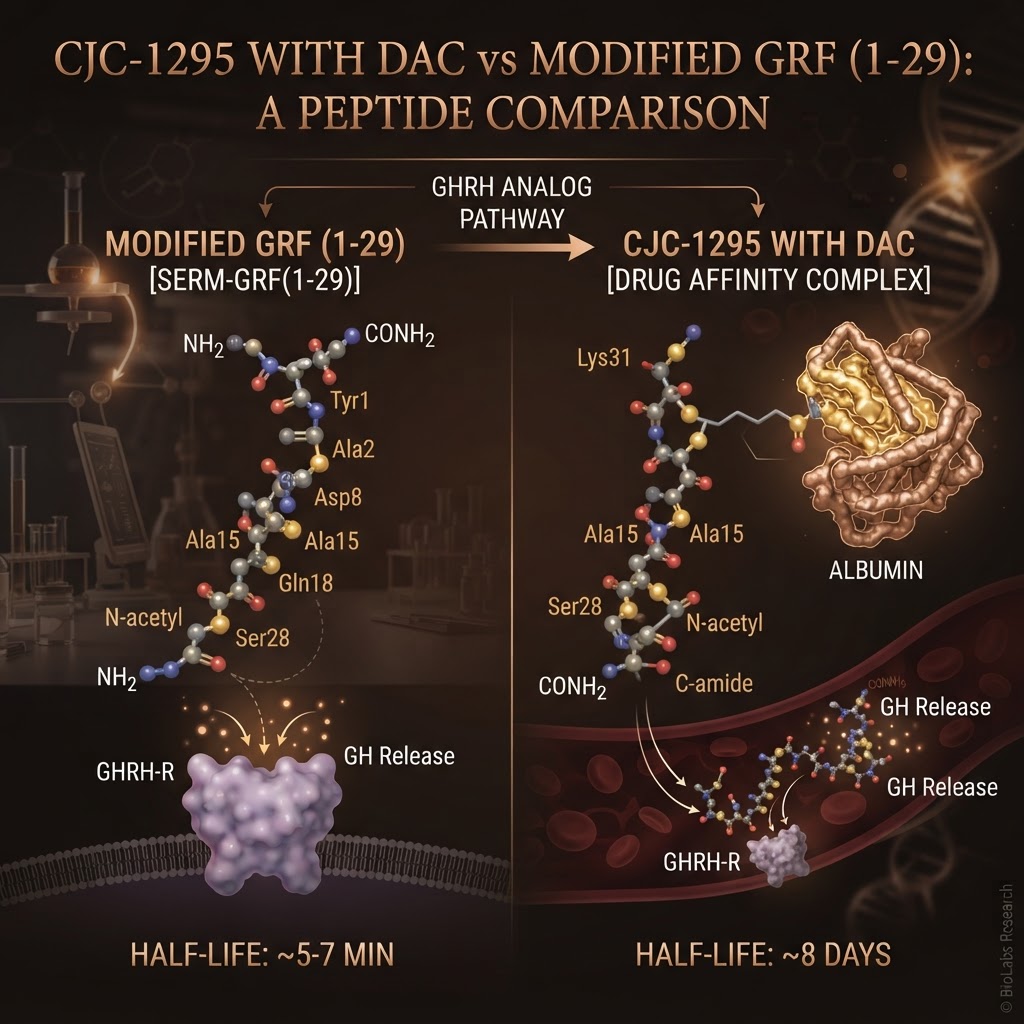
CJC-1295 With DAC and Without DAC Are Different Molecules
“CJC-1295” is used for two backbones. One carries a C-terminal Lys with a maleimidopropionyl (DAC) handle. The other is tetrasubstituted GRF(1–29) amide without…
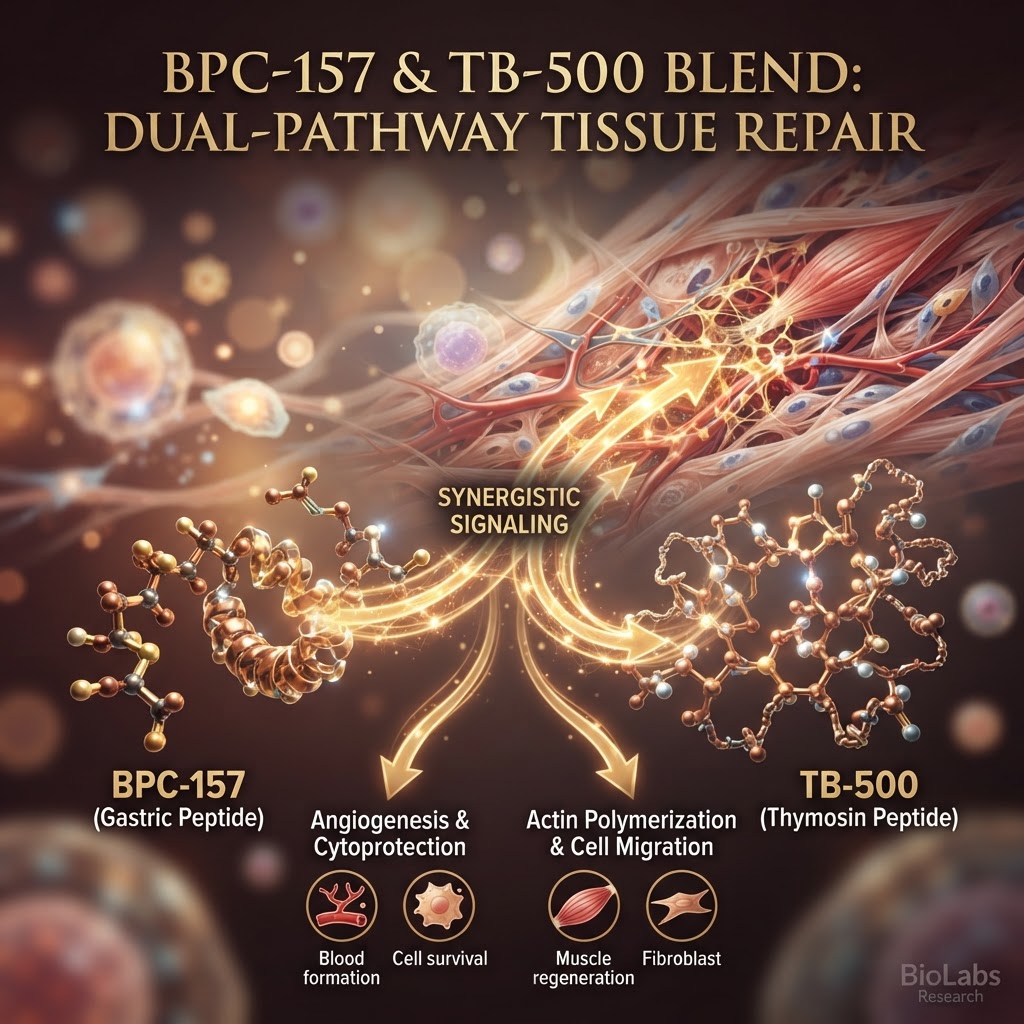
BPC-157 / TB-500 Blend: Two Sequences, Two Masses
A BPC-157 / TB-500 blend is two peptides in one vial, not a new substance. BPC-157 is a 15-residue gastric-derived fragment with its…
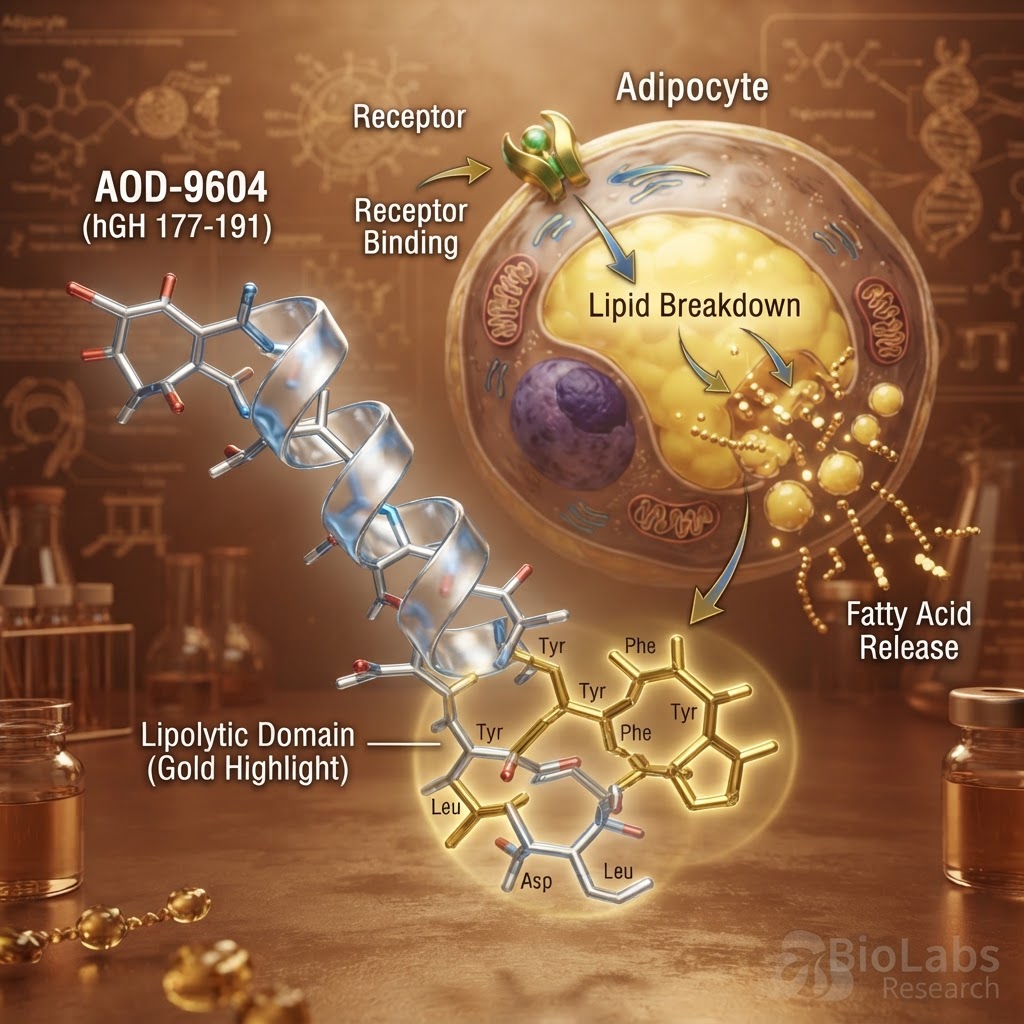
AOD-9604 vs hGH 177–191: Match the Sequence on the Vial
Catalog names in this class get reused until they stop meaning anything. “AOD-9604,” “hGH 177–191,” “hGH 176–191,” and “fragment 176–191” are not automatically…

What Is BPC-157? A Research Overview
BPC-157 (Body Protection Compound-157) is a synthetic pentadecapeptide derived from a sequence found in human gastric juice. Composed of 15 amino acids, it…
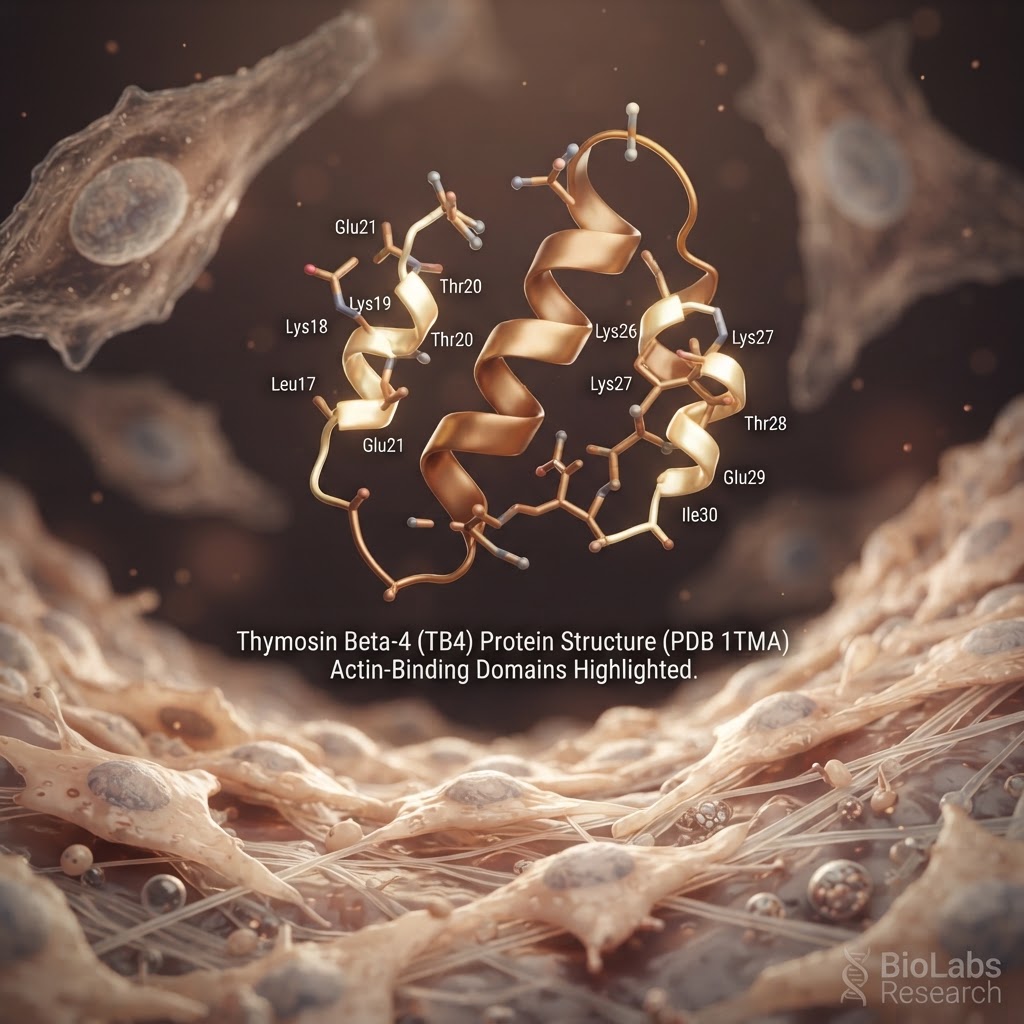
TB-500 (Thymosin Beta-4) Research Overview
TB-500 is a synthetic fragment of Thymosin Beta-4 (Tβ4), a 43-amino acid peptide naturally found in many tissues. TB-500 has been studied extensively…
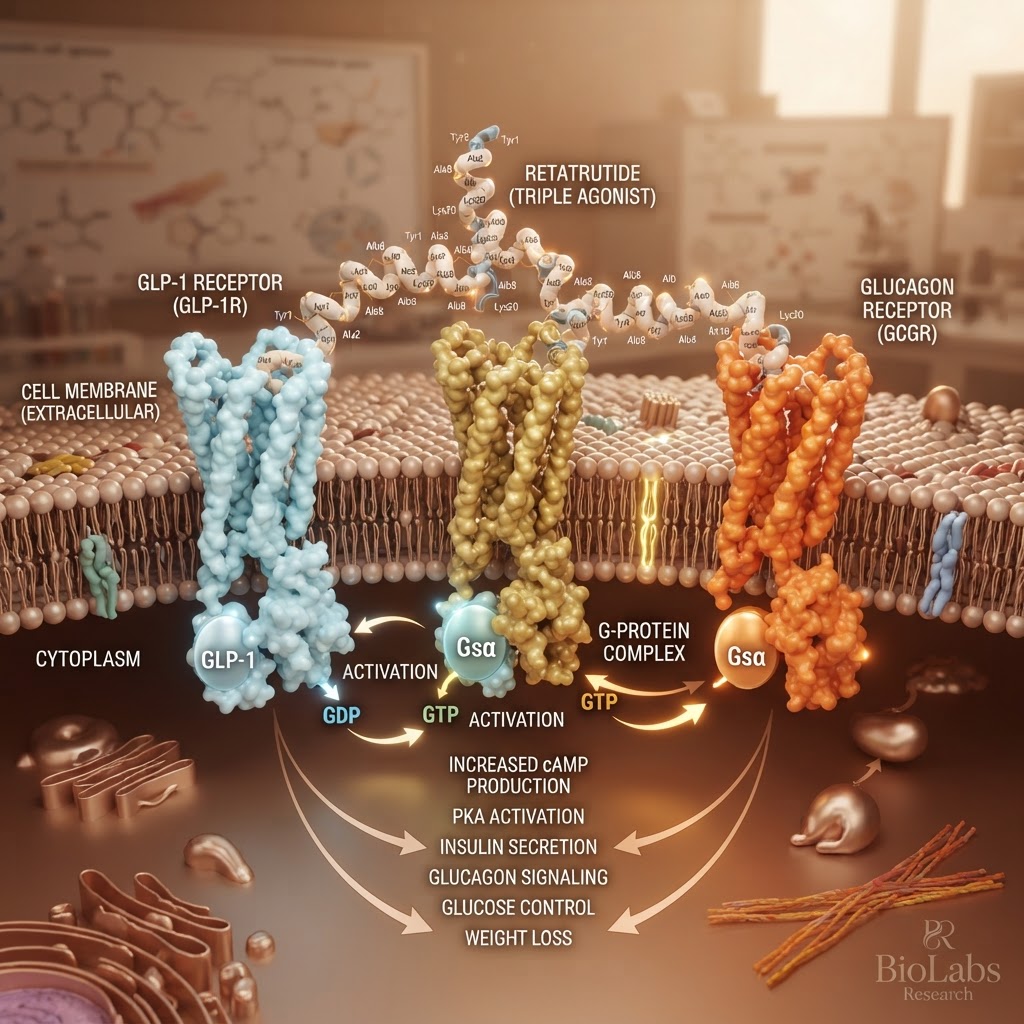
R3TA (Retatrutide): Metabolic Research Overview
R3TA (retatrutide, LY3437943) is a triple hormone receptor agonist that simultaneously targets GLP-1 (glucagon-like peptide-1), GIP (glucose-dependent insulinotropic polypeptide), and glucagon receptors. It…
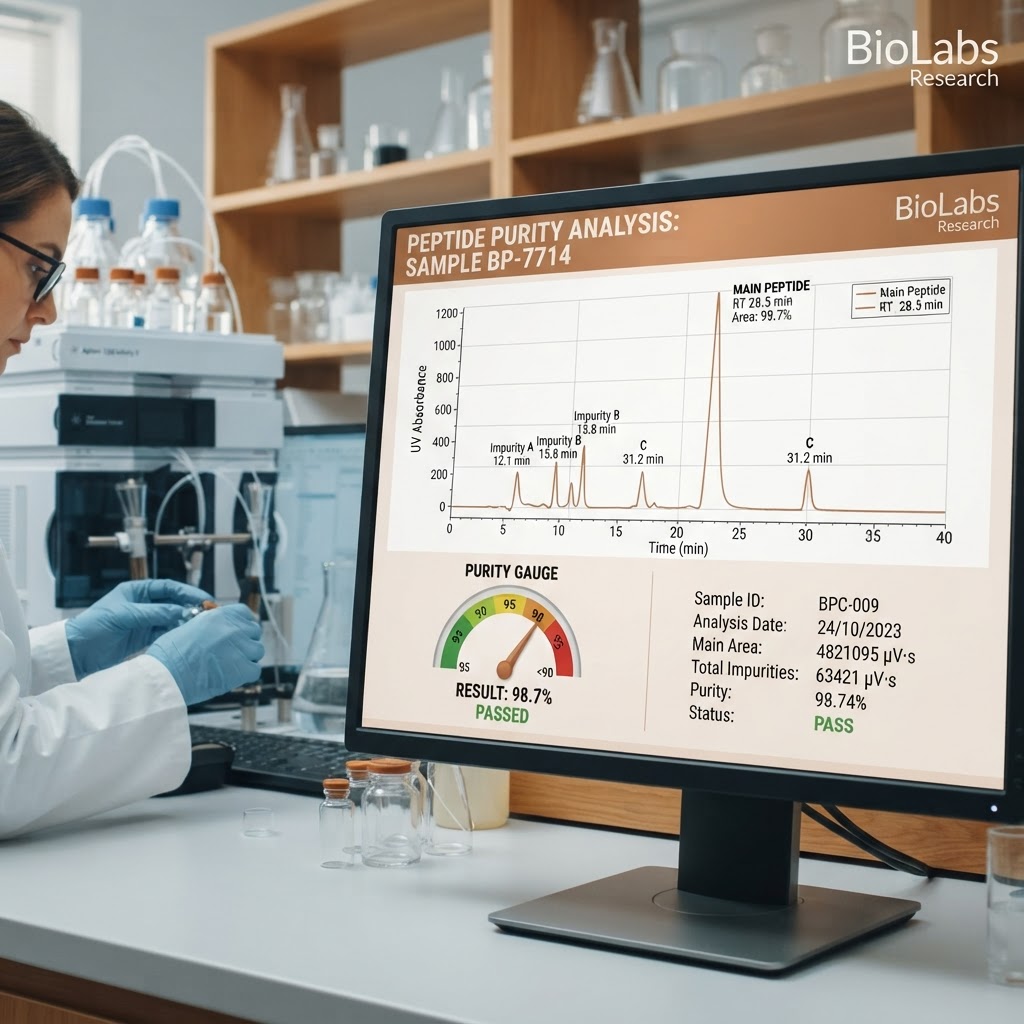
Peptide Purity and COA Explained
Laboratory purchasing note: keep identity fields (sequence or structure, registry numbers when applicable, and observed mass) on the same record as the physical…
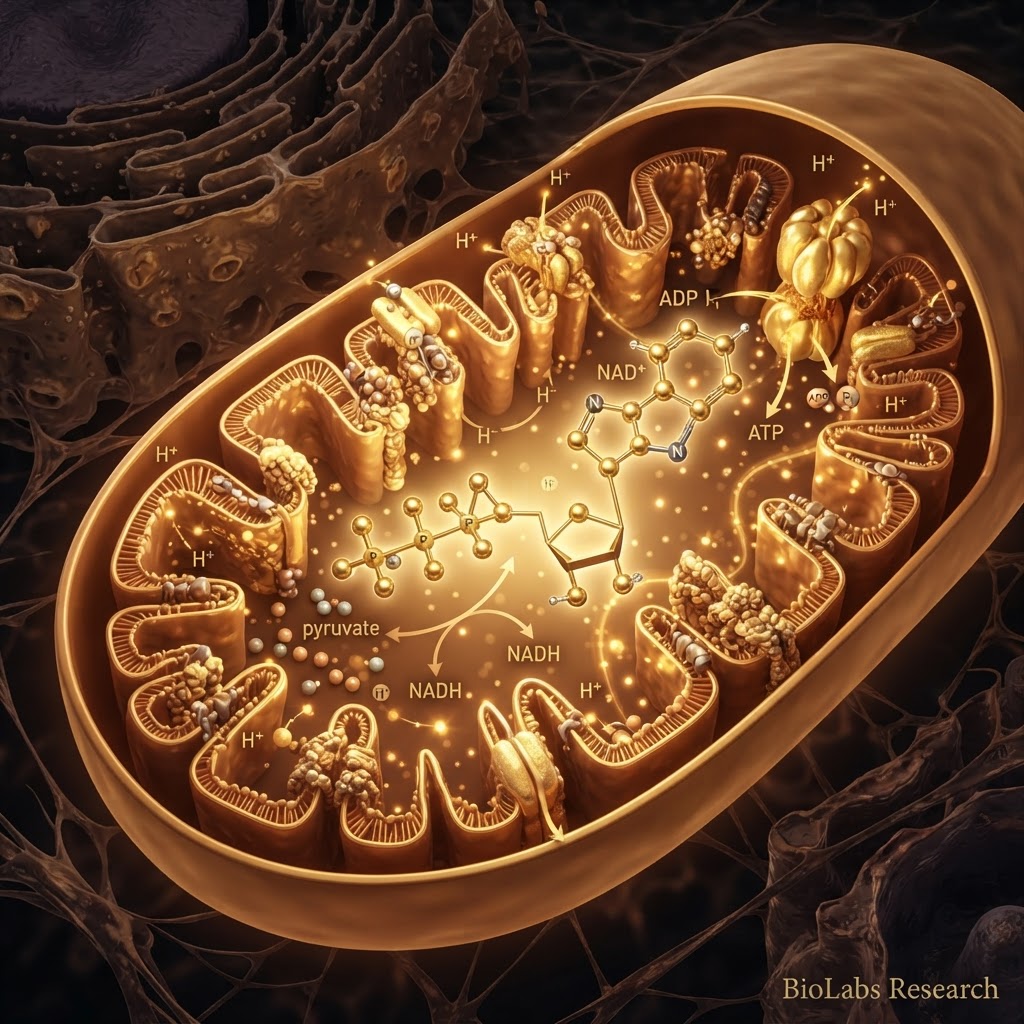
NAD+ Research Applications: A Biochemical Overview
Nicotinamide adenine dinucleotide (NAD+) is one of the most studied coenzymes in biochemistry. First discovered in 1906, it plays a central role in…
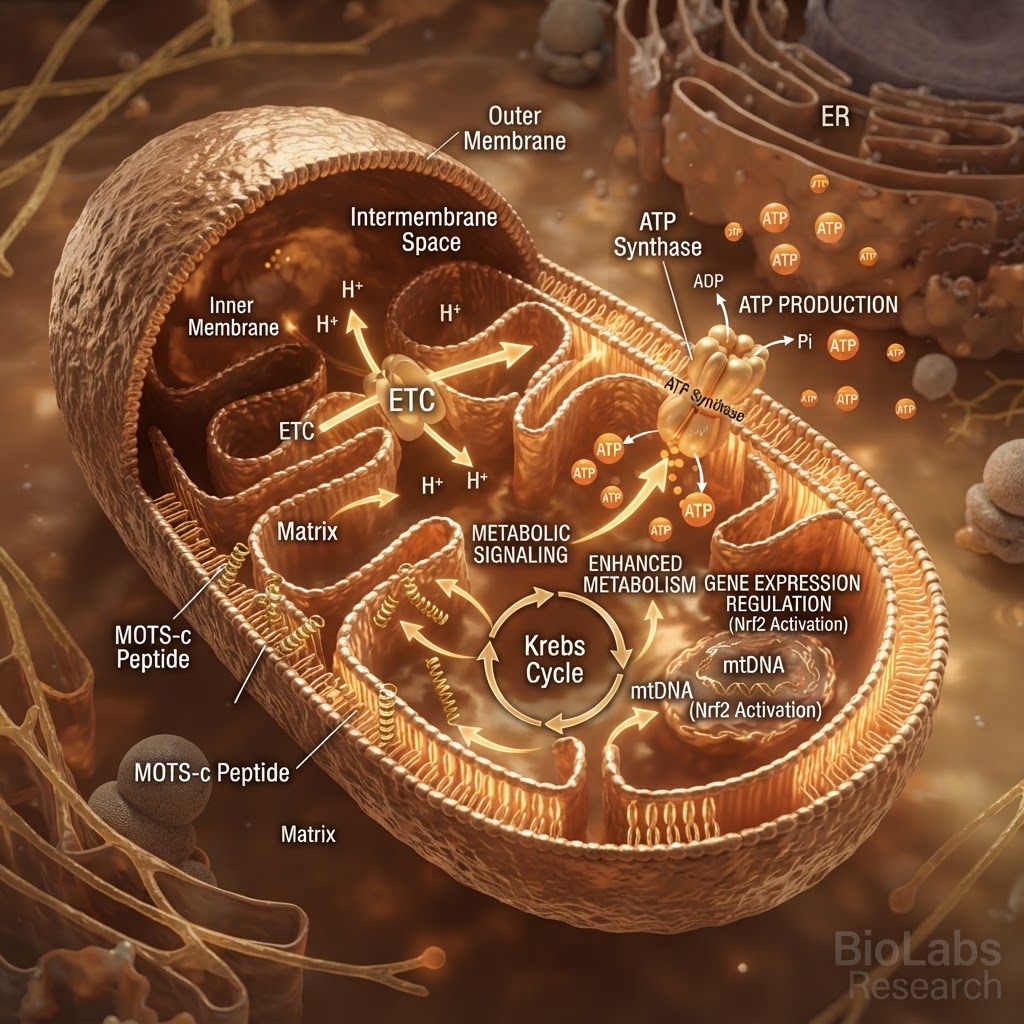
MOTS-c: Mitochondrial Research Peptide Overview
MOTS-c (Mitochondrial ORF of the Twelve S rRNA type-c) is a 16-amino acid mitochondrial-derived peptide encoded by the mitochondrial genome. Discovered in 2015,…

GHK-Cu Copper Peptide: Research Overview
GHK-Cu (glycyl-L-histidyl-L-lysine copper complex) is a naturally occurring copper-binding tripeptide first isolated from human plasma in 1973. It has been extensively studied in…
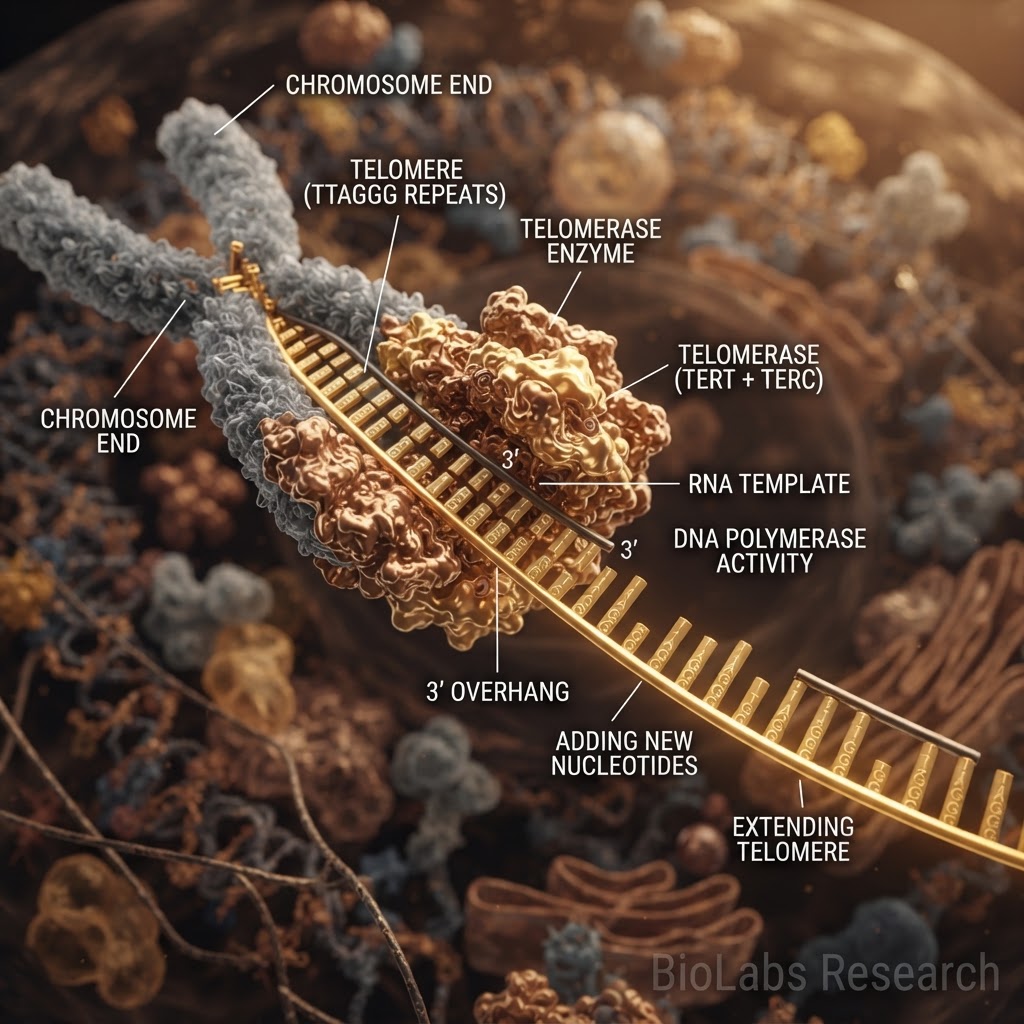
Epithalon: Aging Research Overview
Epithalon (also spelled Epitalon) is a synthetic tetrapeptide (Ala-Glu-Asp-Gly) derived from the pineal gland peptide Epithalamin. It has been studied primarily in the…
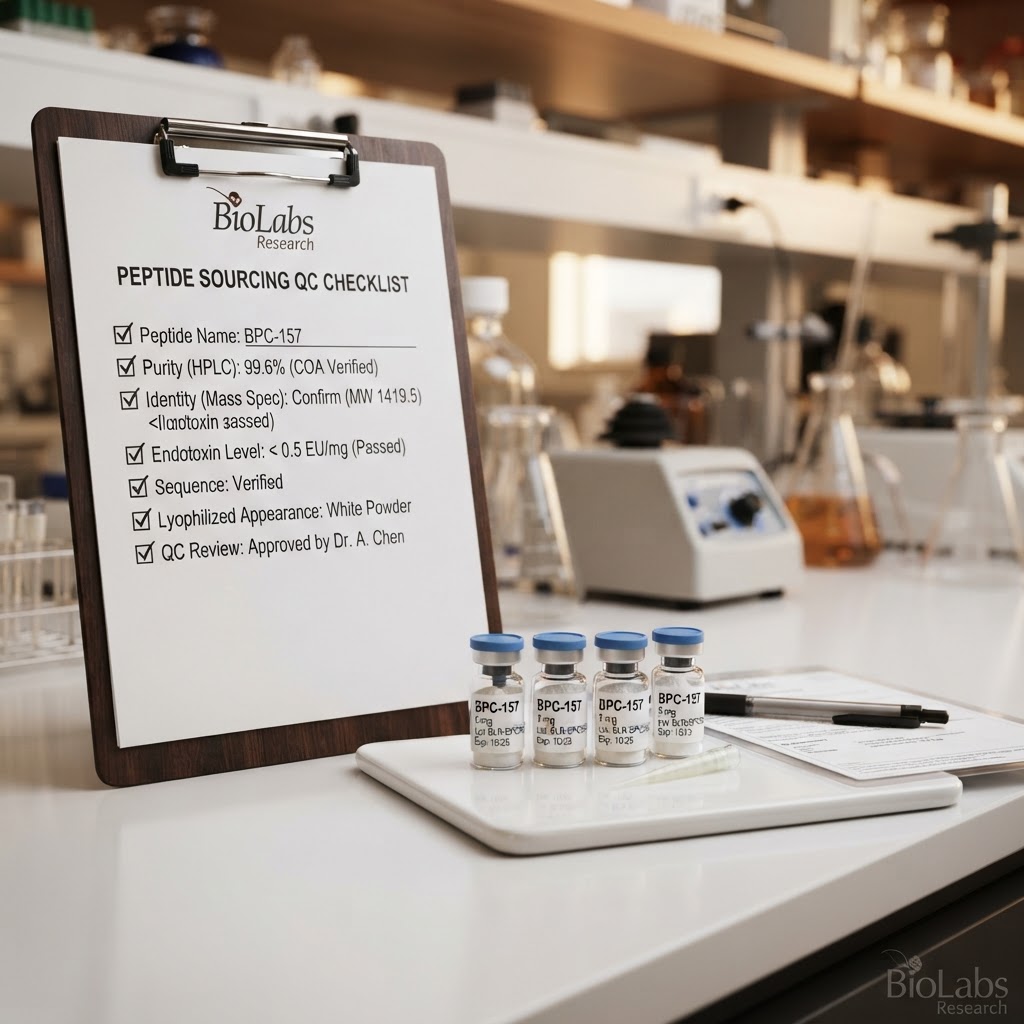
Buying Research Peptides Online: A 2026 Sourcing Guide
Sourcing research peptides online has become increasingly common for laboratories, universities, and independent researchers. However, the market is fragmented and quality varies dramatically…