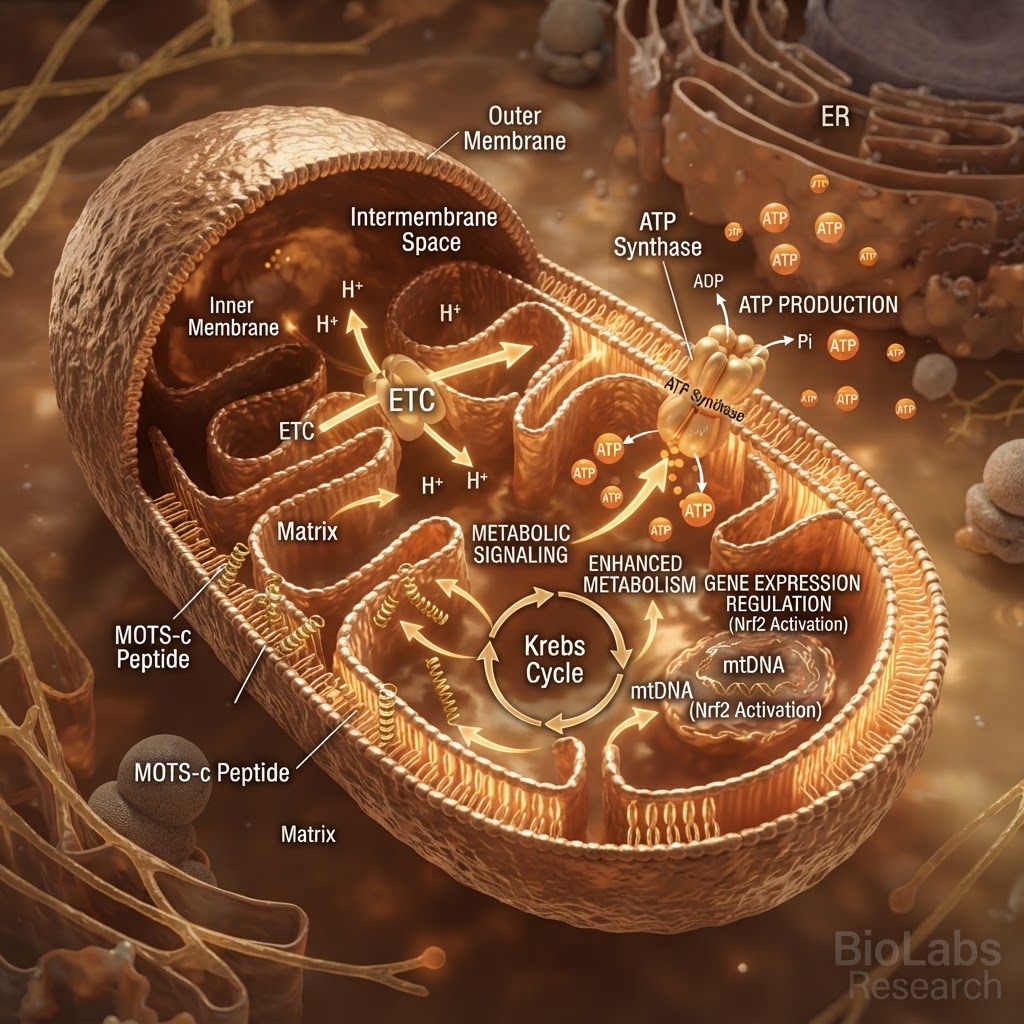
MOTS-c in the mitochondrion: this 16-amino acid peptide is encoded by the mitoch
MOTS-c (Mitochondrial ORF of the Twelve S rRNA type-c) is a 16-amino acid mitochondrial-derived peptide encoded by the mitochondrial genome. Discovered in 2015, it has become a significant research compound in metabolic regulation and exercise biology. This article provides a research-only overview.
What Is MOTS-c?
Unlike most peptides encoded by nuclear DNA, MOTS-c is encoded by the mitochondrial 16S rRNA gene. This makes it one of the few known mitochondrial-derived signaling peptides. Its molecular weight is approximately 1,629 Da. The sequence is MRWQEMGYIFYPRKLR.
Mechanism of Action in Research
MOTS-c has been studied for its effects on several metabolic pathways:
- AMPK activation — MOTS-c activates AMP-activated protein kinase (AMPK), a key cellular energy sensor
- Insulin sensitivity — studied for effects on insulin signaling pathways in skeletal muscle models
- Fatty acid oxidation — promotes mitochondrial fatty acid β-oxidation in cell culture
- Exercise mimicry — some research suggests MOTS-c produces metabolic responses similar to exercise in cellular models
Research Applications
Metabolic Regulation Research
MOTS-c is studied in metabolic disease models, particularly:
- Insulin resistance and type 2 diabetes cell models
- Obesity and adipose tissue metabolism research
- Mitochondrial dysfunction in metabolic disorders
- Exercise physiology and muscle metabolism studies
Aging and Longevity Research
MOTS-c levels decline with age in some models. This has led to research examining:
- MOTS-c as a biomarker of mitochondrial health in aging
- Effects of MOTS-c on cellular senescence markers
- Relationship between MOTS-c and NAD+ in mitochondrial aging research
For comparative aging research, see our NAD+ and Epithalon listings.
Exercise Biology Research
MOTS-c has been described as an "exercise mimetic" in some research literature, meaning it activates metabolic pathways similar to those activated by exercise in cell-based studies. This has driven interest in MOTS-c as a research tool for studying exercise-induced metabolic adaptations.
Sourcing MOTS-c for Research
- Purity — see lot COA (HPLC/MS); no catalog-wide %
- Identity — mass spec confirming 1,629 Da molecular weight
- Storage — -20°C as lyophilized powder
- COA — lot-specific documentation with HPLC and MS data
Exercise is the most potent and underrated longevity drug available.
Source MOTS-c for Your Research
Mitochondrial-derived peptide. Lot COA on request. RUO only.
View MOTS-c Catalog Listing →