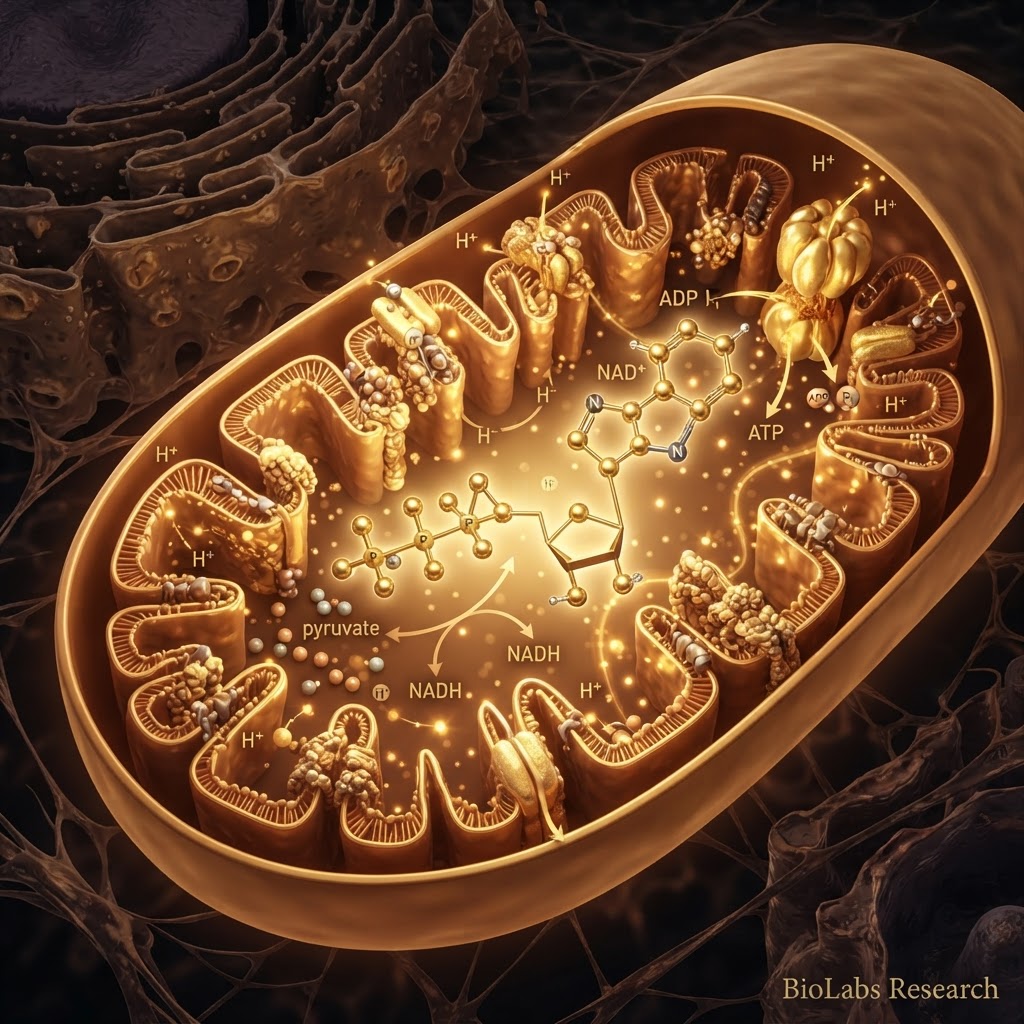
NAD+ in the mitochondrion: the coenzyme central to cellular energy metabolism an
Nicotinamide adenine dinucleotide (NAD+) is one of the most studied coenzymes in biochemistry. First discovered in 1906, it plays a central role in cellular metabolism, redox reactions, and signaling pathways. This article provides a research-only overview of NAD+ and its applications in laboratory studies — no therapeutic claims are made.
What Is NAD+?
NAD+ is a coenzyme found in all living cells. It exists in two forms: the oxidized form (NAD+) and the reduced form (NADH). The NAD+/NADH ratio is a key indicator of cellular metabolic state. NAD+ participates in:
- Redox reactions — electron transfer in metabolic pathways
- Substrate for sirtuins — NAD+-dependent deacetylases involved in aging research
- PARP activity — poly(ADP-ribose) polymerases in DNA repair studies
- CD38/CD157 signaling — ectoenzymes in immune cell research
Molecular Structure
NAD+ consists of two nucleotides joined through their phosphate groups: nicotinamide mononucleotide (NMN) and adenosine diphosphate (ADP). Its molecular formula is C₂₁H₂₇N₇O₁₄P₂ with a molecular weight of 663.43 g/mol.
Research Applications
Metabolic Research
NAD+ is essential for studying cellular energy metabolism. Researchers use NAD+ as a biochemical reference standard in assays measuring:
- Mitochondrial function and oxidative phosphorylation
- Glycolysis and Krebs cycle activity
- NAD+/NADH ratio as a metabolic state indicator
- Enzyme kinetics of NAD+-dependent dehydrogenases
Aging and Longevity Research
NAD+ levels decline with age in many model organisms. This observation has driven significant research into NAD+ metabolism in the context of cellular aging:
- Sirtuin activation studies (SIRT1-7)
- NAD+ biosynthesis pathway research ( salvage vs. de novo pathways)
- NMN and NR (nicotinamide riboside) precursor studies
- Caloric restriction mimetic research
Neurodegeneration Research
NAD+ has been studied in the context of neurodegenerative conditions, particularly regarding mitochondrial dysfunction and oxidative stress in neuronal cell models.
Sourcing NAD+ for Laboratory Research
When sourcing NAD+ for laboratory use, consider:
- Purity — see lot COA (HPLC/MS); no catalog-wide %
- Form — NAD+ is typically supplied as a powder or lyophilized reagent
- Storage — store at -20°C, protect from moisture and light
- COA — request lot documentation before purchase
NAD+ in Research vs. Supplements
It is important to distinguish between NAD+ as a laboratory research reagent and NAD+ as marketed in the supplement industry. BioLabs Research sells NAD+ exclusively as a Research Use Only biochemical reference standard — not as a dietary supplement. This distinction is critical for regulatory compliance and research integrity.
Energy and persistence conquer all things. — Benjamin Franklin
Source NAD+ for Your Research
Biochemical reference standard. Lot COA on request. RUO only.
View NAD+ Catalog Listing →