🔥🔥🔥
Law-firm analysis: a reported temporary peptide compounding reprieve would not equal FDA approval
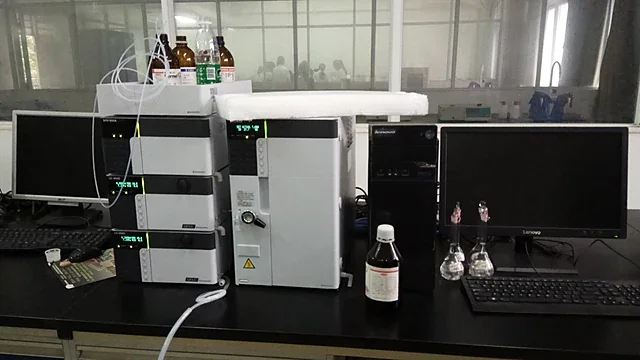
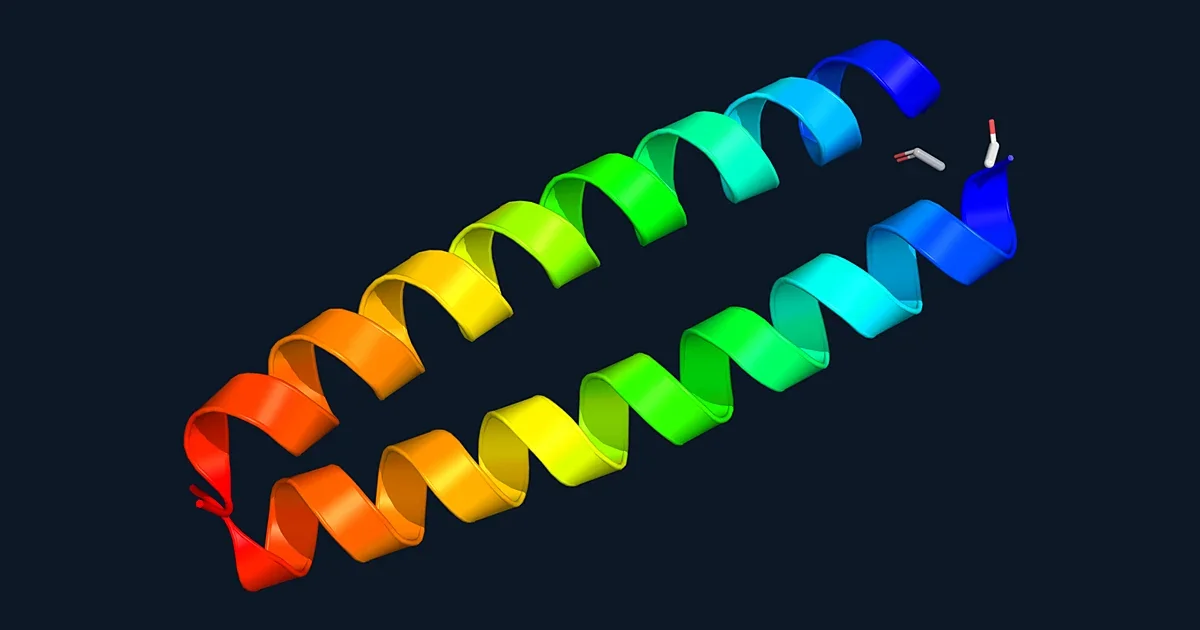
Photo: Dqwyy / Wikimedia Commons (CC0) / own upload
Buchanan Ingersoll & Rooney reported on 14 October that federal officials are said to be considering temporary enforcement discretion that could let qualifying compounding pharmacies dispense certain unapproved peptides while FDA works on permanent rules. The firm notes that no written policy, covered substances or conditions have been announced, that enforcement discretion does not amend the statute or amount to FDA approval, and that the 503A bulks list is still set through notice-and-comment rulemaking. It also points pharmacies to supplier certificates of analysis and FDA-registered manufacturing for bulk substances.
For research-community awareness only. Not legal advice.
🔥🔥
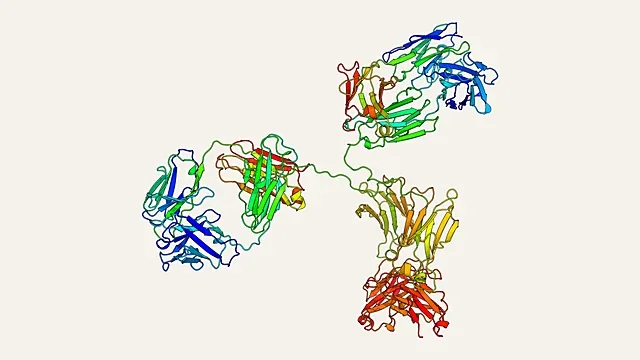
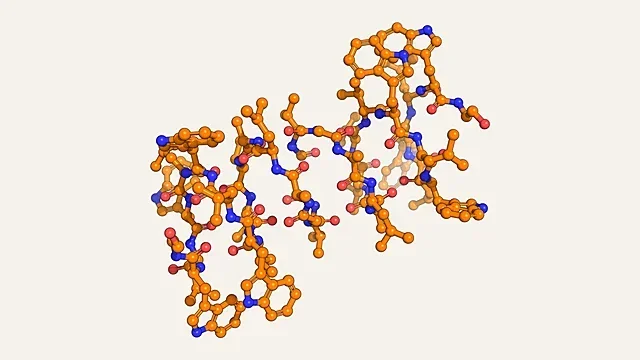
Photo: Image: BioLabs Research, rendered from PDB 1IGT (RCSB PDB, CC0) / own upload
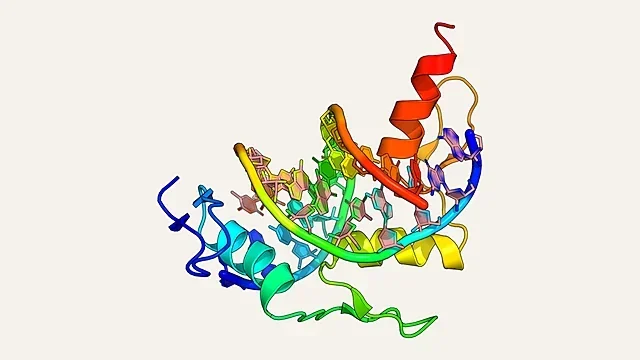
Researchers at the Gwangju Institute of Science and Technology reported in Biomacromolecules on 14 October short CLEAR tags, charge-laden elastin-like polypeptide sequences, tested on two aggregation-prone scFv-based Albubody proteins. After 7 days at 37 °C the CLEAR-E9 versions kept about 100% and 95% of their soluble protein, against 87% and 40% without the tag. The paper is a protein-engineering and storage-stability study.
Read the Full Update
🔥🔥

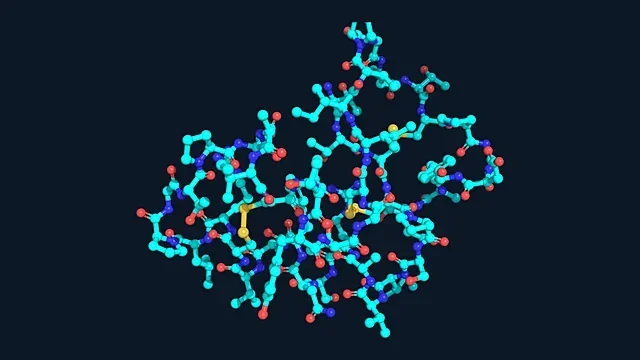
Photo: Derrick Coetzee from Berkeley, CA, USA / Wikimedia Commons (CC0) / own upload
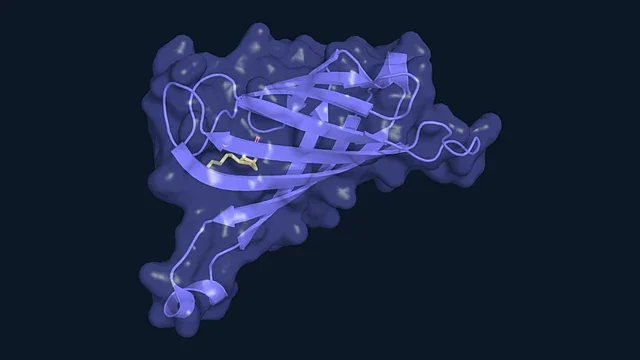
Researchers at Hunan University and partner institutions in China reported in Genome Biology on 14 October Pep2Net, which unifies 52 peptide resources into one knowledge base and fuses protein language model embeddings with physicochemical descriptors through cross-attention. The authors report state-of-the-art benchmark results on several peptide property labels and offer a web interface. It is a computational methods study whose outputs are predictions.
Read the Full Update
🔥🔥
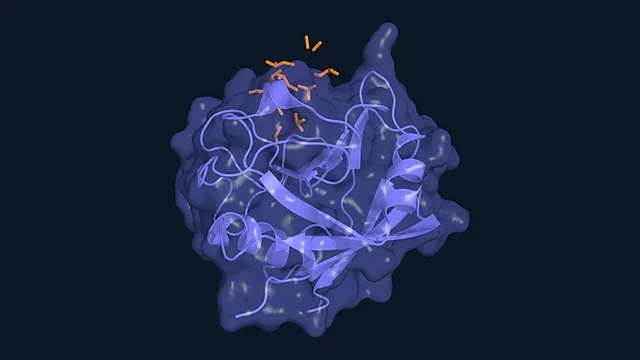
Photo: kallerna / Wikimedia Commons (Public domain) / own upload
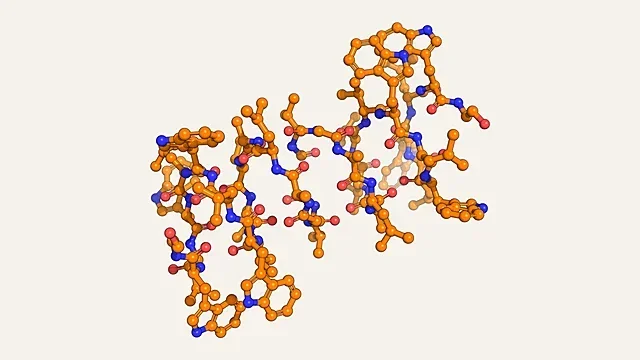
Researchers at the University of Miami and the Air Force Research Laboratory reported in ACS Applied Nano Materials on 14 October palladium-gold, gold-silver and palladium-silver nanoparticles under 5 nm, all capped with the same AuBP1 peptide. In 4-nitrophenol reduction, PdAu at 3:2 and AuAg at 4:1 showed enhanced reactivity. The work is a materials-chemistry and catalysis study with no biological testing.
Read the Full Update
🔥
Perspective proposes reactive-site accounting for thiol-maleimide peptide coupling on liposomes
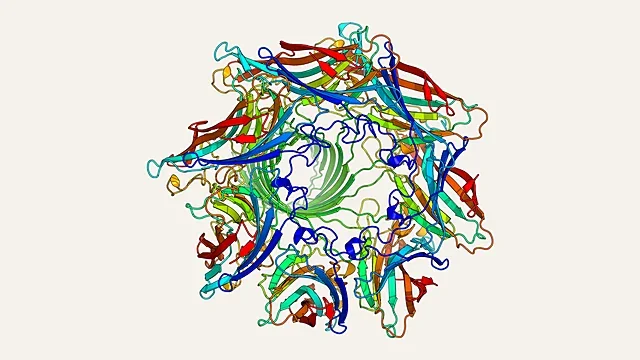
Photo: Image: BioLabs Research, rendered from PDB 7AHL (RCSB PDB, CC0) / own upload
Researchers at Sabanci University and Mersin University published a Perspective in Frontiers in Drug Delivery on 13 October arguing that effective maleimide availability is an underreported variable when peptides are coupled to PEGylated liposomes. Using seven published liver-targeting formulations as a case set, they propose reporting six separate quantities, from nominal maleimide input to final and receptor-accessible ligand density. It is a formulation-reporting framework, not a clinical report.
🔥
Microsecond simulations show slow peptide-plane flips in a protein loop
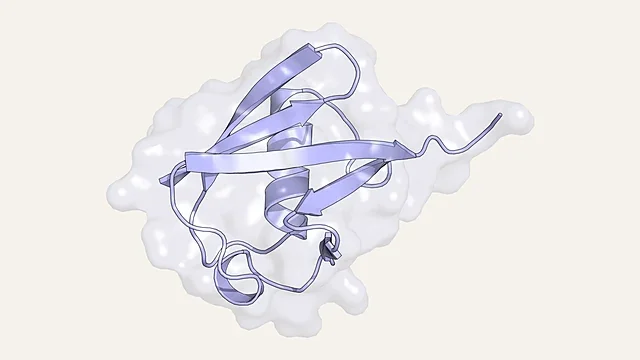
Photo: Image: BioLabs Research, rendered from PDB 1UBQ (RCSB PDB, CC0) / own upload
Researchers at Case Western Reserve University and Bar-Ilan University reported in The Journal of Physical Chemistry B on 13 October a symmetry-based framework for peptide-plane dynamics in protein loops, built on 1-microsecond molecular dynamics simulations of the plexin-B1 Rho GTPase-binding domain. The longer runs revealed a second, inversion-related component of the local potential that rarely interconverts with the first, pointing to slow microsecond motion such as beta-turn crankshaft flips. The paper is computational biophysics with a companion article in the same issue.
Curated for research-community awareness. Not medical or legal advice. All products on this site are for laboratory research use only.