Short charged elastin-like peptide tags curb insoluble aggregation of scFv-based proteins
Researchers at the Gwangju Institute of Science and Technology in South Korea reported in Biomacromolecules, published online on 14 October, short Charge-Laden Elastin-like Polypeptide-based Aggregation Reduction (CLEAR) tags tested on two aggregation-prone scFv-based Albubody proteins.
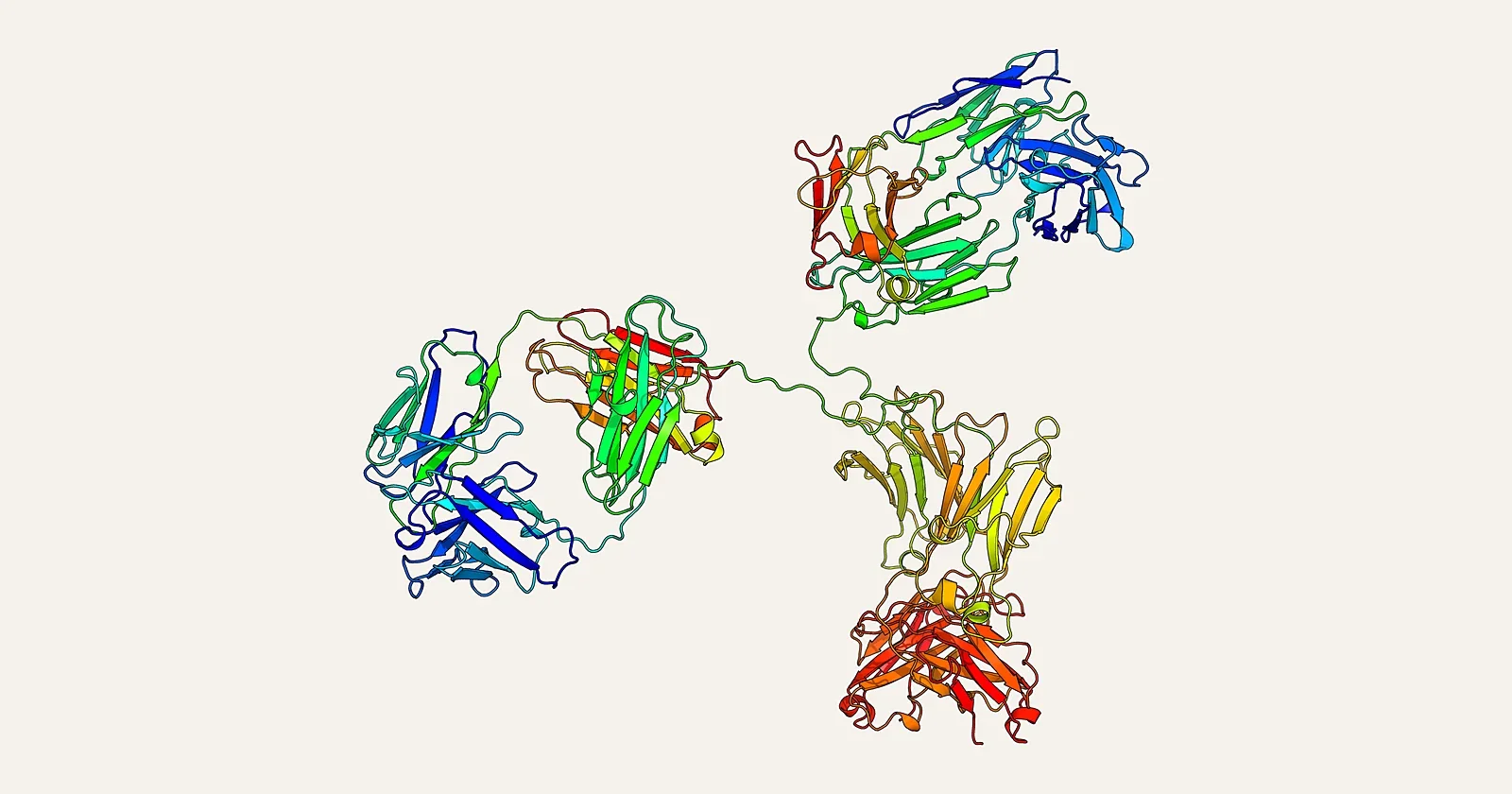
Summary. Researchers at the Gwangju Institute of Science and Technology in South Korea reported in Biomacromolecules, published online on 14 October, short Charge-Laden Elastin-like Polypeptide-based Aggregation Reduction (CLEAR) tags tested on two aggregation-prone scFv-based Albubody proteins. Protein aggregation limits how well engineered proteins can be manufactured and stored. Negatively charged variants, particularly CLEAR-E9, kept aggregation indices low for up to 28 days, and after 7 days at 37 °C the two tagged proteins retained about 100% and 95% of their day-0 soluble protein, compared with 87% and 40% for the untagged versions.

Research context (RUO). Size-exclusion chromatography still showed soluble higher-order association, which the authors read as the tag limiting progression toward large insoluble aggregates rather than preventing intermolecular association altogether. A 1.34 kDa variant, CLEAR-E3, also kept a low aggregation index in one construct, and CLEAR-E9 gave higher soluble yield and a lower aggregation index than polyE9 and SynIDP3 control tags. The paper is a protein-engineering and storage-stability study on the tested scFv-based systems. It does not report a clinical programme or any recommendation for use in people. For protein-expression and biophysics laboratories, the contribution is a short, sequence-programmable tag design documented with stability data; full methods are in the open-access article.