Open MONDE·T database maps 1,210 non-standard amino acids across 23,149 Protein Data Bank structures
Max Planck researchers released MONDE·T, a free database and webserver cataloging 1,210 non-standard amino acids and 724 synthetic peptide components found in 23,149 Protein Data Bank structures, with backbone-angle plots, 3D views and CSV downloads.
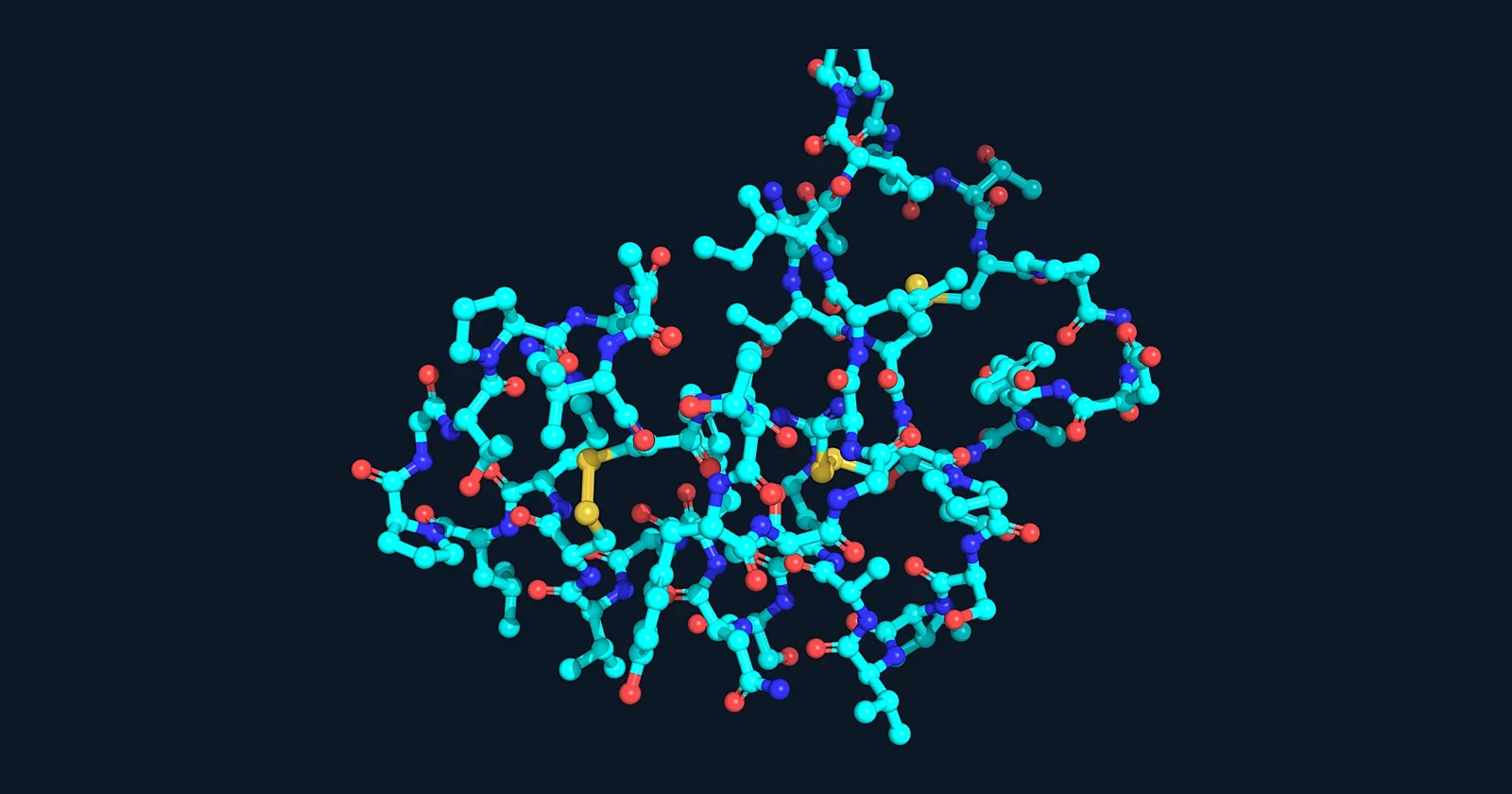
Researchers in the Department for Protein Evolution at the Max Planck Institute for Biology in Tübingen have released MONDE·T, a free database and interactive webserver that collects every non-standard building block found inside polypeptide chains in the Protein Data Bank (PDB). The work was published in Protein Science on 13 October 2026 under a Creative Commons 4.0 license. [1][2]
What is in the database
According to the paper, MONDE·T holds 1,210 unique non-standard amino acids and 724 other synthetic components, such as caps and linkers, that appear in 23,149 PDB structures. [1] The authors note that this is 61 times the diversity of the 20 canonical amino acids. [1]
To build it, the team started from all 50,001 entries in the worldwide PDB Chemical Component Dictionary (cut-off date 4 April 2026). [1][3] They removed ions, free ligands and side-chain-only attachments, which left 2,811 components that truly sit in a polymer backbone. Of those, 1,933 occur in peptide backbones; after setting aside the 20 canonical amino acids, 1,913 components went into MONDE·T. [1]
Each entry is annotated with the PDB IDs where it occurs, source organism, experimental method and resolution. Alongside the usual one-letter sequence, where any non-standard residue is hidden behind an "X", the database gives an "unmasked" sequence that shows each component's three-letter code. The authors suggest this may be useful for machine learning. [1][2]
Four ways to explore
The webserver has four tabs. [1][2]
- Ramachandran plot: shows the backbone angles of a chosen non-standard residue across all its PDB occurrences, against a background of 1,511,165 canonical residues from high-resolution structures. Researchers can also load any PDB ID or upload their own structure file.
- Database: search, filter and download the full annotated dataset as CSV.
- Chemical properties: compare a residue's structure and similarity scores with the canonical amino acids, or render any SMILES string.
- Protein structure: a 3D viewer that highlights non-standard positions in red.
What the examples show
The paper walks through several case studies. Selenomethionine, used in crystallography in place of methionine, is the most common entry (10,214 structures) and sits fully inside the normal methionine backbone space. [1] By contrast, α-aminoisobutyric acid (AIB), found in 220 structures, strongly prefers helical regions in both left- and right-handed forms, which the authors describe as attractive for designing new structures. [1] Two phosphorylated forms of histidine occupy noticeably different backbone regions. [1]
The authors also flag limits. The PDB is shaped by reporting bias toward medically relevant proteins, and peptide nucleic acids are not included because there is no agreed way to calculate their backbone angles. [1] They report that MONDE·T gained 58 non-standard amino acids (about 5%) between April 2025 and April 2026. [1]
Why it matters for peptide research
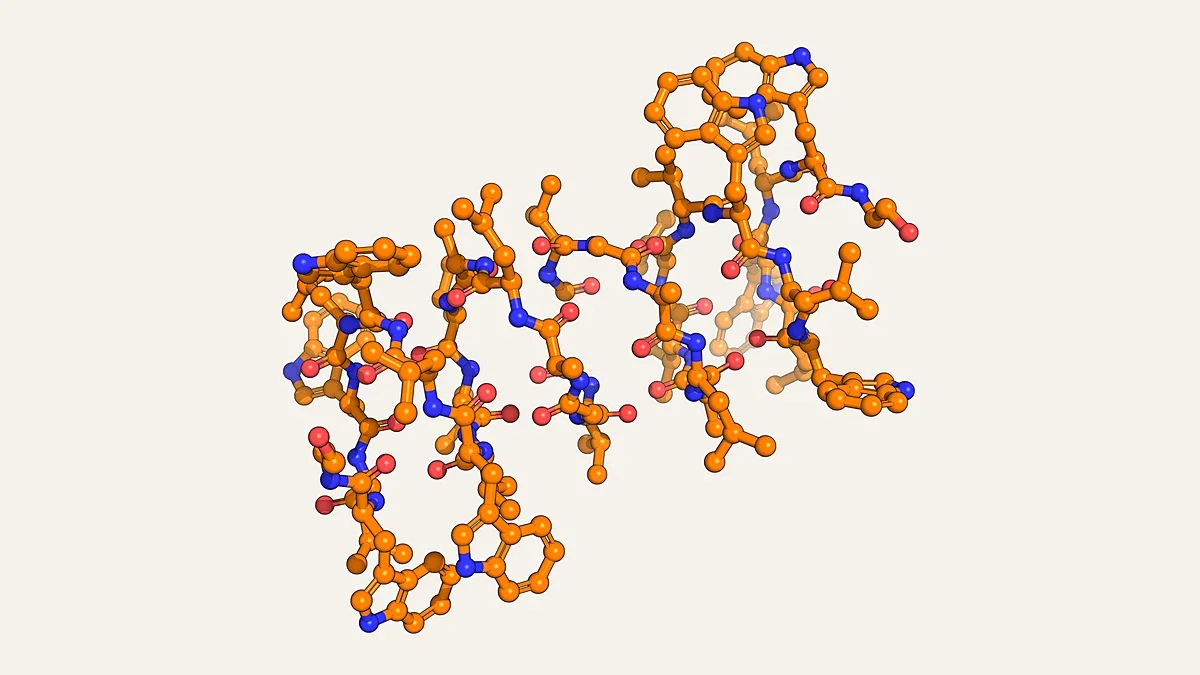
Non-standard residues are a growing part of peptide chemistry and design work. MONDE·T gives laboratories one structural reference point, based on experimentally determined structures, for checking how a modified building block has actually behaved in a resolved chain. It is a reference and analysis tool, not a source of any material.
All BioLabs Research products are sold strictly for laboratory research use only. Not for human or veterinary use. This article reports on a published research database and makes no claims about any BioLabs product.