University of Toronto's OpenPep will build an open peptide–protein binding database and AI models with Google.org funding
A University of Toronto team has launched OpenPep, a project to build an open-access database of peptide–protein binding measurements and AI models trained on that data.
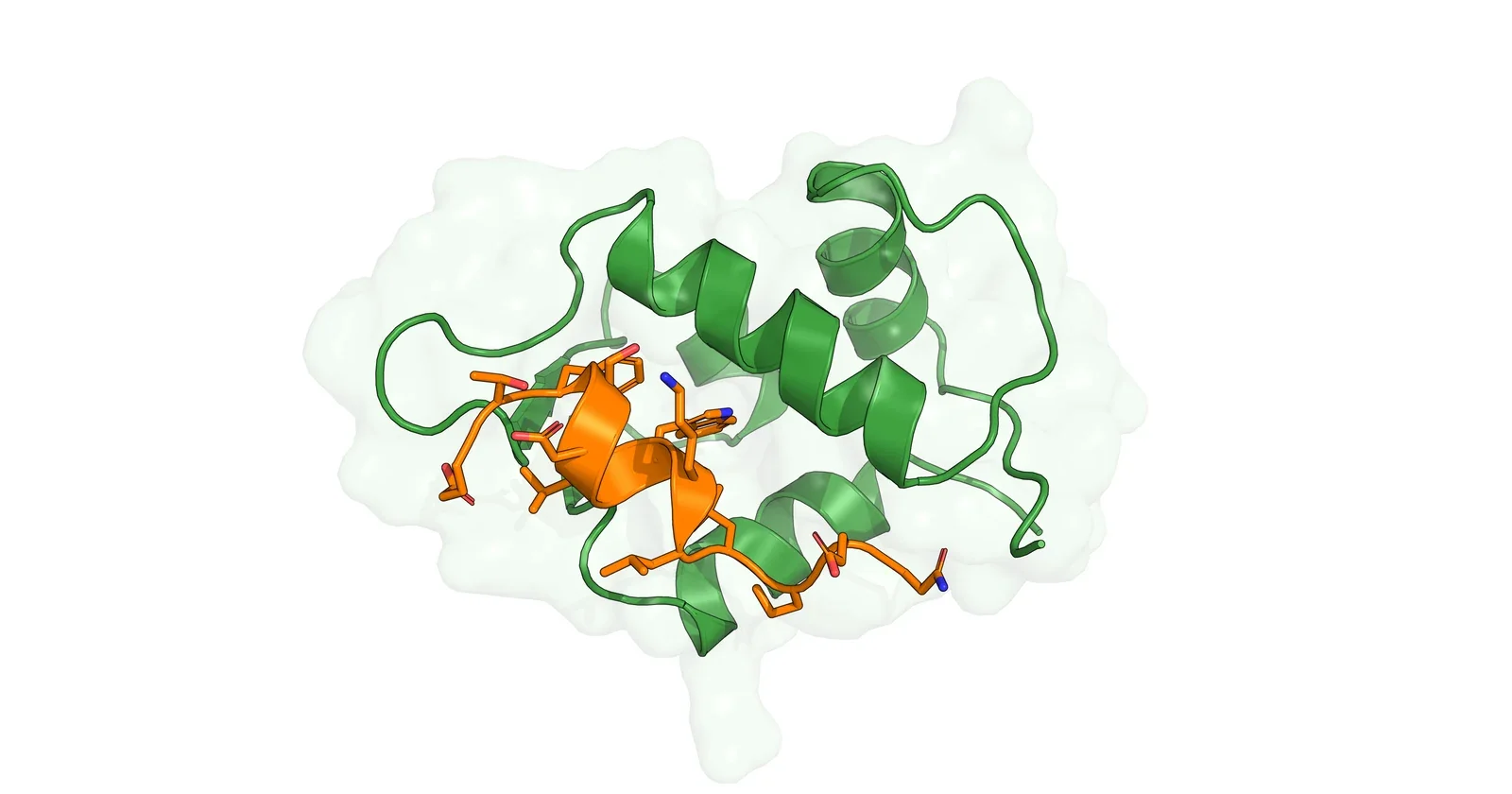
A University of Toronto team has launched OpenPep, a project to build an open-access database of peptide–protein binding measurements and AI models trained on that data. The university announced on 16 October 2026 that the work is supported by US$2.3 million through the Google.org Impact Challenge: AI for Science. Google.org named 17 recipient organisations sharing US$36 million in that program on 14 October 2026, describing the Toronto project as mapping the design space for peptide-based molecules with an AI foundation model.
The data gap the project targets
According to the announcement, peptide discovery still runs almost entirely through experiments, with results scattered across labs, projects and companies. Unlike protein-structure work, which draws on open resources built over decades, there is no comparable shared peptide-binding dataset for training AI models. Project lead Joseph Brown, an assistant professor at the Leslie Dan Faculty of Pharmacy, said limited existing data is the main reason peptide discovery remains slow.
How OpenPep plans to generate data
The plan has three steps, set out on the project's own science page.
- Produce targets. Keith Pardee's group will use cell-free protein synthesis, which makes proteins from lysate, DNA, amino acids and an energy source without growing cells, to produce up to 500 disease-relevant proteins.
- Measure binding. Brown's lab will screen libraries of synthetic peptides, including peptides with building blocks beyond the 20 natural amino acids, mainly by affinity-selection mass spectrometry (AS-MS). In AS-MS, peptides that bind a target are recovered and identified by mass spectrometry, and follow-up concentration-response measurements quantify binding.
- Train models. The team will train models across the whole protein panel and evaluate them on proteins held out of training, then test those predictions experimentally so new results feed back into the database.
Co-investigators also include Philip Kim of the Donnelly Centre for Cellular and Biomolecular Research and Chris Ing, a University of Toronto PhD alumnus and co-founder and chief scientific officer of ProteinQure.
Open data and target nominations
OpenPep says it will release the database and models publicly, with file details, column descriptions and release-specific licensing information. As of 17 October 2026, its data page lists both as "Planned", with no public datasets released yet. Researchers can nominate up to five human proteins for the panel through a form on the project site.
Why it matters for peptide research
Open, consistently measured binding data across many proteins is the kind of resource that lets computational methods be tested fairly, rather than on scattered, single-target datasets. OpenPep's plan to hold whole proteins out of training is aimed at telling genuine generalisation apart from performance on familiar examples. Whether the dataset delivers will depend on the scale and quality of the releases, which have not yet been published.
All BioLabs Research products are sold strictly for laboratory research use only. Not for human or veterinary use. This article reports on a publicly announced academic research project and makes no claims about any BioLabs product.
BioLabs Research has no affiliation with, and no endorsement from, any person named.