🔥🔥
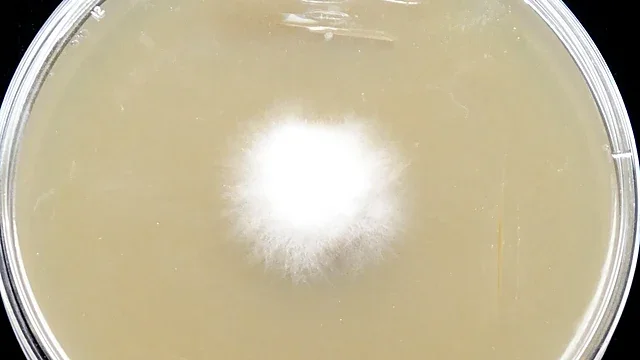
Photo: Scot Nelson / Wikimedia Commons (CC0) / own upload
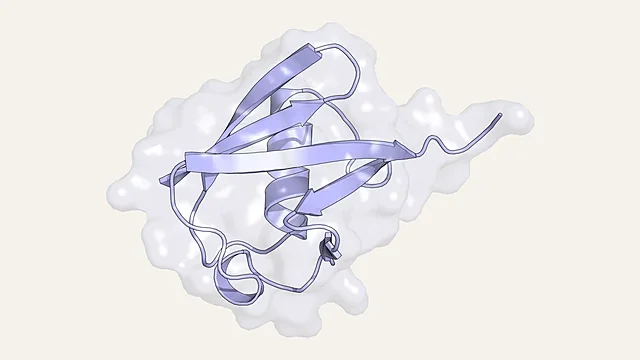
Researchers at Northwest A&F University in China, with a Purdue University collaborator, reported in Nature Microbiology on 19 October that the G-protein-coupled receptor Rsd1 controls spore dormancy in the wheat pathogen Fusarium pseudograminearum. When spores are crowded and nutrients are scarce, the fungus's own lipid signal farnesol activates Rsd1 and a downstream G-protein and MAP kinase pathway that holds back germination. Dormancy aided survival but reduced infection of wheat, and rhizosphere bacteria that strengthened or weakened farnesol-Rsd1 signalling shifted spore germination and crown-rot severity. The study is basic plant-pathology research.
🔥
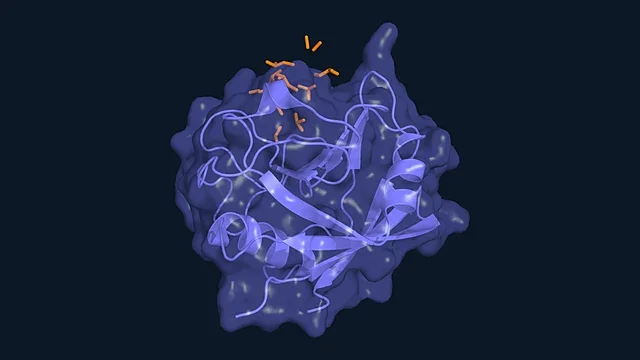
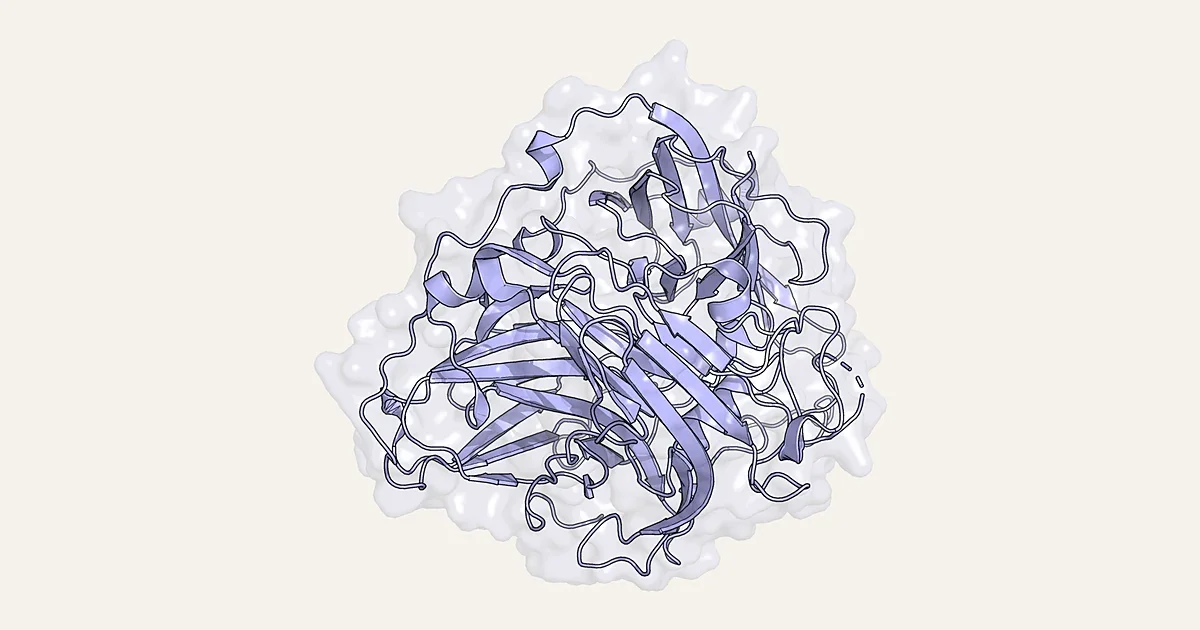
Photo: Image: BioLabs Research, rendered from PDB 1CWA (RCSB PDB, CC0) / own upload
Researchers at Iowa State University reported in Organic Letters on 20 October how thioimidates, backbone groups increasingly used for peptide backbone editing and macrocyclization, switch between trans and cis forms. Using NMR spectroscopy and DFT calculations on model peptides, they found the near-equal equilibrium and the barrier between the forms were largely insensitive to the size and stereochemistry of neighbouring amino acids, while a bulkier substituent on sulfur shifted the balance most. Calculations favour isomerization through nitrogen rehybridization rather than rotation about the C=N bond. The paper is a synthetic-methods report.
🔥
Photo: Groep29 BFW / Wikimedia Commons (Public domain) / own upload
Researchers at the University of Maryland reported in Analytical Chemistry on 20 October Eco-diaPASEF, which uses the predictable migration time, mass-to-charge and ion-mobility positions of peptides in capillary electrophoresis-mass spectrometry to focus data-independent acquisition on peptide-rich regions. On 200-picogram HeLa cell-line digests it raised protein-group identifications by up to about 65 percent over conventional diaPASEF, and in single frog-embryo cells it quantified 1108 protein groups across three cells. The paper is an analytical-methods report.
🔥
Catalytic asymmetric route delivers axially chiral spiro[3.3]heptane amino acids for peptide synthesis
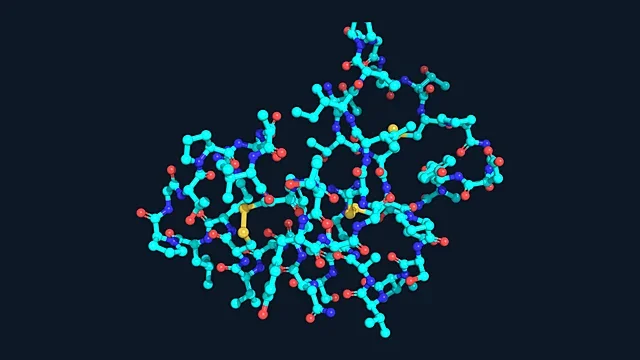
Photo: Image: BioLabs Research, rendered from PDB 1CRN (RCSB PDB, CC0) / own upload
Researchers at Chongqing University reported in Angewandte Chemie on 16 October a class of alpha-amino acids that are chiral through an axis rather than a stereocentre, built on a spiro[3.3]heptane scaffold. A reductive amination using chiral phosphoric acid catalysis gave a wide range of these amino acids in generally high yields and enantioselectivities, and they were incorporated into complex peptides by both solution-phase and solid-phase peptide synthesis. The authors describe them as conformationally constrained lysine mimetics and studied the reaction mechanism and the origin of enantioselectivity experimentally and computationally. The paper is a synthetic-methods report.
🔥
SAXS shows plasmid conjugation protein TrhW is an elongated, flexible monomer rather than one rigid structure
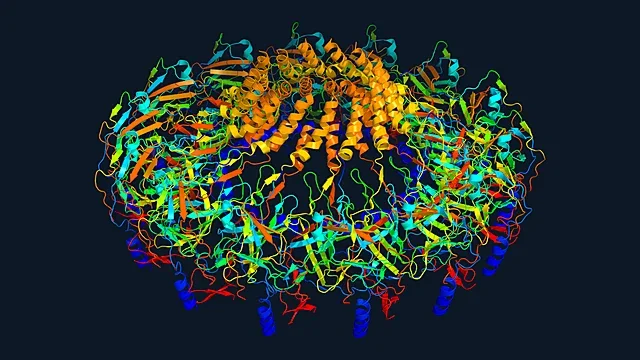
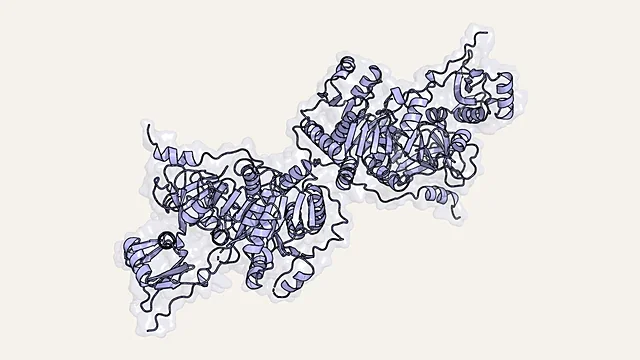
Photo: Image: BioLabs Research, rendered from PDB 3JQO (RCSB PDB, CC0) / own upload
Researchers at York University in Toronto reported in Structural Dynamics on 19 October the first experimental structural characterization of TrhW, a periplasmic protein of the type IV secretion system encoded by the IncHI1 plasmid R27. Size-exclusion chromatography with multi-angle light scattering showed a monomer, circular dichroism showed substantial non-canonical secondary structure, and SEC-SAXS revealed an elongated shape with a radius of gyration of 44.6 angstroms and a maximum dimension of 160 angstroms. Ensemble modelling fitted the data best as interconverting conformations; AlphaFold captured the domain layout but not this flexibility.
🔥
APR-Score machine-learning tool flags aggregation-prone regions in protein sequences

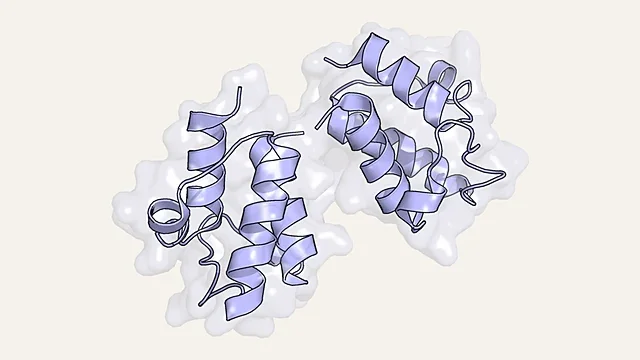
Photo: Image: BioLabs Research, rendered from PDB 2BEG (RCSB PDB, CC0) / own upload
Researchers at the Technology Innovation Institute in Abu Dhabi reported in Genomics, Proteomics & Bioinformatics on 19 October APR-Score, a machine-learning method that identifies aggregation-prone regions in protein sequences from combined sequence and structural features. In the authors' cross-validation and independent-test evaluation it reported a Matthews correlation coefficient of 0.77, a precision of 0.89 and an F1 score of 0.87. The authors present it as a screening aid for computational protein design and engineering and for studies of protein aggregation. The code is available on GitHub.