What 'Research Use Only' Means: Labels, Limits and Lab Supply
Where the research-use-only label comes from in FDA rules, what it signals, what it does not do, and why lab documentation matters.
Updated October 5, 2026

Research explainer | Updated 2026-10-04
"Research use only" (RUO) appears on many laboratory products, from reagents and instruments to peptide materials. This explainer sets out where the phrase comes from in US regulation, what it signals, and what it does not do.
Where the phrase comes from
In US federal regulations, the best-known RUO wording sits in FDA's labeling rule for in vitro diagnostic (IVD) products, 21 CFR 809.10. Under paragraph (c), an IVD product "in the laboratory research phase of development, and not represented as an effective in vitro diagnostic product" may be shipped without full diagnostic labeling if all of its labeling prominently bears the statement "For Research Use Only. Not for use in diagnostic procedures." A parallel statement applies to products shipped for testing before full commercial marketing: "For Investigational Use Only. The performance characteristics of this product have not been established." (21 CFR 809.10)
The same rule, in paragraph (d), lets general-purpose laboratory reagents such as hydrochloric acid carry the statement "For Laboratory Use" in place of full directions, provided the label gives the reagent's identity, a statement of purity and quality including any impurities, storage conditions, and a lot or control number from which the manufacturing history can be traced (21 CFR 809.10).
FDA's guidance on RUO and IUO labels
In November 2013, FDA's Center for Devices and Radiological Health and Center for Biologics Evaluation and Research issued guidance on when IVD products are properly labeled "for research use only" or "for investigational use only" (FDA guidance, November 2013). The guidance addresses IVD products specifically.
What RUO labelling is
- A statement of the purpose for which a product is supplied: laboratory research, not diagnostic procedures.
- In the IVD rule, one of the conditions for shipping a research-phase product without full diagnostic labeling (21 CFR 809.10).
- For laboratory reagents, a label that sits alongside identity, purity, storage and lot information (21 CFR 809.10).
What RUO labelling is not
- It is not an approval or clearance of any kind.
- It does not decide on its own how a product is classified. Under FDA's regulation on "intended uses", intended use refers to the objective intent of the persons responsible for an article's labeling, which may be shown by labeling claims, advertising, oral or written statements, and the circumstances surrounding distribution (21 CFR 201.128).
- In August 2026, FDA sent warning letters to online peptide sellers. In one of them, FDA stated that despite "for research use only" and "not for human or veterinary use" statements on the seller's labeling, evidence from its website established that the products were intended to be drugs for human use (FDA warning letter, 24 August 2026). A law-firm analysis of these letters reported that five online sellers received them (McDermott Will & Schulte, 24 September 2026).
- Outside the US, the UK Medicines and Healthcare products Regulatory Agency told The Independent that it disregards claims that products are for "research purposes" where such claims are used in an attempt to avoid regulation (The Independent, 30 November 2025).
Lab-supply context
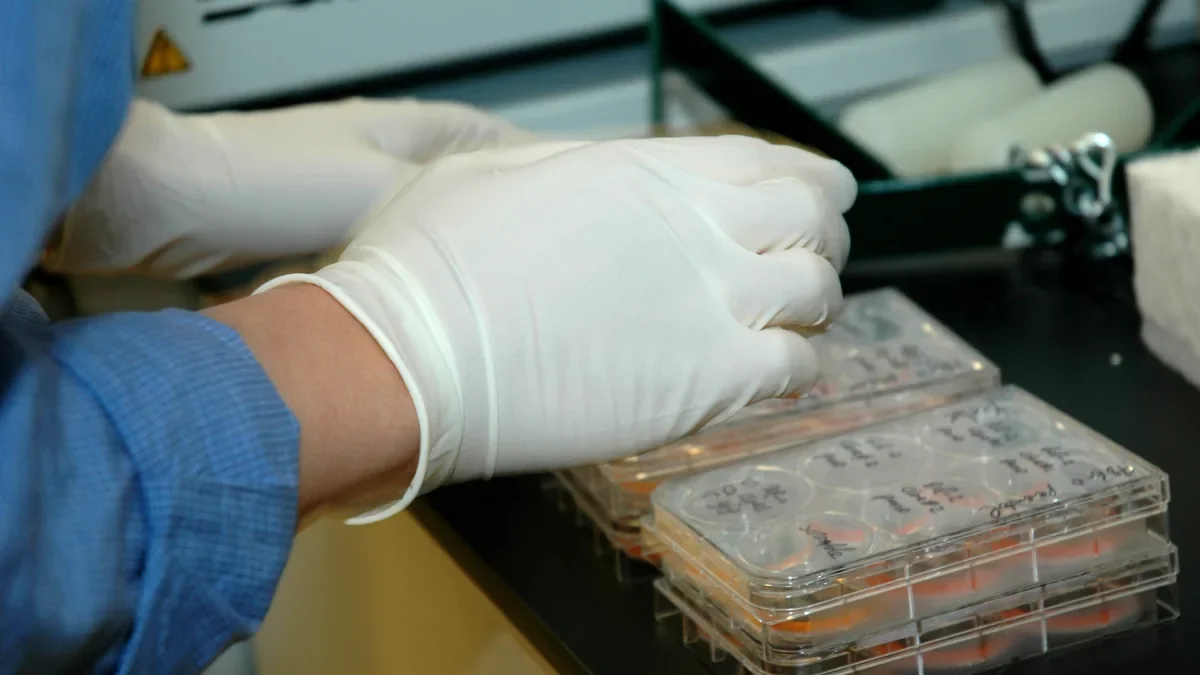
For a laboratory, the practical value of research material lies in its documentation: identity, purity and lot traceability. That gap is visible in the public record. At FDA's Pharmacy Compounding Advisory Committee meeting in July 2026, FDA staff noted that substances marketed under the same common name, including BPC-157, had been found to contain different active moieties, and that available information often lacked data on peptide impurities, aggregates, microbial quality and bacterial endotoxins (Bass, Berry & Sims, 31 July 2026). BBC News reported in March 2026 that a recent analysis suggested 8% of some peptide products tested may be contaminated with bacterial endotoxins (BBC News, 1 March 2026).
Frequently asked questions
What does "research use only" mean?
It indicates that a product is supplied for laboratory research and not for diagnostic procedures or use in people. In FDA's IVD labeling rule, it is a condition for shipping a research-phase product without full diagnostic labeling.
Does an RUO label mean a product is approved?
No. The label is not an approval or clearance, and FDA's intended-use regulation looks at labeling, advertising, statements and the circumstances of distribution as a whole.
What documentation should accompany research reagents?
FDA's rule for general-purpose laboratory reagents lists identity, a statement of purity and quality including impurities, storage conditions and a lot or control number.
Sources
- eCFR, 21 CFR 809.10 (labeling for in vitro diagnostic products) | 2026-10-04 | www.ecfr.gov
- U.S. FDA, RUO/IUO guidance for in vitro diagnostic products | 2013-11-25 | www.fda.gov
- eCFR, 21 CFR 201.128 (meaning of intended uses) | 2021-08-02 | www.ecfr.gov
- U.S. FDA (warning letter, 2026-08-24) | 2026-08-24 | www.fda.gov
- McDermott Will & Schulte (client alert) | 2026-09-24 | www.mcdermottlaw.com
- The Independent | 2025-11-30 | www.independent.co.uk
- Bass, Berry & Sims (analysis) | 2026-07-31 | bassberry.com
- BBC News | 2026-03-01 | www.bbc.com
This article is a summary of publicly reported information for research-community awareness only. It is not medical advice, not legal advice, and not a statement about any BioLabs Research product.
For research use only. Not for human or veterinary use. Not a drug, food, or cosmetic.
This summary is for research-community awareness only and is not legal advice.