New chemistry builds bicyclic peptide libraries directly on phage
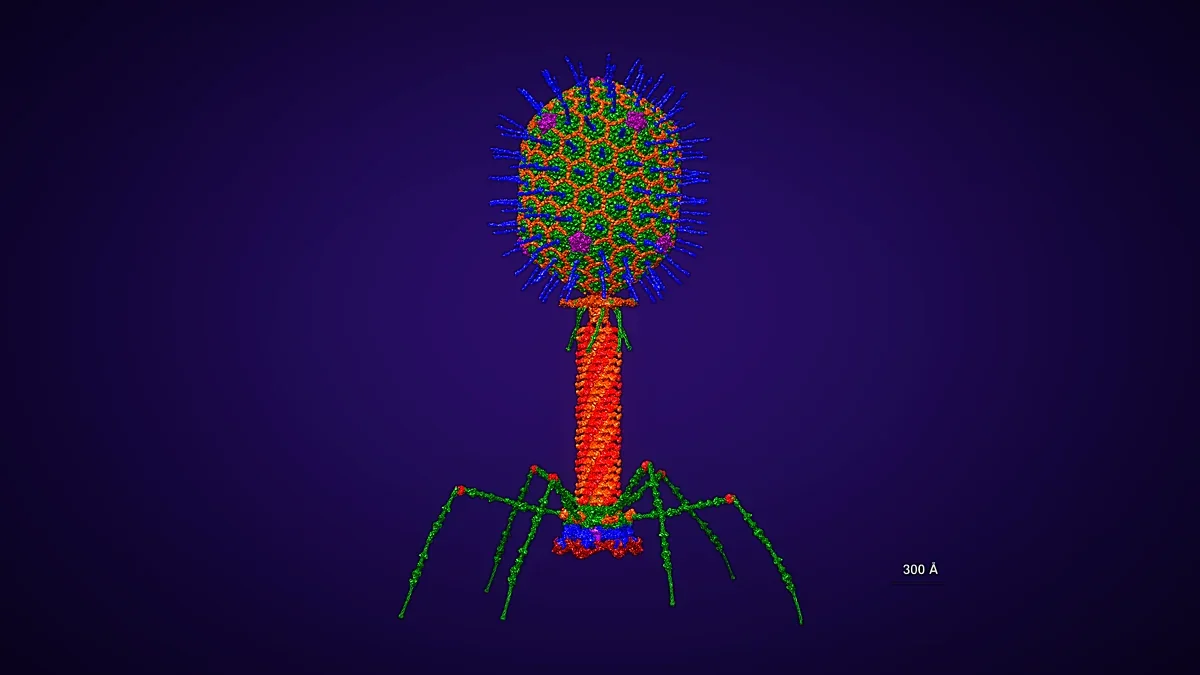
A Texas A&M team has reported PReP-Bicyc, a method for turning peptide libraries displayed on bacteriophage into bicyclic peptides without additives.

Summary. A Texas A&M team has reported PReP-Bicyc, a method for turning peptide libraries displayed on bacteriophage into bicyclic peptides without additives. A purpose-designed linker, 4,6-dichloropyrimidine-2-carbonitrile, first reacts with a cysteine at the peptide's N-terminus and then, because the reacting groups are held close together, links two internal cysteines. The reaction runs under mild conditions and leaves the phage viable, which has been a sticking point for earlier bicyclization chemistries. Screening a modified library against the protein PD-1 produced bicyclic ligands with sub-micromolar affinity, the best at a dissociation constant of about 400 nM, which selectively labelled PD-1-expressing cells in the lab.
Research context (RUO). Cyclic and bicyclic peptides are studied because the added constraint can improve stability, rigidity and binding compared with linear sequences. Making that chemistry compatible with phage display lets researchers screen very large constrained libraries in one step. As with any display hit, the ligands still need resynthesis, purification and analytical confirmation (identity, purity, conformation) before further characterisation.