Regulators, Journalists and Lawyers Are Reshaping the Peptide Market
How regulators, journalists and law firms are changing the research-peptide market in 2025 and 2026, with a source for each point.
Updated October 5, 2026

The research-peptide market is being reshaped by three groups: regulators, journalists, and the law firms that advise companies in this space. This article summarizes the current dynamics, with a source for each point.
Regulators: from quiet to active
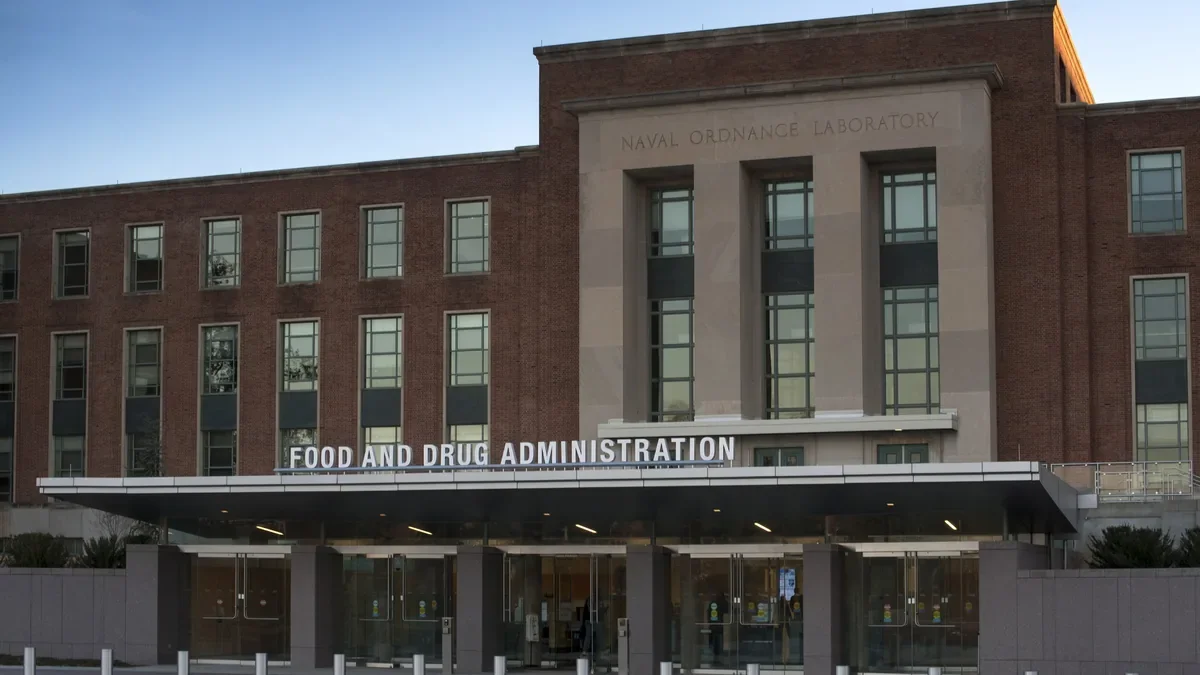
Regulatory attention has sharpened through 2026. In February, FDA announced its intent to restrict ingredients for non-FDA-approved compounded incretin-class drugs that are mass-marketed to consumers, and to act against misleading marketing of those products (FDA, 6 February 2026). In August, FDA sent warning letters to five online peptide sellers (McDermott Will & Schulte); in one of them, FDA stated that "for research use only" statements did not outweigh evidence on the seller's website that the products were intended for human use (FDA warning letter, 24 August 2026).
Compounding policy is moving at the same time. In July 2026, FDA's Pharmacy Compounding Advisory Committee voted to recommend adding six peptides, including BPC-157, to the list of substances that may be used in compounding under Section 503A, against the recommendation of FDA's scientific review team; the votes are advisory only (Bass, Berry & Sims, 31 July 2026). Reuters reported on 15 September 2026 that FDA had not yet issued its decision (Reuters via Medscape).
State boards have begun acting independently. According to a law-firm client alert, the Alabama Medical Board said in a June 2026 notice that physicians may not compound, administer or dispense a non-FDA-approved or research-grade peptide to a patient, and Ohio's Board of Pharmacy advised in December 2025 that medications labeled "for research purposes only" are unlawful for prescriber clinics and medical spas to possess (McDermott Will & Schulte). The same alert describes a July 2026 federal criminal case in Indiana in which the owner of a company that marketed peptides as research-use-only received 70 months in federal prison for introducing unapproved drugs into interstate commerce with intent to defraud or mislead; according to the alert, the company had also forged certificates of analysis (McDermott Will & Schulte).
Journalists: the mainstream arrives
Major outlets have published investigative and explanatory pieces on the peptide boom. The Independent reported in November 2025 on influencers promoting peptides on TikTok and Instagram, cited analysis of Google search trends showing nearly 10 times as many searches for these compounds in 2025 as in 2020, and reported that TikTok said it had banned the hashtag #peptide (The Independent, 30 November 2025). BBC News reported in March 2026 on the grey market for peptides sold "for research purposes only", described China as a major supplier, and reported that a recent analysis suggested 8% of some products tested may be contaminated with bacterial endotoxins (BBC News, 1 March 2026). Reuters reported in September 2026 on an analysis of more than 15 million medical records that found the number of newly documented BPC-157 users rose 33-fold between 2020 and 2026 (Reuters via Medscape). In October 2026, Harvard T.H. Chan School of Public Health published a Q&A noting that many synthetic peptides promoted online have undergone little to no rigorous clinical testing and are sold on the gray market and by "research chemical" suppliers (Harvard T.H. Chan School of Public Health, 1 October 2026).

Lawyers: reading the rules for the market
Law firms have become a visible part of the conversation, publishing analyses for compounders, sellers and life sciences companies. Bass, Berry & Sims set out the criteria the advisory committee applied in July 2026, including FDA staff's concerns that the peptides were not well characterized and that public information often lacked data on impurities, aggregates, microbial quality and bacterial endotoxins (Bass, Berry & Sims). McDermott Will & Schulte reviewed the August warning letters, the state-board actions and the Indiana criminal case, and advised companies to audit their websites and marketing against FDA's intended-use standard, noting that an RUO disclaimer will not overcome human-use content, and to make sure certificates of analysis are accurate and current (McDermott Will & Schulte).
What this means for research buyers
Taken together, the sources point in one direction: regulators look at the whole picture of how a product is marketed and documented, not at the label alone. For a laboratory, that makes accurate, lot-specific identity and purity documentation the most useful thing a supplier can provide.
Sources
- U.S. FDA (press announcement) | 2026-02-06 | www.fda.gov
- U.S. FDA (warning letter, 2026-08-24) | 2026-08-24 | www.fda.gov
- McDermott Will & Schulte (client alert) | 2026-09-24 | www.mcdermottlaw.com
- Bass, Berry & Sims (analysis) | 2026-07-31 | bassberry.com
- Reuters via Medscape | 2026-09-15 | www.medscape.com
- The Independent | 2025-11-30 | www.independent.co.uk
- BBC News | 2026-03-01 | www.bbc.com
- Harvard T.H. Chan School of Public Health | 2026-10-01 | hsph.harvard.edu
This article is a summary of publicly reported information for research-community awareness only. It is not medical advice, not legal advice, and not a statement about any BioLabs Research product.
For research use only. Not for human or veterinary use. Not a drug, food, or cosmetic.
This summary is for research-community awareness only and is not legal advice.
BioLabs Research has no affiliation with, and no endorsement from, any person named.