Catalytic ring-closing chemistry opens a route to strained, atropisomeric cyclic peptides
A team at the Institute of Organic Chemistry and Biochemistry in Prague (IOCB Prague) has reported a catalytic macrocyclization that forms sterically hindered carbon–nitrogen bonds through an intramolecular nucleophilic aromatic substitution (SNAr) reaction.

Summary. A team at the Institute of Organic Chemistry and Biochemistry in Prague (IOCB Prague) has reported a catalytic macrocyclization that forms sterically hindered carbon–nitrogen bonds through an intramolecular nucleophilic aromatic substitution (SNAr) reaction. Linear precursors with an N-heterocycle at one end and an aryl fluoride at the other close directly into strained medium-sized rings and macrocycles. The key step is how the reaction keeps its base active: a fluoride catalyst works together with an organosilane, which the authors describe as a base-embedding electrophile, so the active base is regenerated through a different turnover mechanism. Applied to tryptophan-containing peptides, the method gave structurally and stereochemically diverse "atropopeptides" inspired by naturally occurring RiPPs (ribosomally synthesized and post-translationally modified peptides).
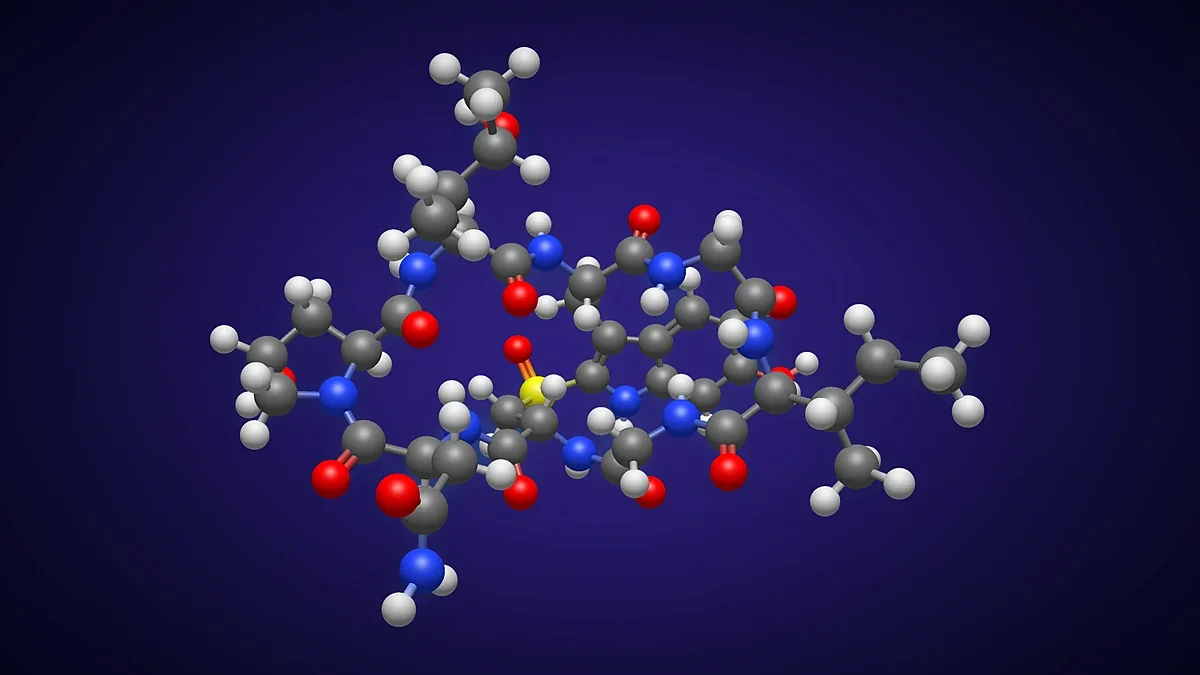
Research context (RUO). Atropisomers are molecules in which rotation about a single bond is hindered enough to give distinct three-dimensional forms, and the institute notes that such shapes are of particular interest in medicinal chemistry. A direct catalytic route from linear precursors could make these cyclic scaffolds easier to build and compare. According to IOCB Prague, the new cyclic peptides will next go into bioactivity screening, which should also shed light on how atropisomerism affects their properties. As with any new synthetic method, scope, yields and stereochemical assignments are set out in the paper and need independent reproduction.