Research comparison
GHK-Cu vs BPC-157: research comparison
GHK-Cu and BPC-157 are both present in the BioLabs Research catalog but represent unrelated chemical identities. GHK-Cu is a copper(II)–tripeptide complex; BPC-157 is a pentadecapeptide. Comparing them is useful for procurement clarity, not because they share a pathway label in marketing copy.
Quick comparison
| Field | First | Second |
|---|---|---|
| CAS | 89030-95-5 | 137525-51-0 |
| Formula | C14H22CuN6O4 | C62H98N16O22 |
| MW (approx.) | ~403.9 Da | ~1419.5 Da |
| Sequence / identity | GHK·Cu | GEPPPGKPADDAGLV |
| Catalog | Yes — GHK-Cu | Yes — BPC-157 |
GHK-Cu
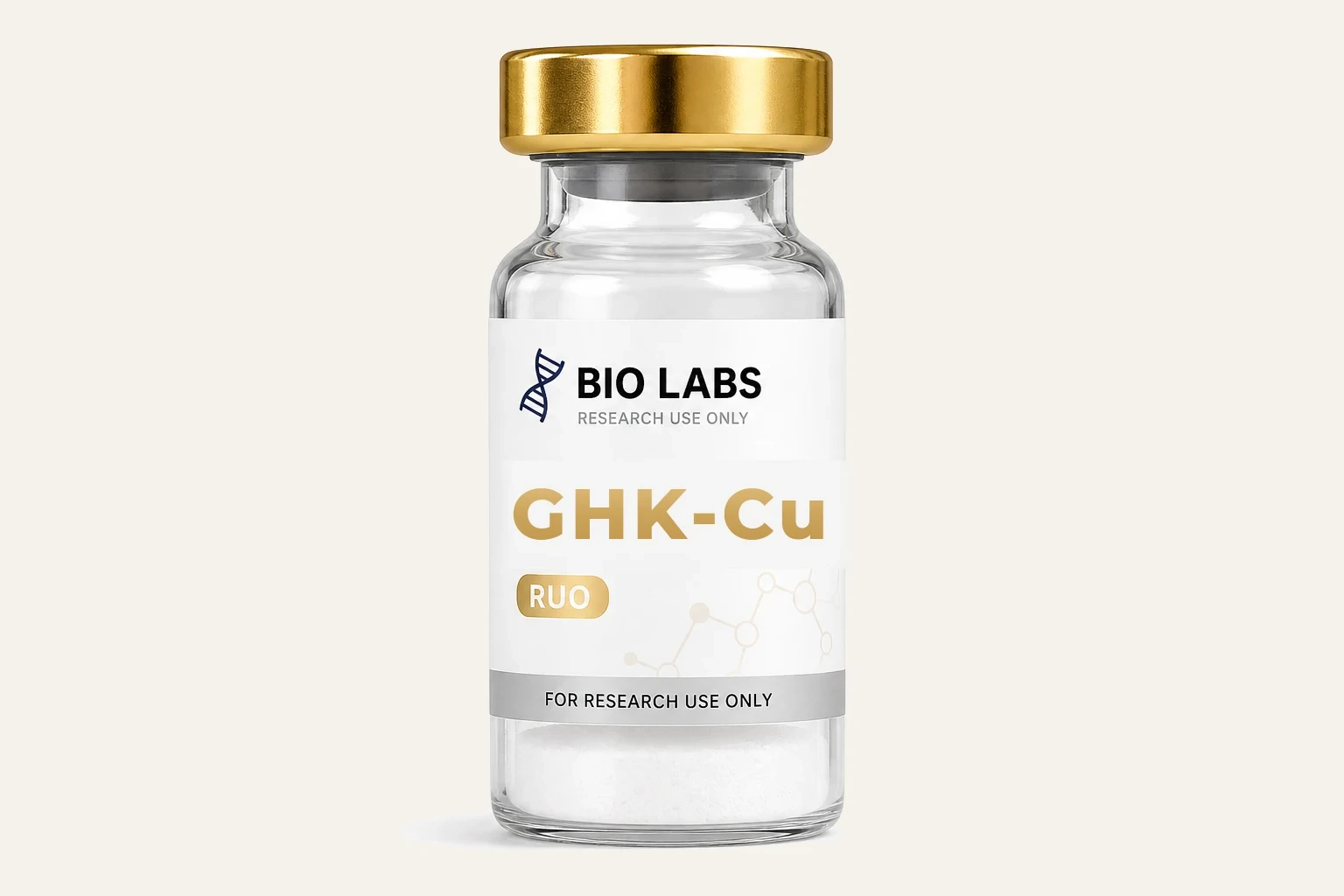
GHK-Cu (CAS 89030-95-5) is listed with formula C14H22CuN6O4 and approximate MW ~403.9 Da on site identity strips. The copper complexation is part of the identity — a copper-free GHK listing would be a different reagent. Research literature often places GHK-Cu in extracellular matrix and copper-handling model systems.
See GHK-Cu copper peptide research and GHK-Cu product. GLOW 70 is a separate named blend SKU that should not be confused with neat GHK-Cu.
BPC-157
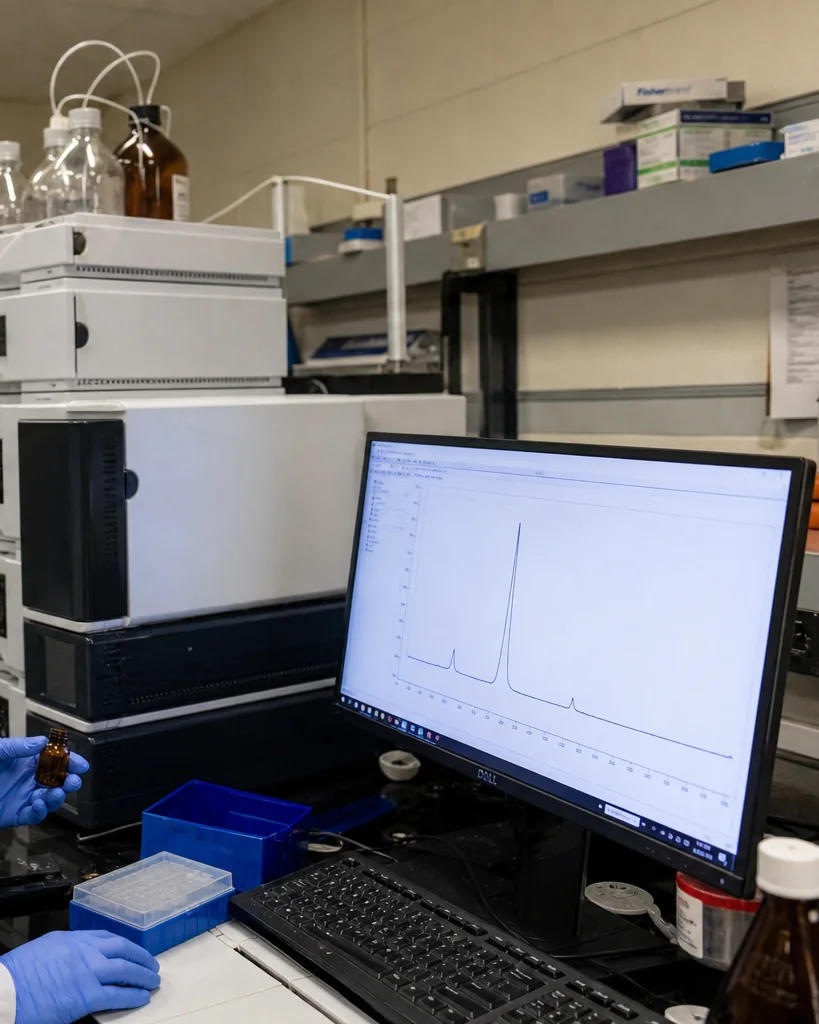
BPC-157 (CAS 137525-51-0) carries formula C62H98N16O22, MW ~1419.5 Da, and sequence GEPPPGKPADDAGLV on this site. It contains no copper center. Analytical expectations (HPLC, MS) differ from metal–peptide complexes; treat COA methods accordingly.
Overview: BPC-157 research overview · product.
Key differences
- Metal complex (Cu) vs non-metallated pentadecapeptide.
- Different CAS, formula, MW, and sequence.
- Distinct research literature clusters; not drop-in replacements.
- Both sold as separate catalog vials with their own strength options.
Which for which research context
GHK-Cu when the protocol requires the copper–tripeptide complex (CAS 89030-95-5).
BPC-157 when the protocol requires GEPPPGKPADDAGLV / CAS 137525-51-0.
Use compound comparison to pull live prices beside identity fields before ordering.
References
- GHK-Cu: PubChem CID 378611 · CAS 89030-95-5
- BPC-157: PubChem CID 9941957 · CAS 137525-51-0
All discussion on this page is limited to chemical identity, public registry identifiers, and laboratory research framing. BioLabs Research lists reagents for in-vitro and analytical work only. Confirm vial strengths and any hosted COA PDFs on the product page or in the COA Library.
Use the solution dilution calculator and unit converter for lab math only. Related reading: blog, Science, reading a COA, Shipping.
Copper–peptide handling may involve additional laboratory safety notes versus plain peptides; follow SDS guidance for metal-containing reagents. For hosted COAs on other SKUs, filter the COA Library.
Word-of-mouth blend names (for example GLOW 70) can include multiple components — always open the product identity strip rather than assuming “GHK-Cu equivalent.”
For laboratory research use only. Not for human or veterinary use. No medical claims; no human dosing guidance.