Research comparison
BPC-157 vs TB-500: research comparison
BPC-157 and TB-500 appear frequently in peptide research catalogs as distinct chemical listings. This page compares them as research identities — sequence, CAS, and typical laboratory framing — without medical claims or human dosing language. Both SKUs are available in the BioLabs Research catalog for laboratory use only.
BPC-157 is a pentadecapeptide derived from a gastric juice protein fragment and is commonly referenced under CAS 137525-51-0. TB-500 is a catalog name for a thymosin-β4 fragment listing (often the Ac-LKKTETQ motif) with CAS 885340-09-2 on this site’s identity map. Fragment listings are not interchangeable with intact thymosin-β4; always read the sequence printed for the lot.
Quick comparison
| Field | First | Second |
|---|---|---|
| CAS | 137525-51-0 | 885340-09-2 |
| Sequence / identity | GEPPPGKPADDAGLV | Ac-LKKTETQ (fragment listing) |
| Formula (public) | C62H98N16O22 | — (fragment listing) |
| MW (approx.) | ~1419.5 Da | — |
| Catalog | Yes — BPC-157 | Yes — TB-500 |
BPC-157
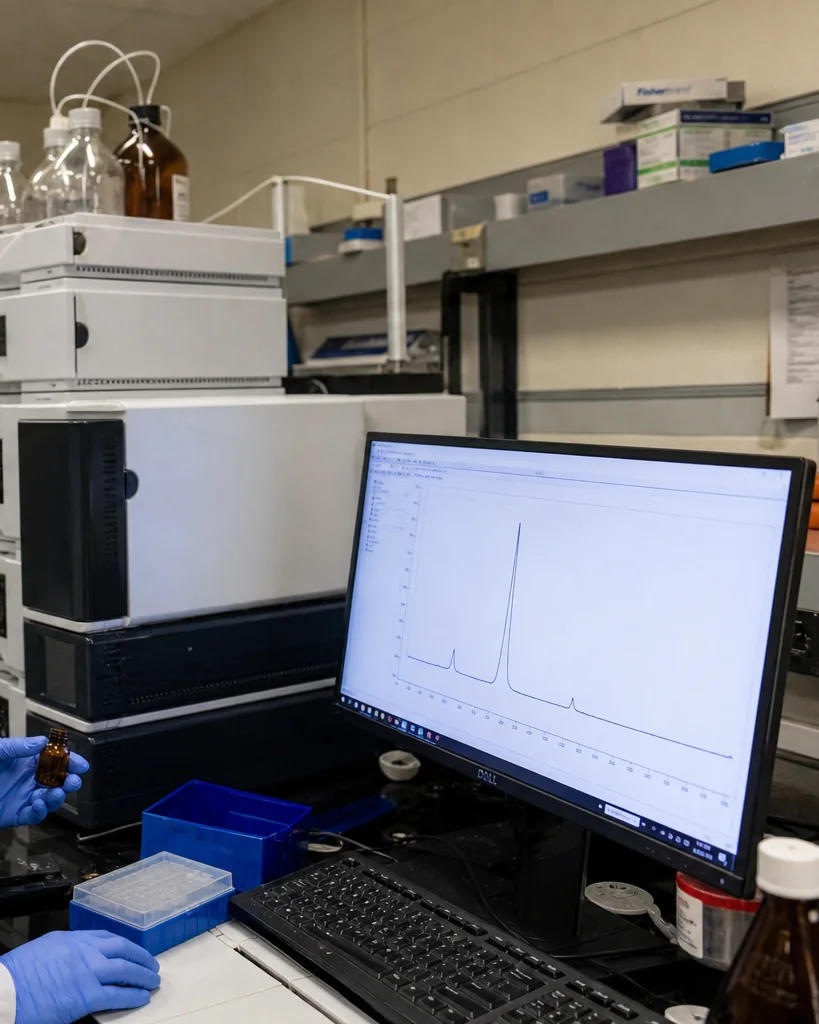
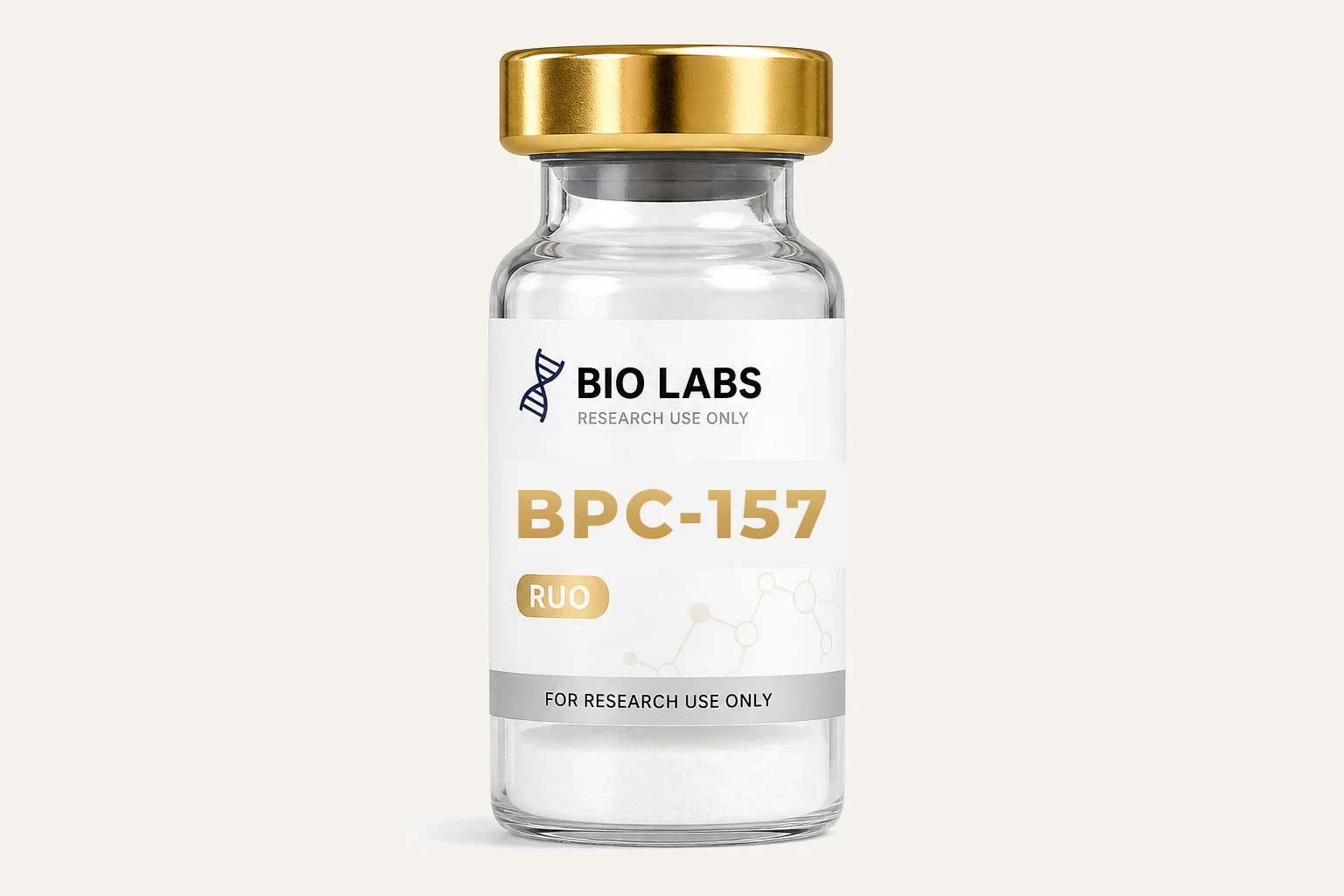
On BioLabs Research product pages, BPC-157 is presented with CAS 137525-51-0, molecular formula C62H98N16O22, approximate molecular weight ~1419.5 Da, and sequence GEPPPGKPADDAGLV. Those fields describe the named peptide identity used in registry databases; they are not lot purity results. Lot-level HPLC/MS data belong on a certificate of analysis when issued.
In laboratory literature, BPC-157 is discussed as a stable pentadecapeptide tool compound in cell and animal model research. Catalog strengths on this site are listed as research vial options (see the live product page). For side-by-side identity checks against other SKUs, use the compound comparison tool.
Further identity notes: What is BPC-157 (research overview) and the product page BPC-157.
TB-500
TB-500 on this catalog is a fragment listing associated with CAS 885340-09-2 and the Ac-LKKTETQ sequence motif commonly marketed under the TB-500 name. Public CAS records for intact thymosin-β4 versus short fragments are not the same chemical entity. Identity for purchasing decisions should follow the sequence and any salt form stated on the vial label and COA.
Research discussions often place TB-500-type fragments in cytoskeletal and actin-binding pathway models. That is a mechanistic research context, not a use instruction. See TB-500 vs thymosin-β4 identity and TB-500 product.
Key differences
- Different primary sequences (pentadecapeptide vs Ac-LKKTETQ fragment motif).
- Different CAS registry numbers on the site identity map.
- TB-500 naming can be confused with intact thymosin-β4 — verify fragment length.
- Both are catalogued separately; a blend SKU also exists for dual-listing research.
- Purity is lot-specific and is not implied by CAS alone.
Which for which research context
Choose BPC-157 when the protocol specifies the GEPPPGKPADDAGLV identity or cites CAS 137525-51-0.
Choose TB-500 when the protocol calls for the Ac-LKKTETQ fragment listing (CAS 885340-09-2 on this map) rather than intact thymosin-β4.
Consider the blend only if the study design explicitly requires both identities in one vial presentation — see BPC-157 / TB-500 Blend.
References
- BPC-157 CAS: PubChem CID 9941957 · CAS 137525-51-0
- Thymosin beta-4 related entries: PubChem · site CAS 885340-09-2 for TB-500 fragment listing
All discussion on this page is limited to chemical identity, public registry identifiers, and laboratory research framing. BioLabs Research lists reagents for in-vitro and analytical work only. Catalog availability, vial strength options, and lot documentation (when a COA PDF is hosted) should be confirmed on the product page and in the COA Library before purchasing for a protocol.
When comparing sequences or CAS numbers across vendors, verify the exact salt form, fragment length, and any N-terminal modifications against the lot COA. Public CAS entries describe a named chemical entity; they are not a substitute for lot-specific HPLC or MS results. For dilution math after a vial is in hand, use the solution dilution calculator. For mass-unit conversions, use the unit converter.
Related reading on this site includes identity posts on the blog, the Science overview, and the guide to reading a COA. Shipping and cold-chain notes for research reagents are summarized on Shipping.
Researchers comparing these two identities should also note storage and solvent compatibility from the product SDS/COA package when available. Neither listing is a finished pharmaceutical. For documentation currently hosted as PDFs, open the COA Library and filter by compound name.
If your assay sheet lists mass in micrograms rather than milligrams, convert with the unit tool (1 mg = 1000 mcg) before preparing stock solutions. Keep laboratory notebooks tied to lot numbers printed on the vial, not to marketing names alone.
For laboratory research use only. Not for human or veterinary use. No medical claims; no human dosing guidance.